What Pickens County lots actually cost to clear
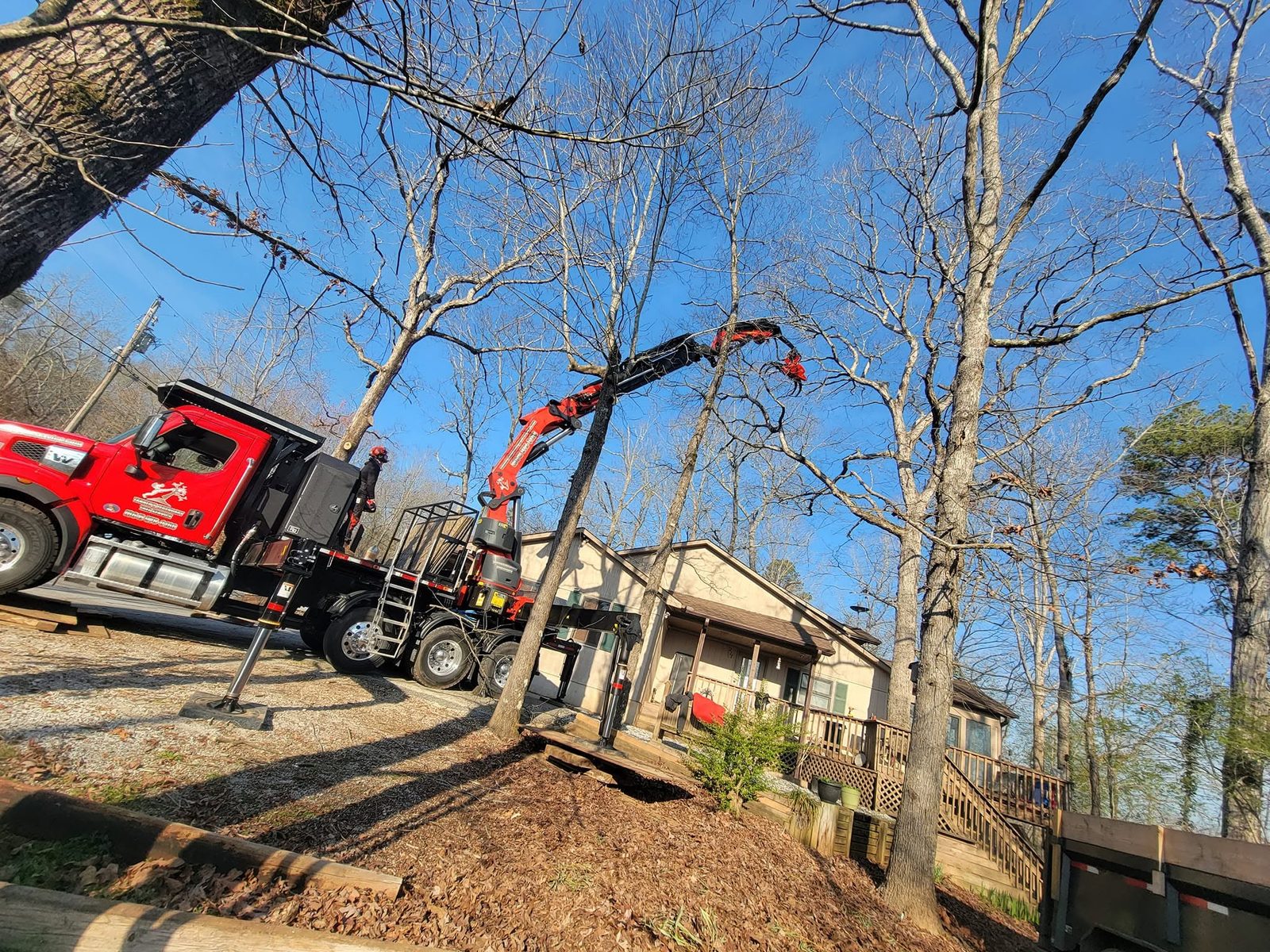
The Greenville metro's outward growth has pushed new residential development deep into Pickens County, turning overgrown family parcels that sat in tree cover for decades into active clearing jobs. What those jobs cost varies more than homeowners expect, mostly because the lots do too. A lightly brushed two-acre site off Highway 93 near Easley quotes very differently than a dense hardwood hillside above Six Mile with twenty years of vine growth on it.
The two biggest variables are vegetation density and stump handling, and both are likely to shift once a crew actually walks the property. That is why the working ranges below are honest guides, not quotes, and why any contractor who gives a firm number after a five-minute phone call is guessing with your money.
| Scope of work | Typical Upstate SC range | What drives it |
|---|---|---|
| Light brush and saplings | $1,500 – $2,200/acre | stem diameter, density, slope access |
| Mixed hardwood and pine | $2,500 – $4,000/acre | tree count, stump handling method |
| Dense canopy with vine cover | $3,500 – $5,000/acre | kudzu or wisteria entanglement, debris volume |
| Forestry mulching in-place | $1,800 – $3,200/acre | density, moisture content, terrain steepness |
| Stump grinding (add-on) | $150 – $450 per stump | diameter, root spread, soil hardness |
One detail that surprises first-time buyers: stump grinding is not automatically included in a clearing quote. Some jobs bury stumps, some leave them to decay on back-lot areas, and some grind every one. That decision alone can shift a midrange quote by several hundred dollars per acre. If the lot has a building footprint planned, your contractor and grader need to agree on stump handling before the first tree comes down. For lots that have been left completely to nature, the overgrown lot page covers what extended neglect adds to both cost and work sequence.
How Upstate terrain and red clay soil reshape the numbers
Pickens County sits where the South Carolina Piedmont begins pressing into the Blue Ridge foothills. The terrain is rolling, not flat, and the subsoil is red clay — sticky when saturated, hard-caked when dry, and slow to drain either way. That drainage profile matters after clearing because stripped red clay sheds water quickly and compacts easily under tracked equipment.
The rolling ground around Pickens, Easley, and Six Mile also makes equipment access a real variable. Whether a tracked mulcher can enter the lot without cutting a temporary road often determines which machines a crew brings, and that setup time shows up directly in the per-acre rate. Lots hemmed in by mature tree lines on two or three sides take longer to stage than open parcels with direct drive access.
Storm history compounds the site challenge. Pickens County has recorded 23 federally declared disaster events spanning 2005-2026, most of them involving storms and flooding events that move large volumes of water across the landscape in a short window. Lots that sit below a road grade or in a natural draw can flood after clearing until drainage is re-established. Experienced crews address this by preserving a temporary slope buffer and staging rough grading to follow clearing rather than run alongside it.
Vine coverage adds its own layer. Kudzu and Japanese wisteria have spread through much of Upstate SC, and both grow into tree canopies in ways that slow mechanical clearing well beyond what a timber-only stand of the same density would take. The Clemson Cooperative Extension catalogs the most aggressive invasives across this region, and their plant identification resources are worth reviewing before you get quotes on a lot you have not walked thoroughly.
When forestry mulching wins on rolling piedmont lots
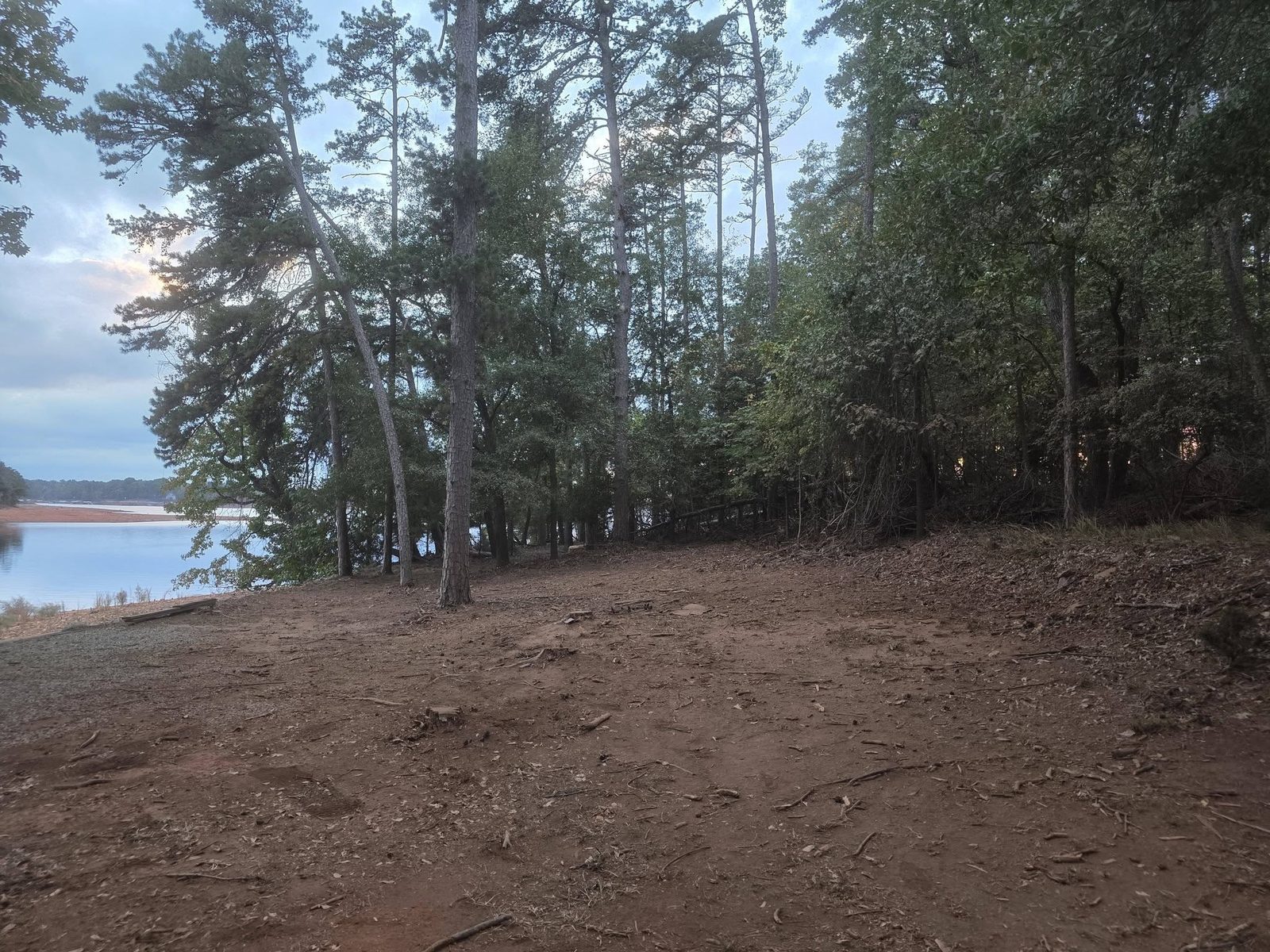
Forestry mulching, where a forestry head grinds everything it passes over into a mulch mat that stays on site, has become the dominant clearing approach on sloped Pickens County parcels. The economics are straightforward. A tracked mulcher does not need a separate haul truck following it, does not require a burn pile and an open-burn permit, and leaves a ground cover that slows erosion until the site is seeded or graded. On lots with real grade change, that erosion control matters from day one.
A clean-cut lot on a slope without root systems and organic matter anchoring the soil can lose topsoil fast in an Upstate SC rainstorm. The mulch mat acts as an immediate erosion blanket while the site crew plans the next phase. That is genuine cost avoidance on parcels where weeks or months separate clearing from construction.
The tradeoff is what stays in the soil. Forestry mulching leaves organic material that decays over time, creating settlement risk in a building pad if it is not removed first. If the goal is a slab or an in-ground foundation in a specific footprint, stumps and organic material need full removal before concrete work begins. Mulching applies to the buffer zone, not the building envelope. The complete land clearing services page walks through how those decisions typically get made in the field and what site conditions favor one method over the other.
SC burn permits, contractor licensing, and when they apply
Before clearing debris is piled and lit, the SC rules are worth knowing. The SC Forestry Commission administers open-burning regulations statewide: vegetative debris burns generally require a permit from SCFC, and the commission can suspend burning when fire weather conditions are elevated. The Upstate's dry stretches in fall and late spring are exactly when those suspensions tend to fall. Clearing contracts that plan to burn the debris pile need a contingency for haul-off or in-place mulching if the permit window closes before the pile is gone.
On the contractor side, clearing work attached to a permitted construction project falls within SC's contractor licensing framework. The SC LLR Contractor Licensing Board is the state's licensing authority; verifying an active license before signing is standard due diligence for any significant site work. A crew that is also rough-grading or handling erosion control as part of a permitted build should be able to produce license documentation without hesitation. One that cannot is a liability exposure on a project where the county inspector will eventually arrive.
Routine hand-cut brush maintenance on private property does not trigger the same requirements. But machine-driven clearing of an acre or more, especially where it is attached to a construction permit, is worth treating as a licensed, permitted job from the start. It also bears on insurance: an unlicensed crew working a lot with an active building permit can create a coverage gap that surfaces after a site incident, not before.
What to settle in writing before the first tree falls
Three questions should be answered in the contract before any crew starts work on an Upstate SC clearing job:
- What happens to the stumps? Grind, bury, or leave — the choice changes your grading options and long-term site stability. Get the specific method in writing, not just a verbal assurance that it will be handled.
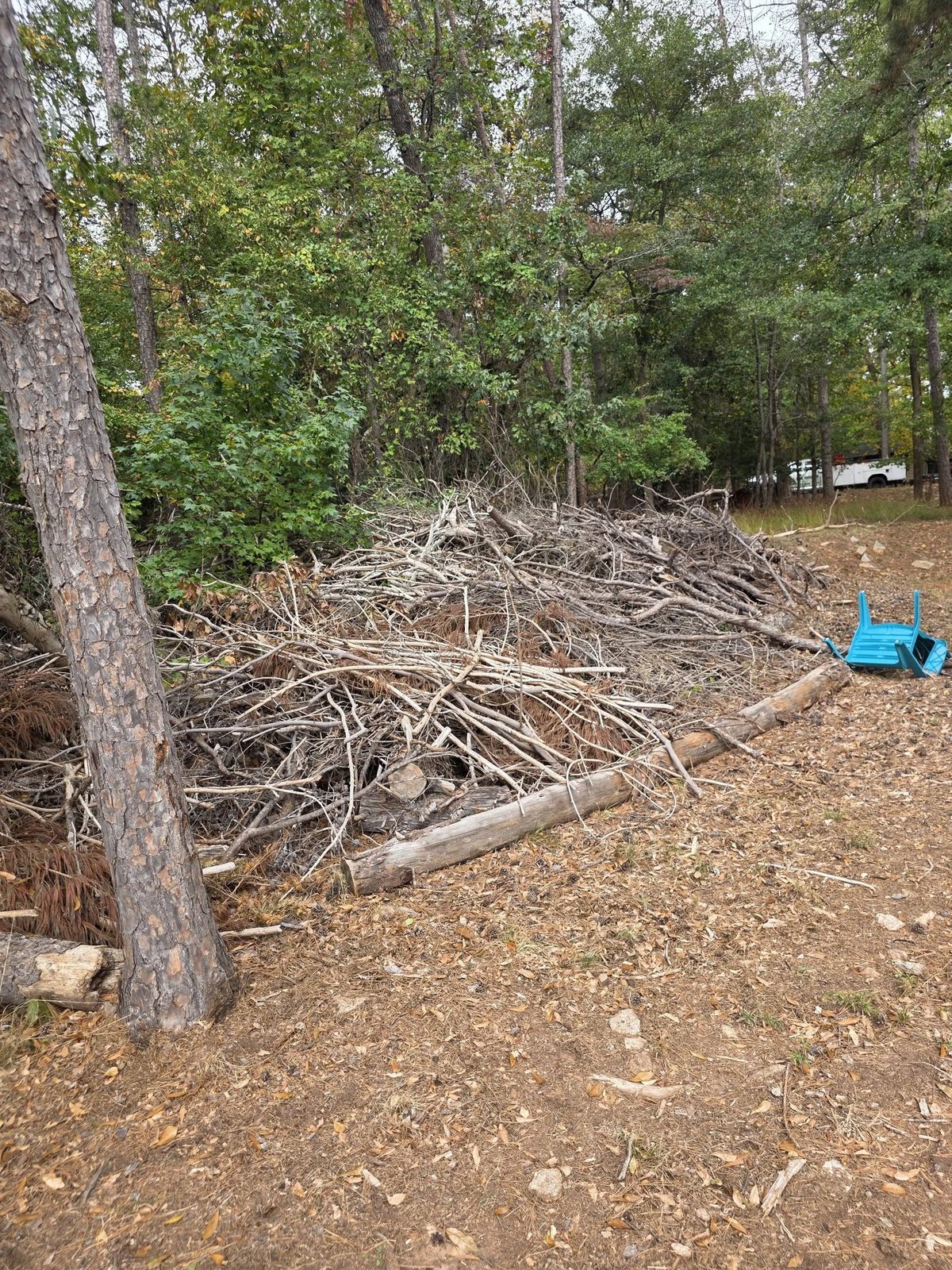
- How is debris disposed of? Haul-off, burn pile, or mulch-in-place carry different costs and timelines. If the plan is to burn, confirm the permit situation with the SC Forestry Commission before the pile grows. The debris hauling page breaks out what full haul-off adds to a job and when that cost makes sense compared to mulching in place.
- Is the quote per-acre or per-job? A lot that maps at 1.5 acres may clear as 2 once the crew accounts for slope buffer and access cuts. Per-acre pricing keeps the math honest when scope shifts in the field.
Lots that sit idle long enough develop their own clearing challenges: sapling regrowth, additional vine entanglement, and sometimes drainage problems from blocked natural channels. If the parcel has been unmanaged for years, the overgrown lot page covers what that extra complexity adds to both the quote and the work sequence before standard clearing can begin.