Clay soil, heavy roots, and what that means for a stump in Pickens County
Central is a small Pickens County town tucked between Clemson and Easley, sitting squarely in the Upstate's rolling foothills. The soil under most of these lots is a dense red clay that holds moisture and grips root systems in a way that sandier soils further east do not. White oaks, loblolly pines, sweet gums, and tulip poplars dominate the canopy here, and all of them put down deep, wide root masses that anchor hard in clay.
That matters for grinding because a shallow pass on a clay-soil stump does not end the problem. Feeder roots left below grade in moist clay stay viable long after the trunk is gone, and without adequate depth, resprouting is common with hardwood species. A proper grind in this terrain means working down at least eight to twelve inches, sometimes more for older oaks. If you are weighing whether to grind now or wait, the stump in the yard guide covers what active and dormant stumps actually cost you in the meantime.
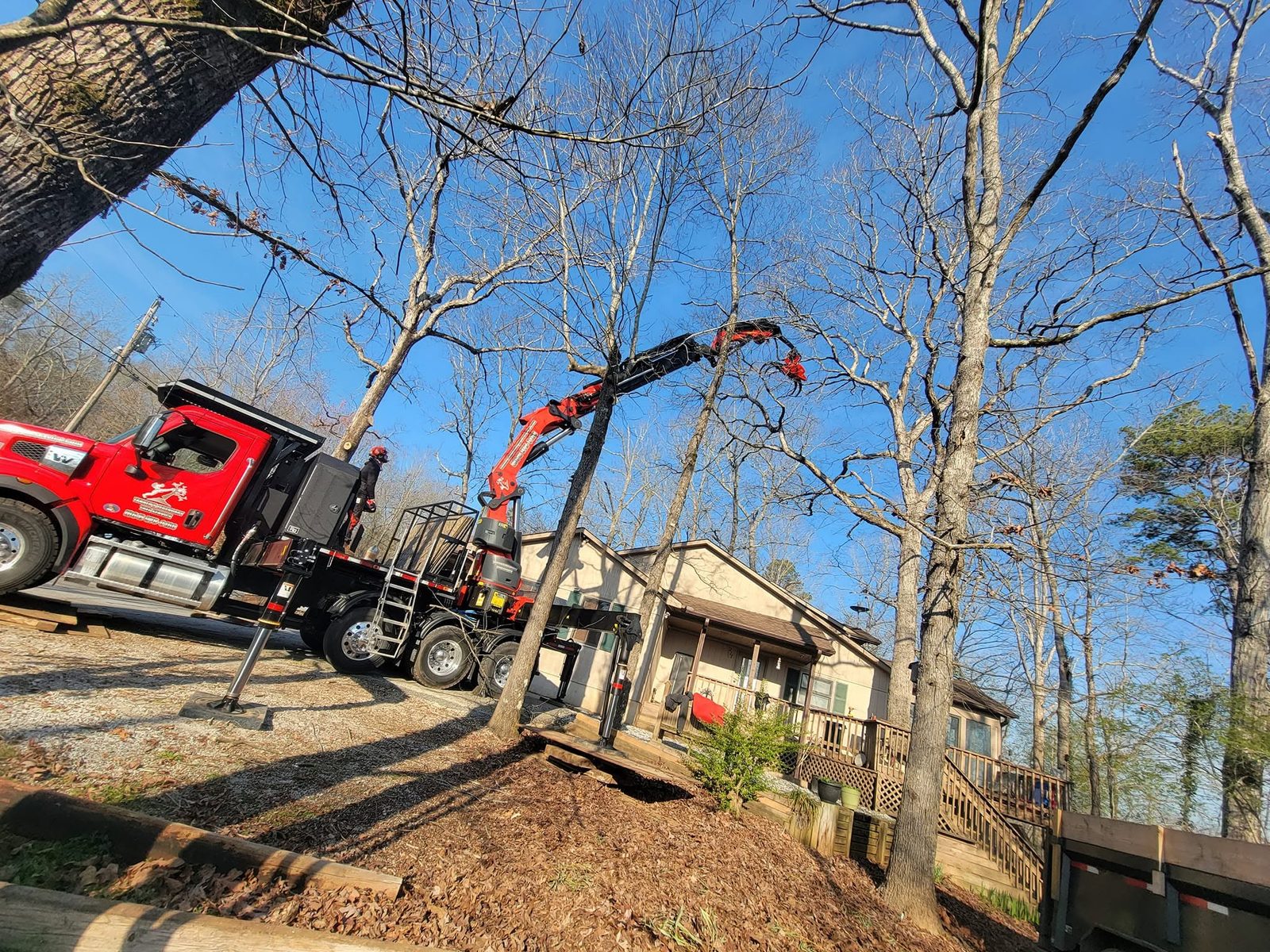
Central's housing stock adds to the picture. The town has older frame homes with established trees that have had decades to grow unchecked, newer subdivision lots carved from former farmland, and rural parcels where legacy trees predate any survey markers. The stumps on these properties range from managed shade trees dropped after ice damage to large pines cleared for driveways or utility easements — a wider variety than you find in newer Greenville suburbs, where most trees were planted at build-out and are still relatively young.
What stump grinding costs around Central
For line-item detail on what moves the final number, see the full stump grinding cost guide. The table below reflects typical jobs on Pickens County residential and rural lots.
| Job scope | Typical range |
|---|---|
| Small stump, under 12" diameter | $100–$150 |
| Medium stump, 12" to 24" diameter | $150–$250 |
| Large hardwood stump, over 24" diameter | $250–$400 |
| Stump with heavy surface roots | $150–$300 |
| Multiple stumps, same visit | Bundled estimate recommended |
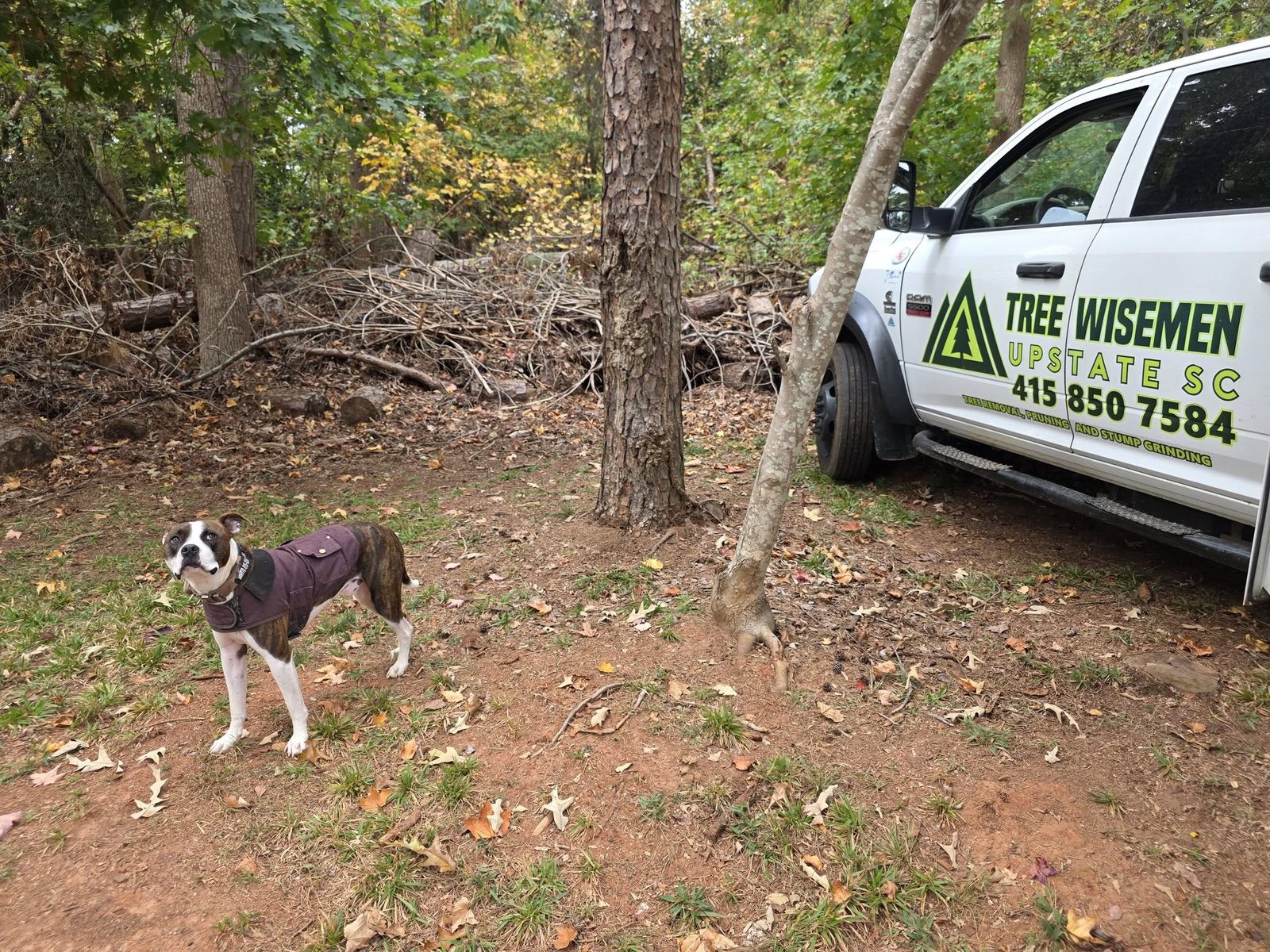
Two local factors push Pickens County jobs toward the higher end: site access and species. Lots along gravel roads, up long driveways, or with tight equipment clearance add time once the grinder is on site. White oak and hickory root systems are dense enough that grinding takes noticeably longer than a comparably sized pine stump, and time is the main cost driver after mobilization.
If you are dealing with more than one stump — a fence-line clearing, storm damage to several trees, or lot prep for an addition — bundled pricing typically offers the best value. Single-stump pricing reflects full mobilization cost; each additional stump on the same visit costs considerably less per unit.
Storm patterns, beetle kill, and why stumps accumulate in this part of SC
Pickens County carries 23 federal disaster declarations on record (2005-2026), most tied to severe weather and flooding events that bring down mature trees across the Upstate. Each tree dropped by a storm leaves a root mass requiring grinding before the lot can be replanted, graded, or built on. Beyond direct storm damage, the SC Forestry Commission tracks tree health threats statewide, including southern pine beetle pressure that is an ongoing concern for loblolly pine stands throughout this part of Pickens County. A beetle-stressed pine can decline and drop within a single growing season, leaving a large-diameter stump with extensive lateral roots that no homeowner chainsaw can reach.
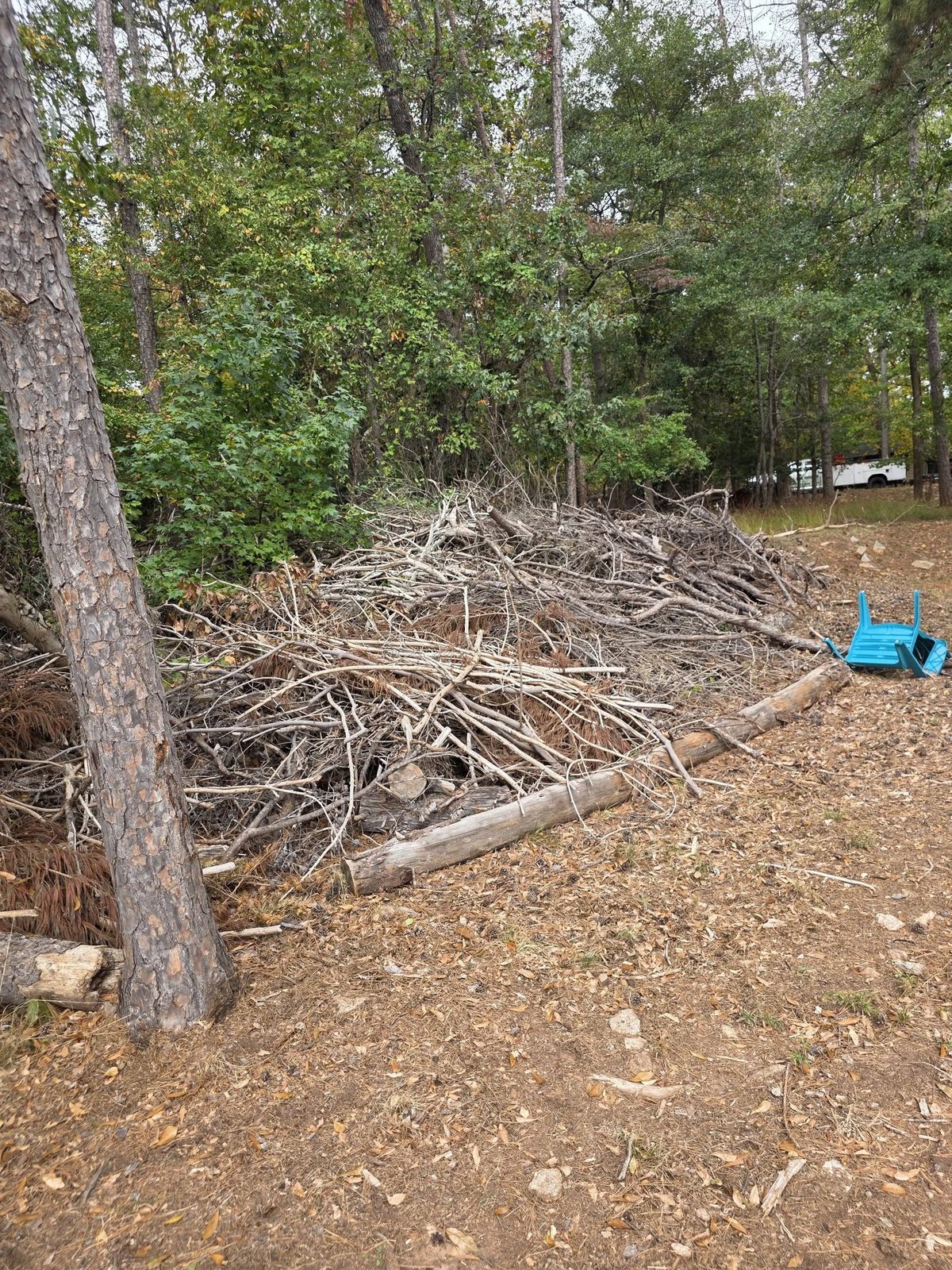
The practical point: if you have had a tree removed in the past few years from storm damage, utility clearance, or beetle kill, the stump is on a timer. Roots do not stop pulling soil moisture just because the trunk is gone, and in clay soil that activity can keep the stump system biologically active for years.
What SC requires from a stump grinding crew
Mechanical stump grinding alone carries no state contractor licensing requirement in South Carolina. That changes if a crew adds chemistry: any application of a stump-kill or root-kill product brings the job under pesticide certification rules. The Clemson University Department of Pesticide Regulation is the state lead agency on applicator licensing, and asking to see a valid certificate before any chemical is applied is a standard, reasonable request. For larger land-clearing work accompanying stump removal, the SC LLR Contractor Licensing Board governs the contractor license classes that may apply depending on project scope.
On the practical side, verify that any crew carries general liability insurance and workers' compensation before work starts. Equipment incidents during grinding are among the most common claim types in tree services, and an uninsured crew leaves the property owner exposed. The stump grinding service page covers what a professional Tree Wisemen visit includes and what to expect on the day of the job.
After the grind: settling, soil, and what to plant next
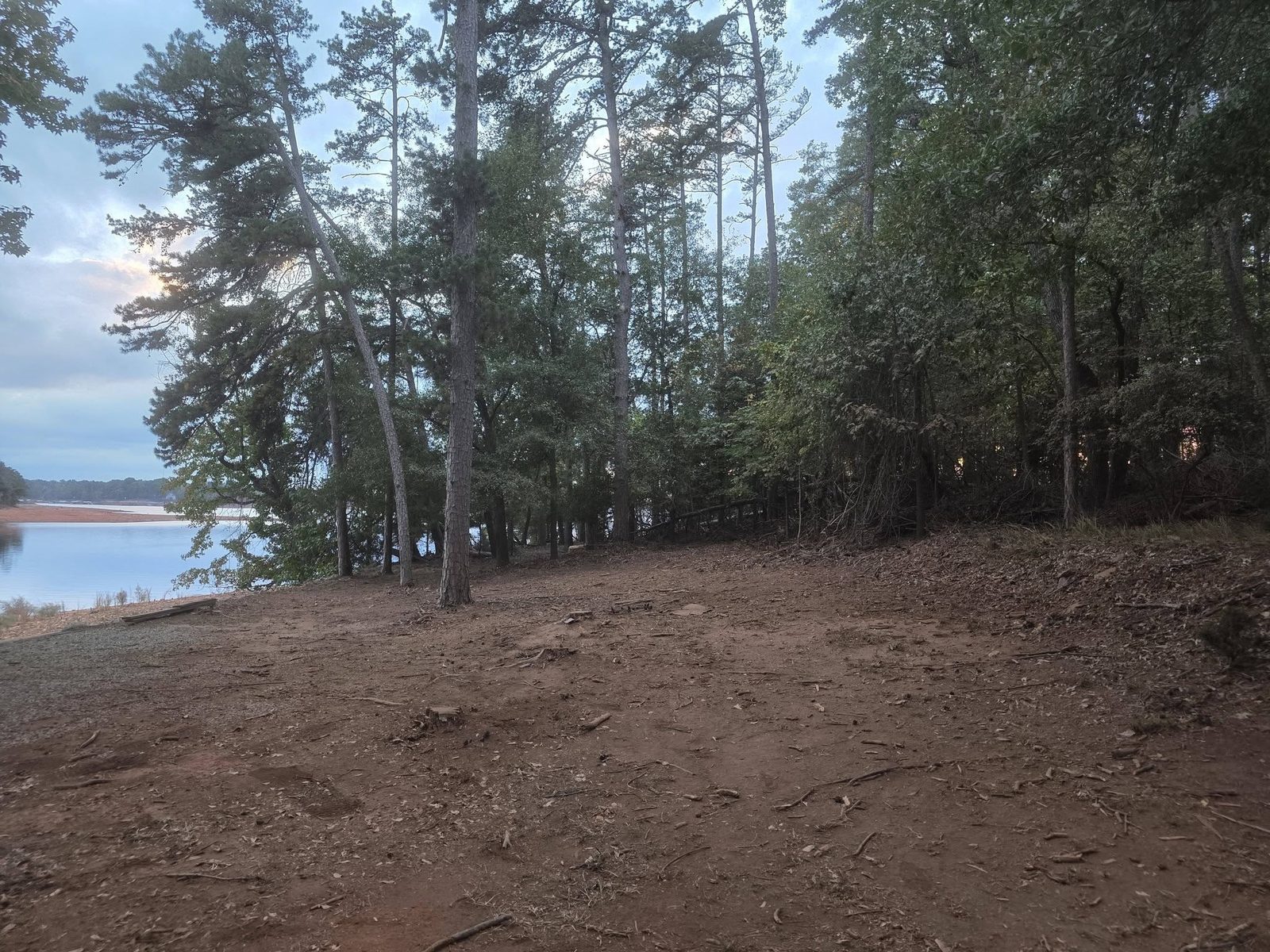
A finished grind leaves a mix of wood chips, soil, and root debris in the cavity where the stump sat, with excess chips typically mounded above grade. On Pickens County clay lots, this material does not settle the same way it does in looser soils. The chips hold air pockets as they decompose, which can leave a visible depression three to six months after the job. Topping with topsoil and overseeding is the standard follow-up for turf areas; leaving the chip pile as a mulch ring works well for nearby planting beds.
If you plan to replant a shade tree in the same spot, the Clemson Cooperative Extension Home and Garden Information Center recommends waiting one full growing season before planting into a fresh grind site. Decomposing root material competes with new plantings for nutrients during early establishment, and that competition is one of the more common reasons transplanted trees struggle in Upstate SC. Fill the cavity with topsoil, let it settle through one season of rain, then plant.