What Upstate SC homeowners actually pay
The same 60-foot pine costs more to remove on a Pickens County ridge lot above Lake Keowee than it does on a flat Greenville-area subdivision — and the reason is not the crew or the market, it is the lot. Slope dictates rigging, canopy spread dictates section count, and narrow lakefront gates or steep backyards dictate whether a bucket truck can even reach the work. All three variables stack differently in the foothills, and they all show up in the quote.
| Scope of work | Typical Upstate SC range | What drives it |
|---|---|---|
| Small tree (under 30 ft) | $300 – $600 | access, clearance from structures |
| Medium tree (30–60 ft) | $600 – $1,200 | height, climbing vs. aerial lift |
| Large tree (60–80 ft) | $1,000 – $2,000 | rigging, landing zone, debris volume |
| Very large or hazardous tree | $2,000 – $3,000+ | crane, slope, proximity to structures |
| Stump grinding (add-on) | $100 – $300 | diameter, root depth, site access |
These are honest working ranges for the Upstate SC market — not quotes and not national averages padded for clicks. Any contractor pricing a job without walking the property is estimating blind. Tree Wisemen provides free on-site estimates within 50 miles of Easley before any number goes on paper.
Why foothills terrain changes the math
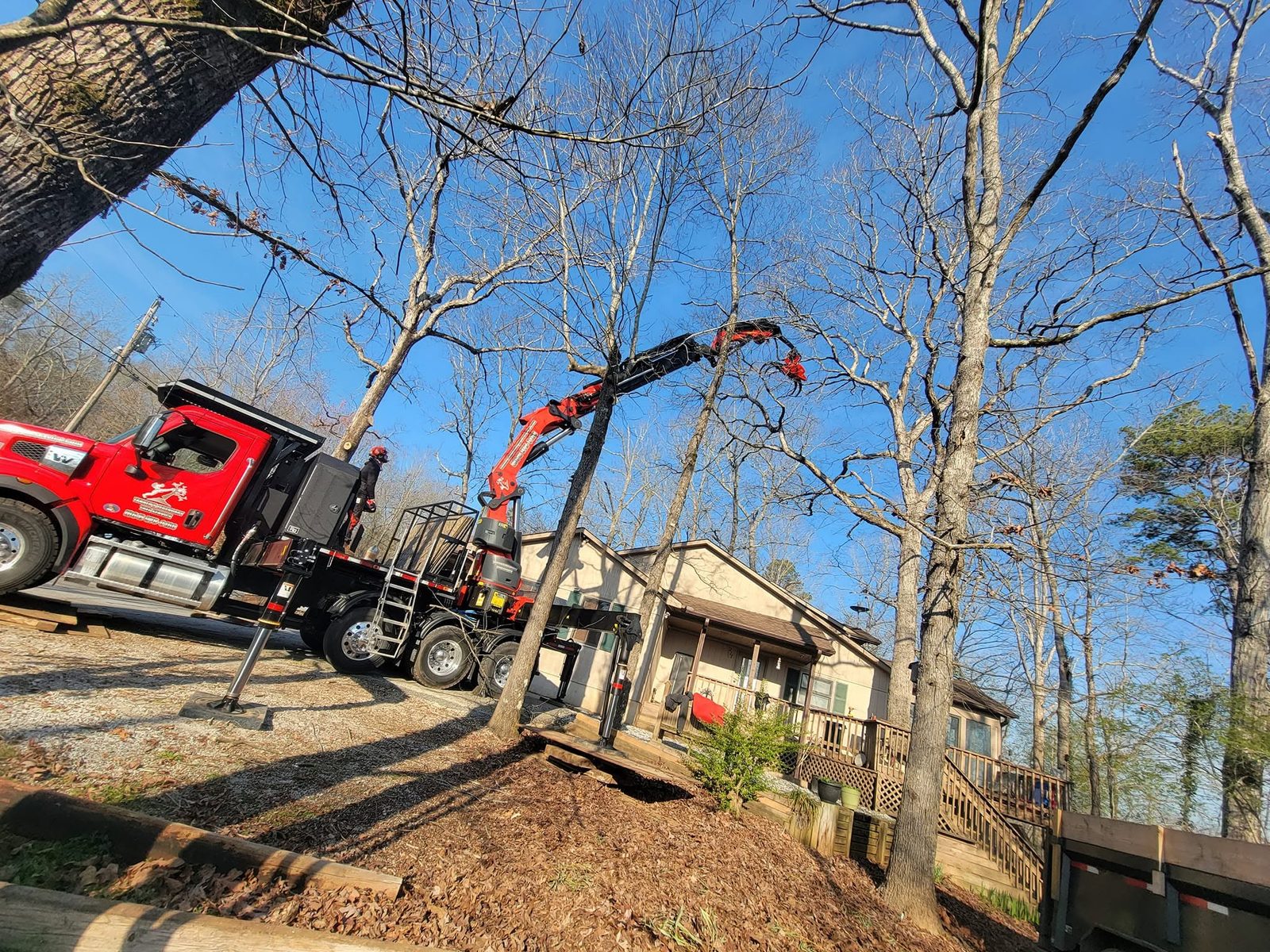
Pickens County sits where the South Carolina Piedmont gives way to the Blue Ridge foothills, and that transition shapes tree work here in ways a quote from a flatland contractor will not reflect. Lots are graded and cut into slopes. Hardwoods — white oak, hickory, tulip poplar — grow tall competing with loblolly pines along ridgelines and creek drainages throughout the county. A tree that grew straight because its neighbors crowded it has a different weight distribution at the crown than a yard tree with open growing room, and that changes how the crew brings it down: more piece work, more rigging time, more precision at each cut. Large white oaks and tulip poplars common to this area also grow wide canopies that reach over fences, driveways, and rooflines, adding structural risk to the height problem.
Storm history compounds this. The Upstate has seen 23 federally declared disasters across 2005-2026, including ice storms and severe wind events that stress or compromise trees without fully uprooting them. A leaning pine on a slope, its root plate partially lifted by wind, is a fundamentally different job than a healthy standing tree — the crew has to engineer the failure mode before making the first cut, and that planning and additional rigging is in the price. When a tree comes down in a storm rather than on a schedule, the job often shifts to emergency territory; the emergency tree removal cost guide covers what that premium looks like and when it applies.
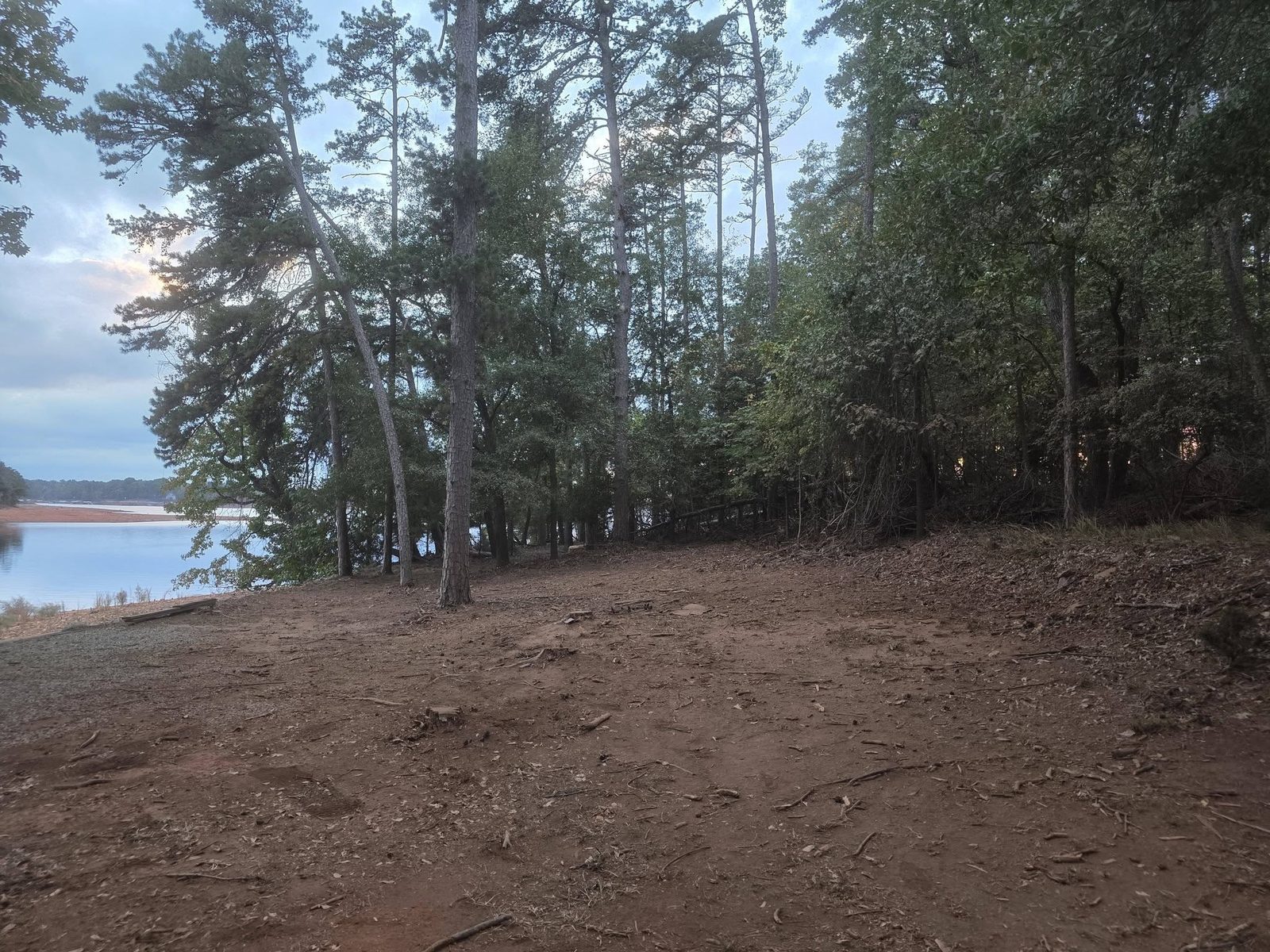
Lakefront lots on Lake Keowee and Lake Hartwell bring a third variable: equipment access. A crane or chipper truck that cannot navigate through a narrow gate or down a terraced grade forces the crew to work by hand, and that labor adds directly to the total. It is a common reality on lake-access properties in this county, and crews unfamiliar with it often revise their quote after the first site visit.
What the quote actually covers — and what gets added
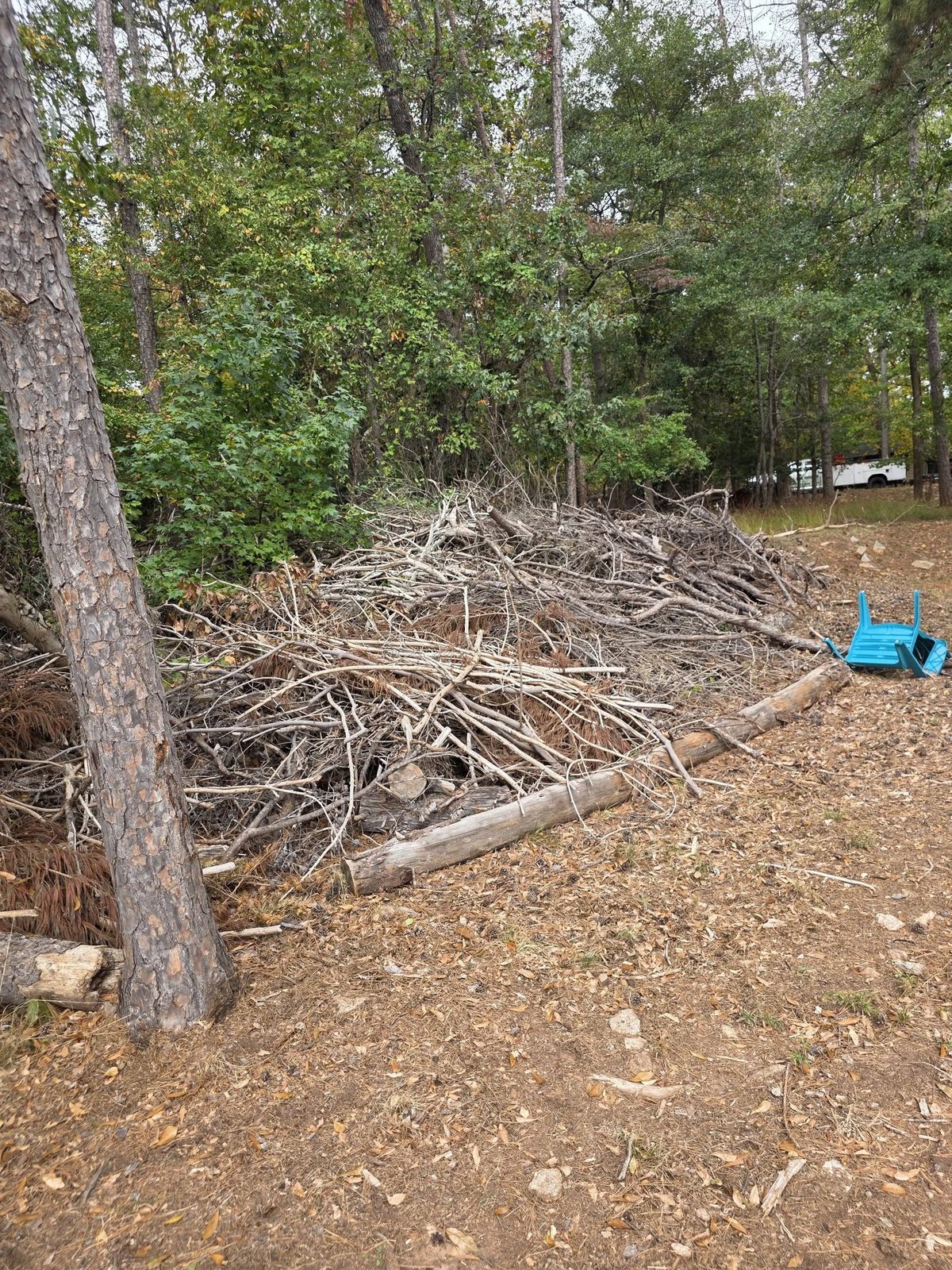
Most tree removal quotes cover the cut, the sections, and the haul to the truck. What they may not include by default: stump grinding, log splitting for firewood, root-ball excavation, or cleanup of brush beyond the main wood. Ask what is bundled before comparing bids side by side — a low headline price that excludes stump and debris can cost more in total than a higher all-in quote.
Stump grinding is worth pricing at the same time the tree comes down. The crew is already on site, the chip truck is in the driveway, and the per-job cost is lower than scheduling a return trip. The stump grinding cost guide breaks down what diameter and root depth do to that number specifically in this market.
Permits for private-property tree removal vary by municipality in South Carolina. Unincorporated Pickens County generally does not require one, but cities like Easley and Clemson maintain their own tree ordinances — confirm with your city's planning department before work begins. The SC Forestry Commission tracks Heritage Tree protections statewide and can confirm whether a specific specimen carries a protected designation. For species identification and guidance on what you have growing on the property, the Clemson Cooperative Extension Home and Garden Information Center is a reliable public resource built specifically for South Carolina homeowners and widely used in the Upstate.
What SC law requires of a tree crew
South Carolina does not maintain a dedicated tree-service license at the state level. That does not mean the work is unregulated. Contractors performing general construction work above certain dollar thresholds are required to hold a license through the SC LLR Contractor Licensing Board — ask any bidder to confirm their current standing and use the LLR public lookup to verify it before work starts. An unlicensed contractor operating above that threshold is a legal problem for them and an uninsured risk for you.
Liability insurance and workers' compensation coverage are non-negotiable requirements, not optional courtesies. A crew member injured on your property without coverage becomes your financial exposure in ways a standard homeowner policy may not fully absorb. Request a certificate of insurance, confirm it is current, and do this before the first saw starts up.
If the job includes chemical stump treatment to prevent resprouting, that work falls under South Carolina's pesticide applicator licensing requirements. Any contractor offering that service should produce the credential on request without hesitation. The full scope of what a qualified crew looks like from estimate through cleanup is covered on the tree removal service page.
How to get a fair number before you commit
Three habits protect Upstate SC homeowners when comparing quotes in this market:
- Require a site visit before any number. Lot slope, canopy spread, proximity to structures, and equipment access cannot be assessed from the street or a satellite image. A contractor who quotes without walking the property is guessing — and the foothills terrain here punishes guesses.
- Ask exactly what the stump situation is. Know what each bid includes — stump grinding, debris, brush cleanup — before the numbers mean anything side by side. The gap between a stump-included and stump-excluded quote can run $100 to $300 on a single tree.
- Verify insurance before the chainsaw starts. Request a certificate of liability and workers' compensation. A crew working without coverage is cheap for reasons that could become very expensive for you.
If you have several trees to remove, ask whether the contractor prices them as a lot. Mobilization and equipment costs shared across multiple jobs on the same day often bring the combined total below what adding individual quotes would produce. That math is worth asking about before you finalize the schedule.
Late fall through winter is typically the most efficient time for removal in Upstate SC — lighter canopy, firmer ground, and minimal lawn damage from crew access. A hazardous tree should come down whenever the risk is present, not on a seasonal calendar. For a full picture of what a job looks like from first call to final cleanup, see the tree removal service page.