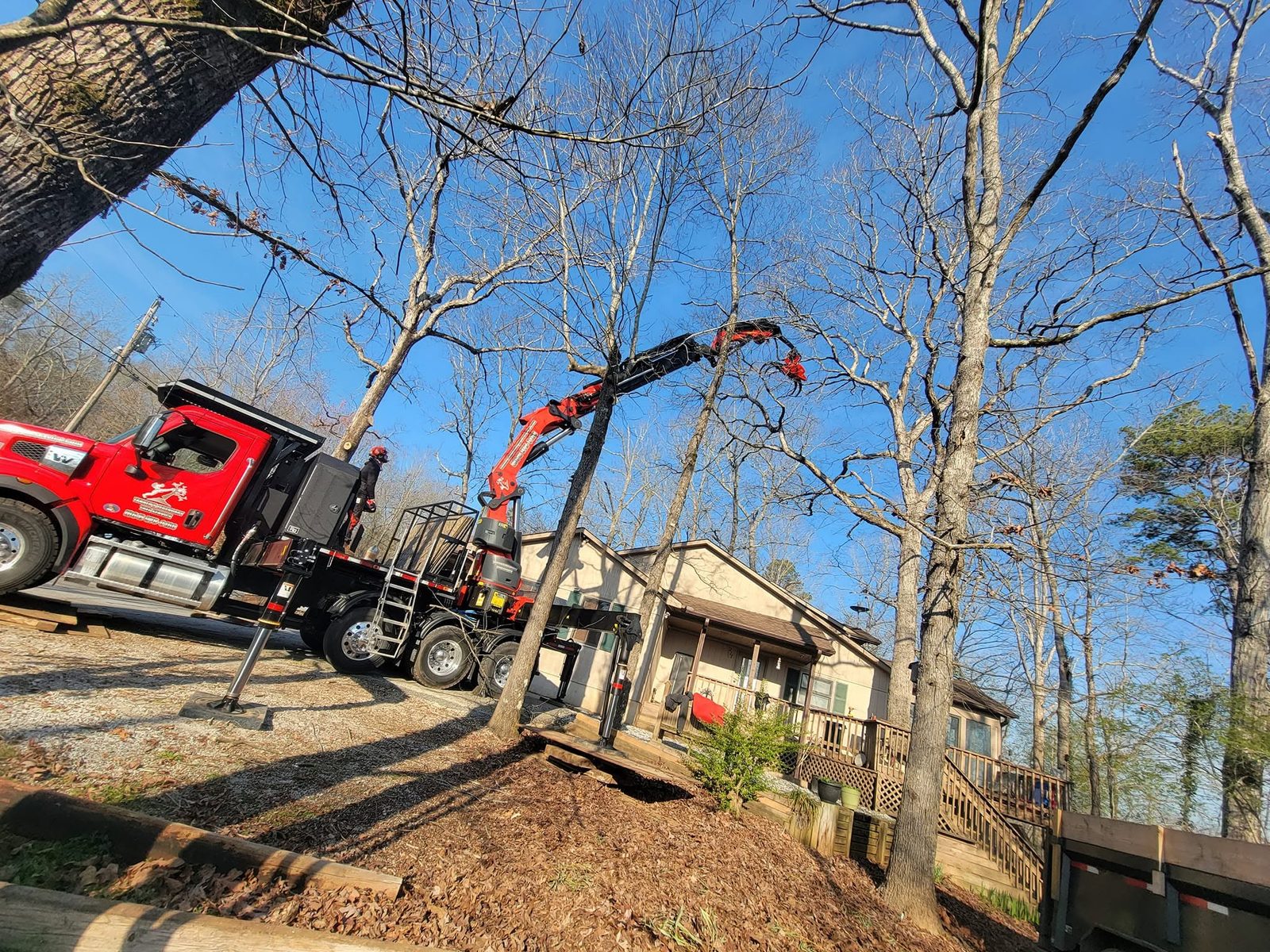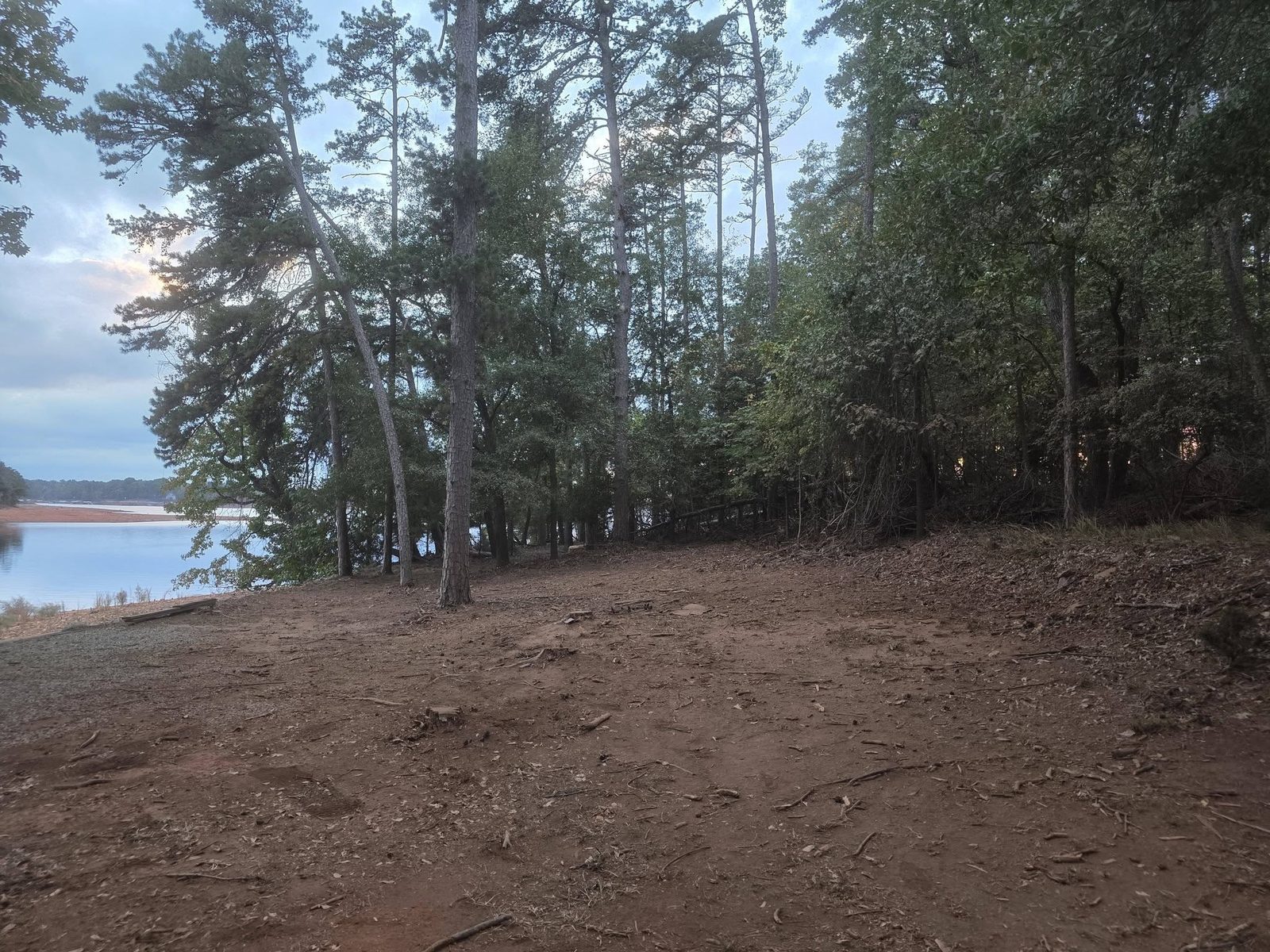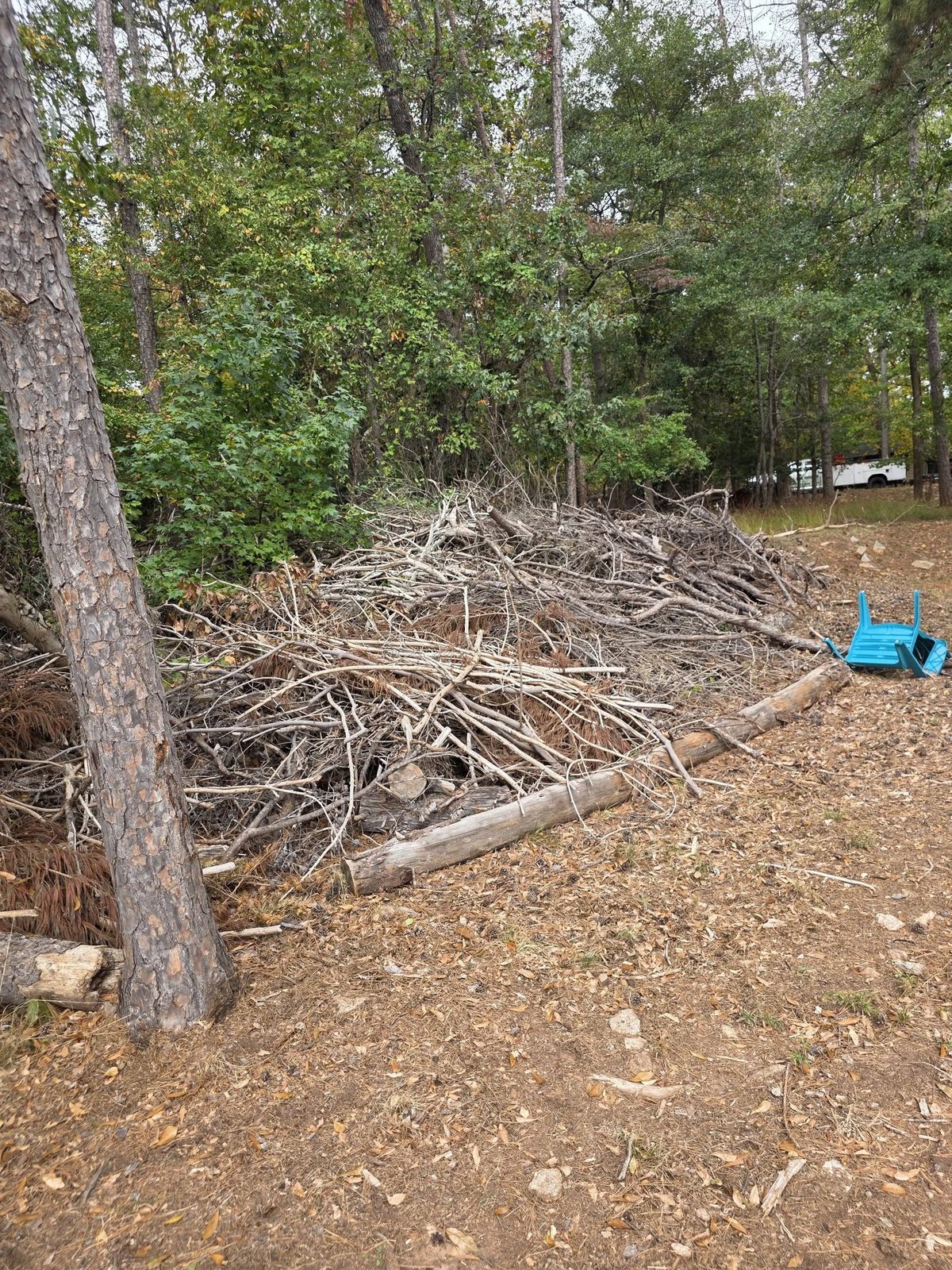
What red clay means for a stump job in Pickens County
Pickens County sits at the lower edge of the Blue Ridge foothills, and most residential lots here — in Easley, Clemson, Liberty, and the rural stretches between — are underlaid by the red piedmont clay that defines Upstate South Carolina. That clay changes what a stump job actually means before anyone starts the grinder.
Clay holds moisture. A fresh-cut pine or oak stump in this ground stays wet far longer than it would in the sandier soils of the Midlands, which means it softens unevenly — firm at the core, punky at the edges — and continues supporting sprouting from the collar for years after the tree comes down. That same clay grips roots. A sweetgum or water oak stump left in the yard is still anchored to a lateral root system that may extend ten to fifteen feet in every direction, and in undried clay those roots remain structurally intact long after the visible wood is gone. Homeowners who wait two or three seasons to deal with a stump often find it has gotten harder to clear, not easier.
Three things that happen when you leave it
Root sprouts are the first and fastest problem. Hardwoods common in Pickens County yards — sweetgum, white oak, tulip poplar, water oak — throw suckers from the root collar and lateral roots within weeks of a cut. Without treatment or grinding, a healthy root system pushes sprouts repeatedly until it exhausts its stored carbohydrate reserves, a process the Clemson Home & Garden Information Center documents for South Carolina homeowners as taking several growing seasons. For any part of the yard where the stump sits in a lawn or managed bed, that means recurring sprout control on a cut you already paid for.
Soft rot is the slower problem. Pine stumps decompose faster than hardwood, but both eventually create a hollow mass that collapses underfoot. For properties with children, pets, or anyone running a mower nearby, that becomes a real hazard once a stump has been in the ground untreated for several years.
The root system itself does not stay put. Lateral roots that remain alive under the clay can interfere with shallow irrigation lines, garden edging, and any new planting you try to establish nearby. If the eventual plan involves landscape installation where the stump used to stand, those roots have to come out regardless of what the stump looks like above grade.
Options and what they cost in Upstate SC
Three realistic options exist: grind it, treat it chemically, or leave it. The right one depends on where the stump sits and what you need the space to eventually do.
Grinding is the most complete solution. A stump grinder works the wood down six to ten inches below grade, eliminates the collar where sprouts originate, and leaves wood chips that break down faster than intact wood. Full detail on how the process works is on the stump grinding page. Cost depends on stump diameter, the spread of surface roots, and how much room equipment has to maneuver.
| Scenario | Stump diameter | Typical range (Upstate SC) |
|---|---|---|
| Small stump, open access | Under 12 in. | $100 – $175 |
| Medium stump with root flare | 12 – 24 in. | $150 – $275 |
| Large stump, multiple grinding passes | Over 24 in. | $250 – $400 |
| Multiple stumps, same visit | Varies | Ask for a combined estimate |
Chemical treatment — applying a concentrated herbicide to the freshly cut surface — costs less up front but requires patience. The stump will not disappear; it will stop active growth and begin to decay faster than untreated wood. This is a reasonable choice for stumps in locations where grinding equipment cannot easily reach. The stump grinding cost page gives the full Upstate SC breakdown by diameter and job type.
What SC requires for chemical stump treatment
If a contractor is applying systemic herbicide to a stump on your property, that work is a licensed activity in South Carolina. The Clemson University Department of Pesticide Regulation administers applicator licensing for the state; any crew applying these products on a client's property should hold a valid license under that program. It is a straightforward question to ask before anyone pours concentrate into a cut stump.
Homeowners applying over-the-counter stump killers on their own property are not subject to the same licensing requirement, but label compliance is not optional. The EPA pesticide worker safety program covers safe handling of commercial concentrates — read the label, wear the recommended protection, and understand that systemic products like triclopyr do not respect property lines underground. Roots from your stump and roots from neighboring trees may share the same clay layer.
For general questions about tree health during stump treatment or the impact on surrounding trees, the SC Forestry Commission is the state authority for forestry and tree care matters in South Carolina.
After the stump: clearing and replanting
Once a stump is ground, the space looks cleared but is not ready to plant. The grinder leaves a pile of wood chips and disturbed soil — typically a depression six to ten inches below the original grade once the chips settle. That material can be used as mulch elsewhere on the property or removed entirely if the goal is to plant or turf over the spot.
Wood chips break down slowly and do not bind well as a subbase, so if you are bringing in topsoil and planting directly over a fresh grind, excavating the chip pile first gives faster, more reliable results. For Pickens County properties where stump removal is part of a larger yard project — a new planting bed, a lawn renovation, or a hardscape addition — sequencing matters. The landscape installation page covers what that transition looks like for Upstate SC properties, from a fresh grind to a finished planting area.