When the lot slopes toward the house
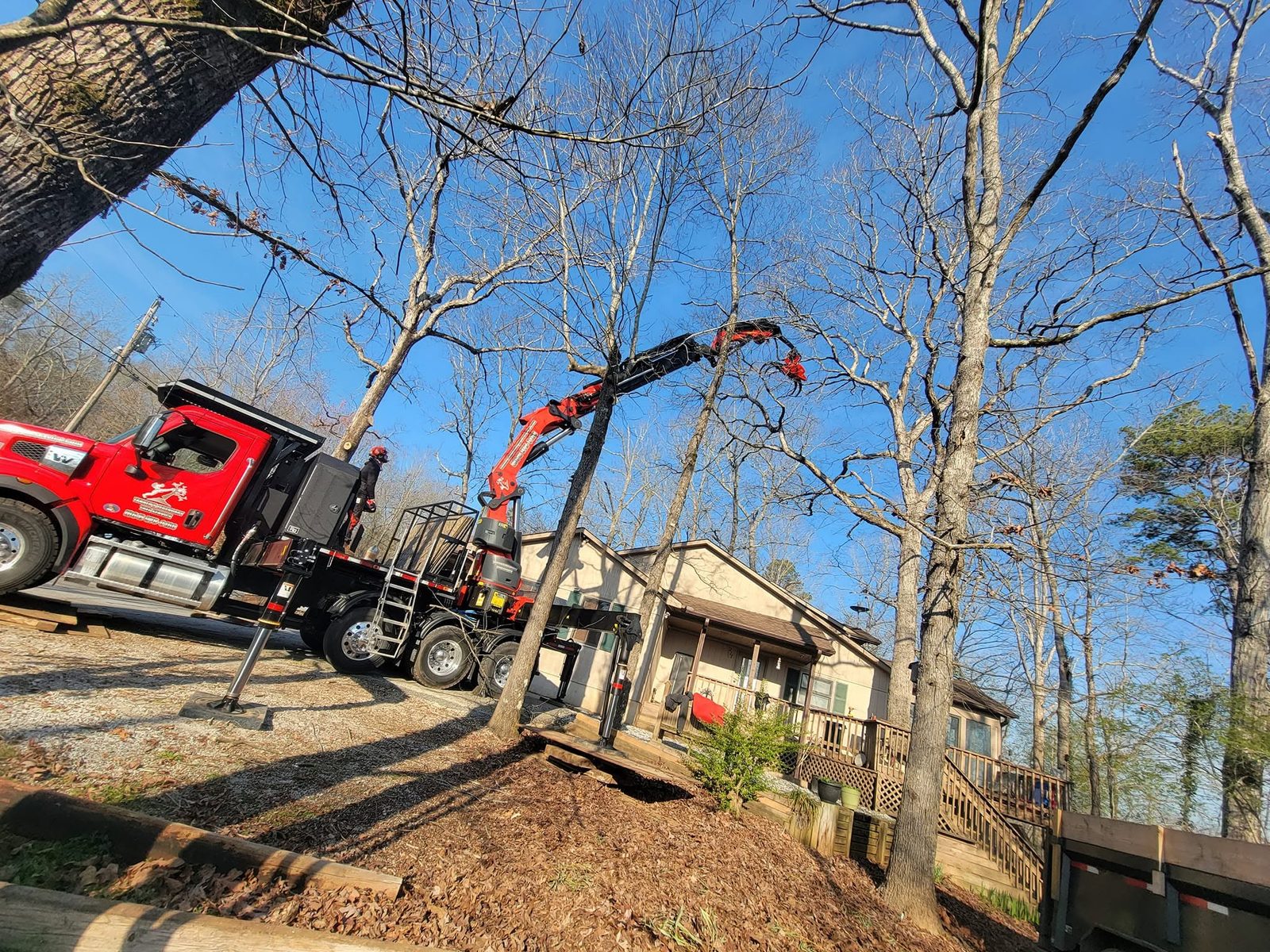
Pickens County runs uphill fast. The terrain shifts from rolling piedmont around Easley and Liberty to steep ridge lots above Lake Keowee and the wooded hollows leading into the Jocassee Gorges, all within the same county line. That geography sorts tree work here into two categories: open-lot jobs where a tree can be felled in one controlled piece, and slope-and-structure jobs where it has to come down section by section.
When a large white oak or tulip poplar is growing on a hillside above a house, dropping it in one piece is not an option — it lands on the structure. A climber works up the tree, makes sectional cuts, and lowers each piece on a lowering device to a ground crew that moves it clear. That work takes more time and more skill than a flat-lot fell. Expect it on most wooded lots in the western half of the county and on a surprising share of in-town lots in Pickens and Easley where mature hardwoods predate the houses that grew up around them.
The full range of tree removal services covers both approaches — felling and sectional rigging — and what site conditions determine which method applies.
Reading the trees on a Pickens County property
The hardwood canopy across Pickens County runs to white oak, tulip poplar, hickory, and red maple, with loblolly and Virginia pine on drier ridge sites. These are long-lived species. White oaks here can reach trunk diameters of 24 to 36 inches before most homeowners realize they have outgrown the lot. At that size, included bark at a major branch union — bark trapped between two co-dominant stems rather than the wood fusing cleanly — becomes a structural fault invisible from the ground, one that shows up only when a limb drops in a storm.
The signs worth acting on: a trunk lean that has increased since last season, any wound at the base where bark has pulled away from wood, crown dieback on one side of an otherwise healthy tree, exposed roots beginning to heave soil around the base, and in pines, small pitch tubes dotting the bark surface with yellowing needles — a sign of pine bark beetle that can move through a stand in a single season. Clemson Cooperative Extension's tree care resources cover identification of these failure indicators in detail for South Carolina species.
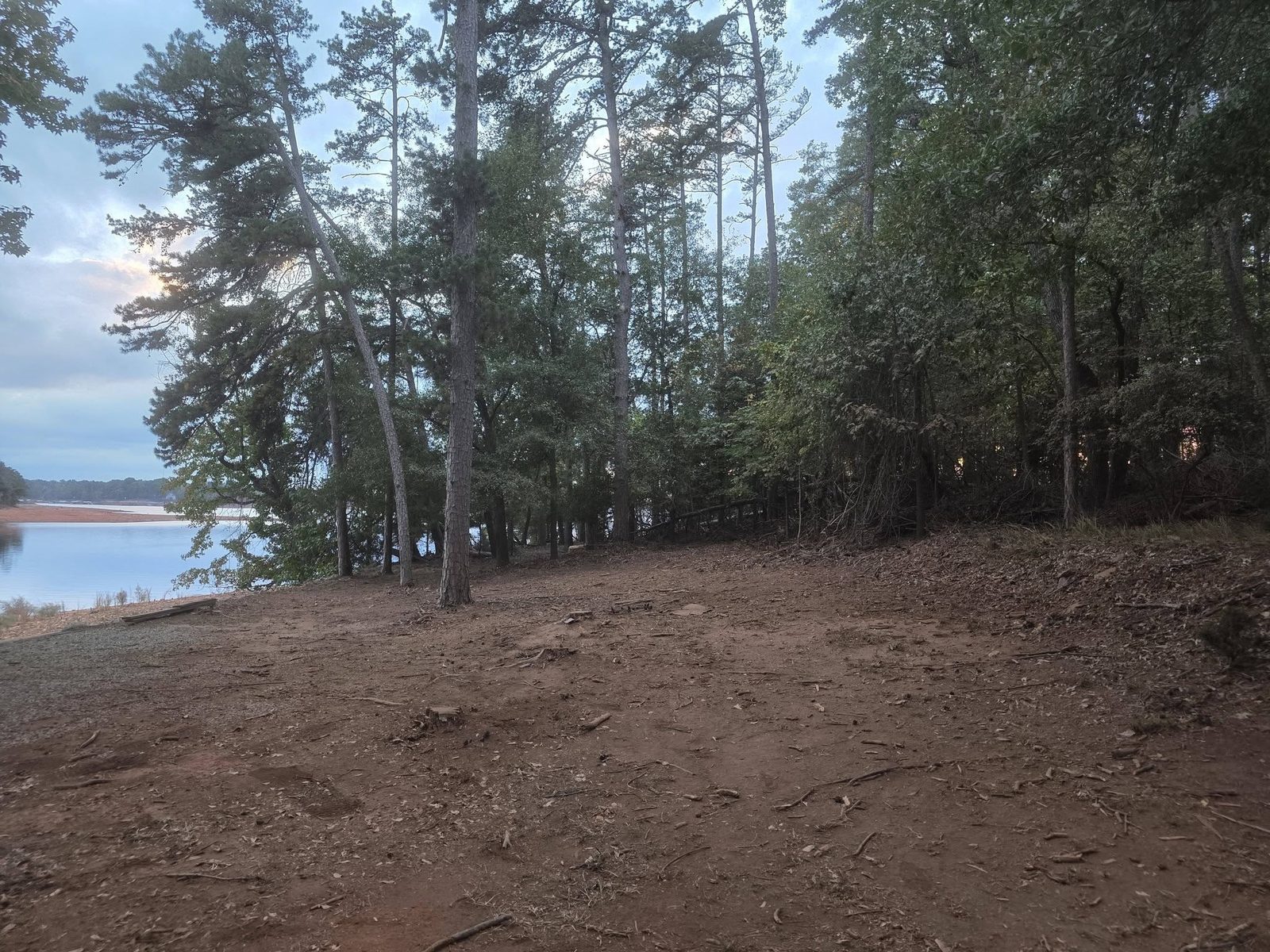
Properties along the northeastern arm of Lake Keowee in Pickens County add a site-specific complication: trees growing on a slope toward the water, or overhanging a dock, cannot be dropped without hitting the structure below. Rigging from above is the method, and that changes the scope of the quote.
What tree removal costs in Pickens County
The full cost breakdown has line-item ranges across scope and site conditions. The table below gives orientation for most jobs in this county.
| Scope | Typical Range |
|---|---|
| Small tree under 30 ft, accessible lot | $300–$600 |
| Medium tree 30–60 ft, accessible lot | $600–$1,200 |
| Large tree 60+ ft, accessible lot | $1,200–$2,000 |
| Any size, steep slope or structure-adjacent | $700–$2,000 |
| Hazardous tree over or near a structure | $1,500–$3,000+ |
| Stump grinding (after removal) | Quoted separately — see stump grinding |
Terrain is the main variable beyond size. A large tulip poplar on an open lawn lands at the low end of its range; the same tree on a ridge lot or directly above a deck lands at the high end or into the hazardous tier. A quote for a slope lot that makes no mention of rigging is not a complete bid.
Storm seasons and the trees they leave behind
Pickens County's storm record drives a substantial share of tree calls each year. FEMA has recorded 23 declared disasters touching this county over the span of 2005-2026, and the storm-and-wind category accounts for the majority. The NOAA National Weather Service for Upstate South Carolina tracks two distinct damage seasons: summer convective storms that produce straight-line winds capable of uprooting mature trees, and winter ice events that load pine crowns and split the included-bark unions in hardwoods that might otherwise hold for years more.
When a storm has come through and you are looking at a tree resting against your roof or partially uprooted near a foundation, waiting is not the right call. Movement in a compromised root system accelerates after the initial failure, and a tree with a trunk leaning on a structure is a liability question for your insurer as much as it is a safety one. Flag your situation as urgent when you contact Tree Wisemen.
Credentials to ask about before the saw starts
South Carolina does not issue a single tree-service license, but the credentials that matter on a Pickens County job are still checkable. Work above a certain dollar threshold falls under the SC LLR Contractor Licensing Board — ask any company bidding a substantial job whether they hold the appropriate registration. The SC Forestry Commission is the state agency with jurisdiction over forest practices in South Carolina and is a resource for understanding what professional standards apply statewide.
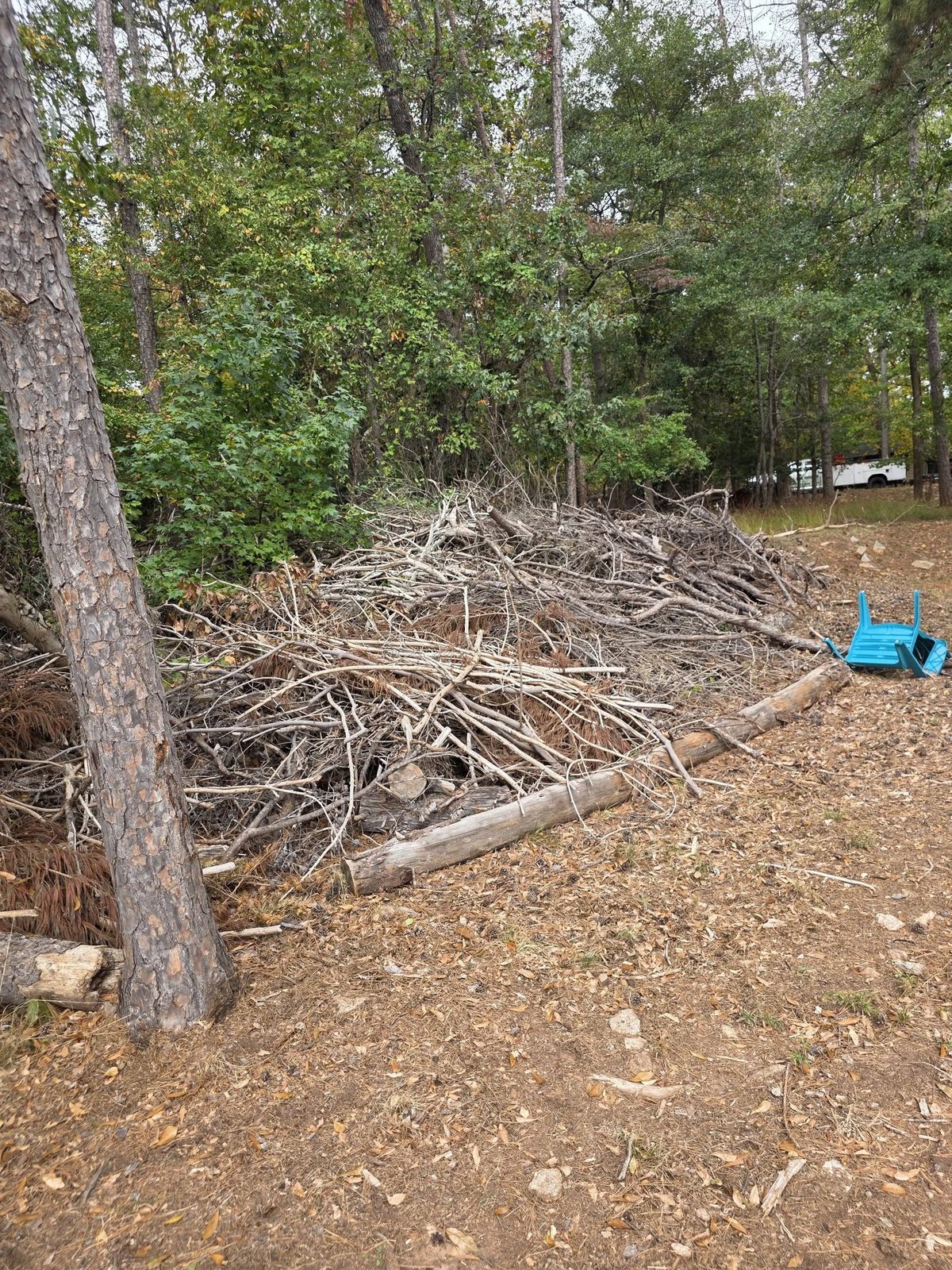
Beyond those checks, ask three questions before work starts: Does the crew carry both general liability and workers' compensation insurance, and will they provide certificates before work begins? Have they completed rigging jobs on steep-slope sites similar to your property? And how do they handle debris — chip on-site, haul it, or leave the rounds for you? Those answers separate serious crews from the operators who appear after every major storm with a chain saw and no plan. For stump grinding after removal, ask the same insurance question separately — many companies subcontract that work, and the sub's coverage is what protects your property during the grind.