What Upstate clay does to a stump job
Pickens County's red-clay Piedmont soil grips root systems in a way that coastal South Carolina's sandy soils never do. When a mature white oak or sweetgum comes down in an Easley neighborhood, the stump is not just sitting on loose ground — it is anchored by lateral roots that decades of compacted clay have woven around. That changes two things about grinding: the grinder wheel works harder per inch of diameter, and cutting to a true below-grade depth often takes more passes than a sandy-soil estimate would assume.
Species mix matters here too. Coastal SC crews remove mostly loblolly pine stumps, which are softer and faster. Up here, the residential canopy is dominated by hardwoods: oaks of several varieties, sweetgum with its notoriously wide root flare, and tulip poplar. Hardwood stumps require more grinding passes per diameter inch, and sweetgum root systems radiate wider than their canopy suggests.
Easley's older in-town neighborhoods carry established oaks and sweetgums that have been growing for decades, with root systems that have colonized the full soil profile. Newer subdivisions in the county's growth corridors often have younger, smaller trees, but graders there frequently stripped topsoil during construction and backfilled with subsoil, so even a twelve-inch stump can sit in recently disturbed clay that behaves unpredictably under the grinder. Neither situation is a reason to avoid grinding — both are reasons a phone quote without an on-site diameter measurement is worth very little. If you are deciding whether the stump even needs to come out, the stump-in-the-yard guide covers what staying put actually costs over time.
What stump grinding involves, start to finish
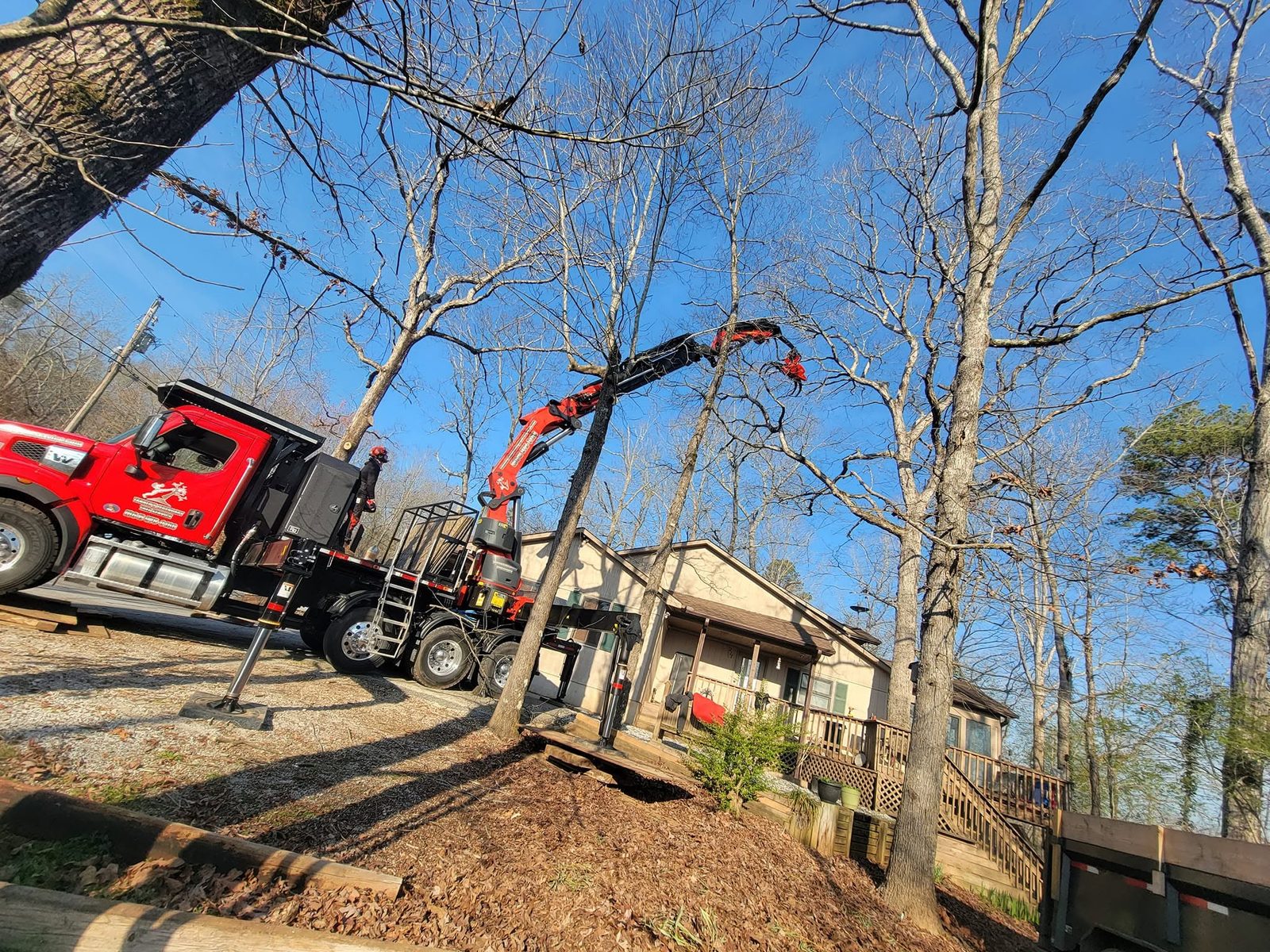
A typical residential grinding job can run on the same visit as tree removal or as a separate appointment — the tree removal page covers how those two scopes are usually sequenced. Here is what happens on-site:
- Equipment check and access. The first question is whether the grinder fits through the gate. Track-mounted machines navigate slopes and narrow side yards; wheel-mounted ones are faster on flat, open lots. The crew assesses this before anything else.
- Diameter and root-flare measurement. The crew measures the collar — not just the visible trunk but the root flare, which on sweetgum and oak often widens below the soil line. That measurement sets working depth.
- Grinding pass by pass. The wheel sweeps horizontally, reducing the stump to chips a few inches at a time. Standard residential depth is 6–12 inches below grade — enough to mow over and re-establish turf without scalping mower blades.
- Chip management. Grinding produces a mix of wood chips and soil. Customers can keep the pile as natural mulch, or the crew can remove it for an additional charge quoted up front.
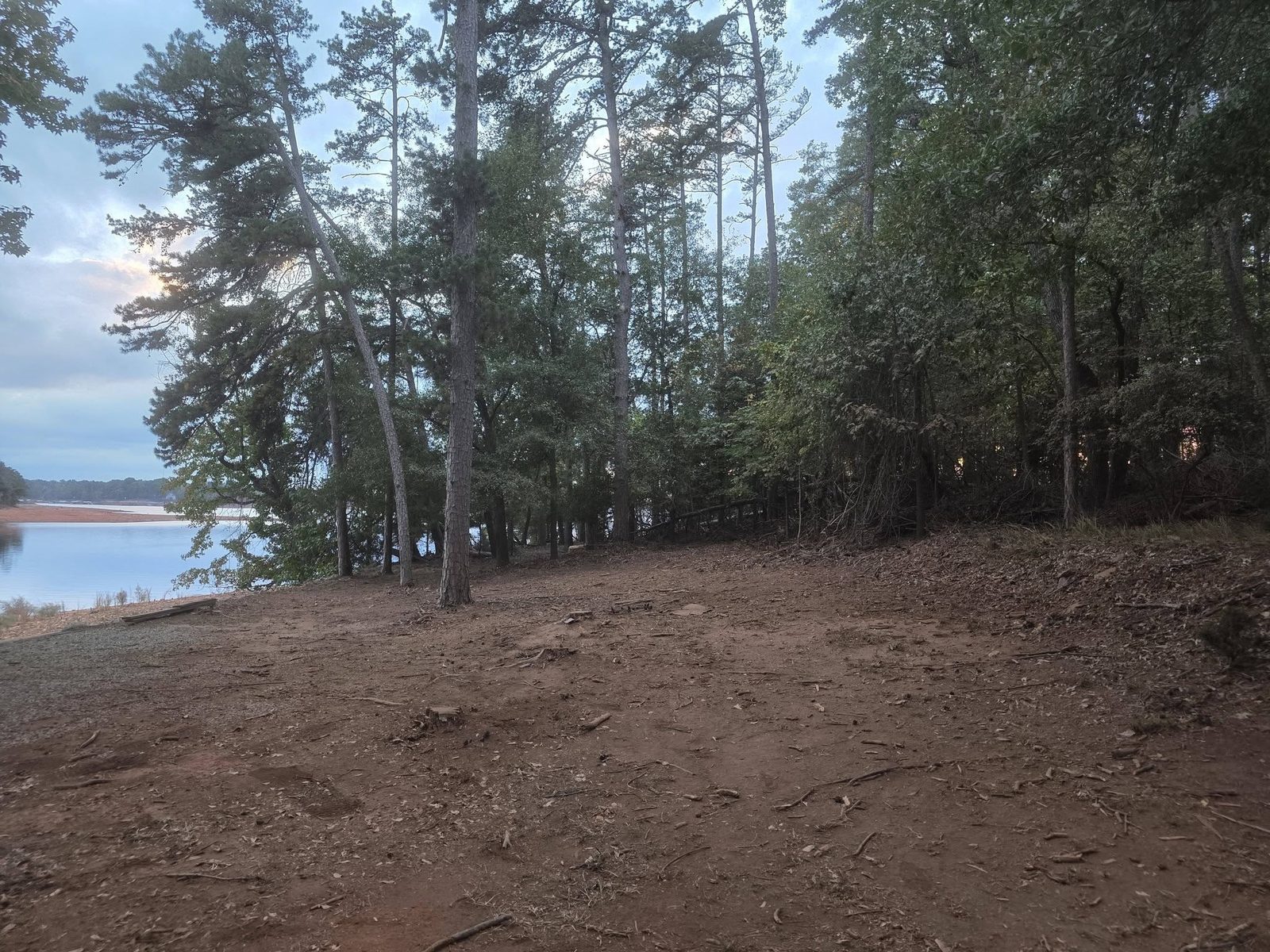
- Settling note. The depression left behind settles over several months as chips decompose. Topdressing with topsoil and seeding closes it cleanly.
What grinding is not: a full root extraction. Lateral roots stay in the ground and decay in place — for most hardwoods in this climate, one to several years. If you plan to replant a tree or shrub in the same spot, the Clemson Home & Garden Information Center has species-specific guidance on how long to wait before the decaying root mass stops competing with new plantings. For installing a fence post or foundation element nearby, ask about root-trench options at estimate time.
What stump grinding costs in Pickens County
Typical ranges for Upstate SC stump grinding, by diameter and site conditions:
| Stump size (diameter at collar) | Typical range | Notes |
|---|---|---|
| Small — under 12 inches | $100–$150 | Faster on younger trees; still slower if oak at this size |
| Medium — 12 to 24 inches | $150–$250 | Most residential hardwoods; sweetgum root flare adds time |
| Large — over 24 inches | $250–$400 | Mature canopy trees; root flare width often exceeds visible trunk diameter |
| Multiple stumps, single visit | Per stump, quoted individually | Mobilization is shared; each stump still priced on its own diameter and access |
Access and slope push jobs toward the top of their range. A stump at the back of a narrow lot that only a track-mounted machine can reach costs more than the same stump beside a driveway. Stumps from storm-toppled trees sometimes present with partially lifted root balls and unstable soil around the base — in a county that has seen 23 federal disaster declarations over 2005-2026, many tied to severe storms, that is not a rare situation. For a full breakdown of what drives each line item, the stump grinding cost page covers every variable with Upstate-specific detail.
What to ask before you book a grinder
"How deep will you grind, and what does that leave?" Standard depth — 6 to 12 inches below the collar — handles lawn re-establishment. If you are replanting in the same spot within a season, you need extra depth and you should say so before the estimate is finalized, not after the job is done.
"What happens to the remaining roots?" They stay in the ground and decay naturally. The SC Forestry Commission tracks invasive bark beetle and fungal pathogens across the state — if the removed tree showed signs of disease, ask whether the stump should be treated before grinding to avoid spreading the problem to nearby healthy trees.
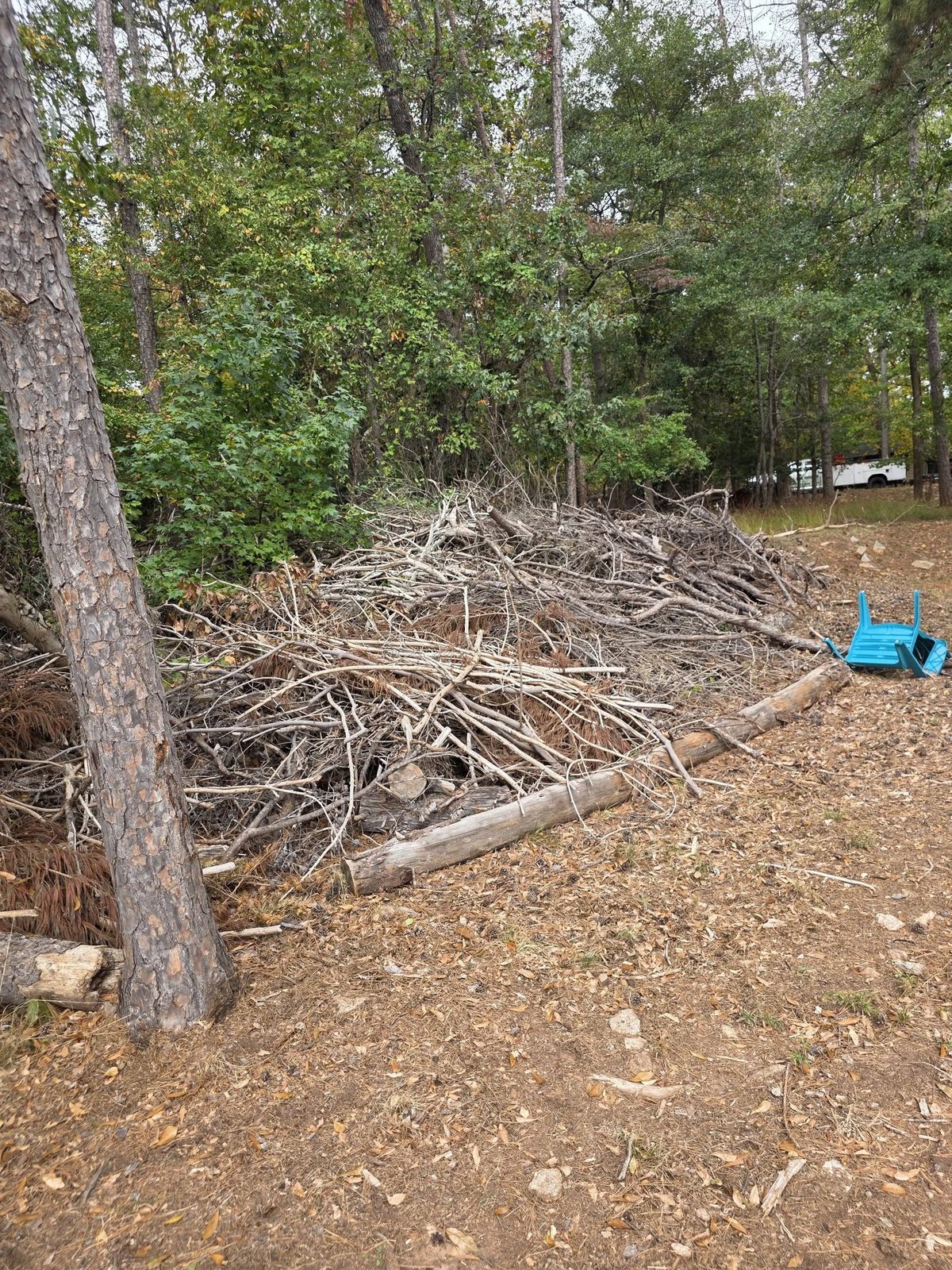
"What is included in chip disposal?" Some bids include haul-off; others price it separately. Confirm in writing, because a chip pile sitting through an Upstate summer will start growing things within weeks.
"Is the crew covered, and does that extend to my property?" Grinding near a foundation, irrigation line, or underground utility carries real risk. Ask for proof of coverage — not just a verbal confirmation — before work begins.
After the grind: settling the site and what to watch for
The chip-and-soil mix left in the depression will settle visibly over the first several weeks as it begins to break down. Topdressing with clean topsoil and re-seeding is the standard close-out step; without it, the spot stays sunken and prone to weeds through the growing season. Most homeowners handle this themselves or fold it into a scheduled lawn care visit rather than bringing the grinding crew back.
Sweetgum deserves a specific note. That species pushes sprouts from lateral roots for a season or two after the stump is removed — the root system still holds stored energy. If you see small shoots emerging in a rough circle around where the tree stood, that is exactly what is happening. Light cultivation or a targeted application handles it; the Clemson Home & Garden Information Center has guidance on managing regrowth from common Upstate species without damaging nearby plantings.
If you are thinking ahead to replanting the same spot, the timing gap matters. Even at standard grinding depth, the decomposing chip mix competes with new root systems during the first growing season. Wait until the depression has fully settled and you have added fresh topsoil before putting in anything you care about keeping.