What the Upstate foothills do to a clearing job
Pickens County sits where the South Carolina Piedmont starts climbing toward the Blue Ridge. That transition zone produces lots that are rolling, heavily wooded, and underlain by red clay that holds water long after a storm. When Greenville-area growth pushes west into Easley and surrounding communities, it typically lands on forested tracts carrying a mix of loblolly pine that filled in after old pasture abandonment, hardwoods like sweetgum, tulip poplar, and water oak, and a dense understory of privet and muscadine vine.
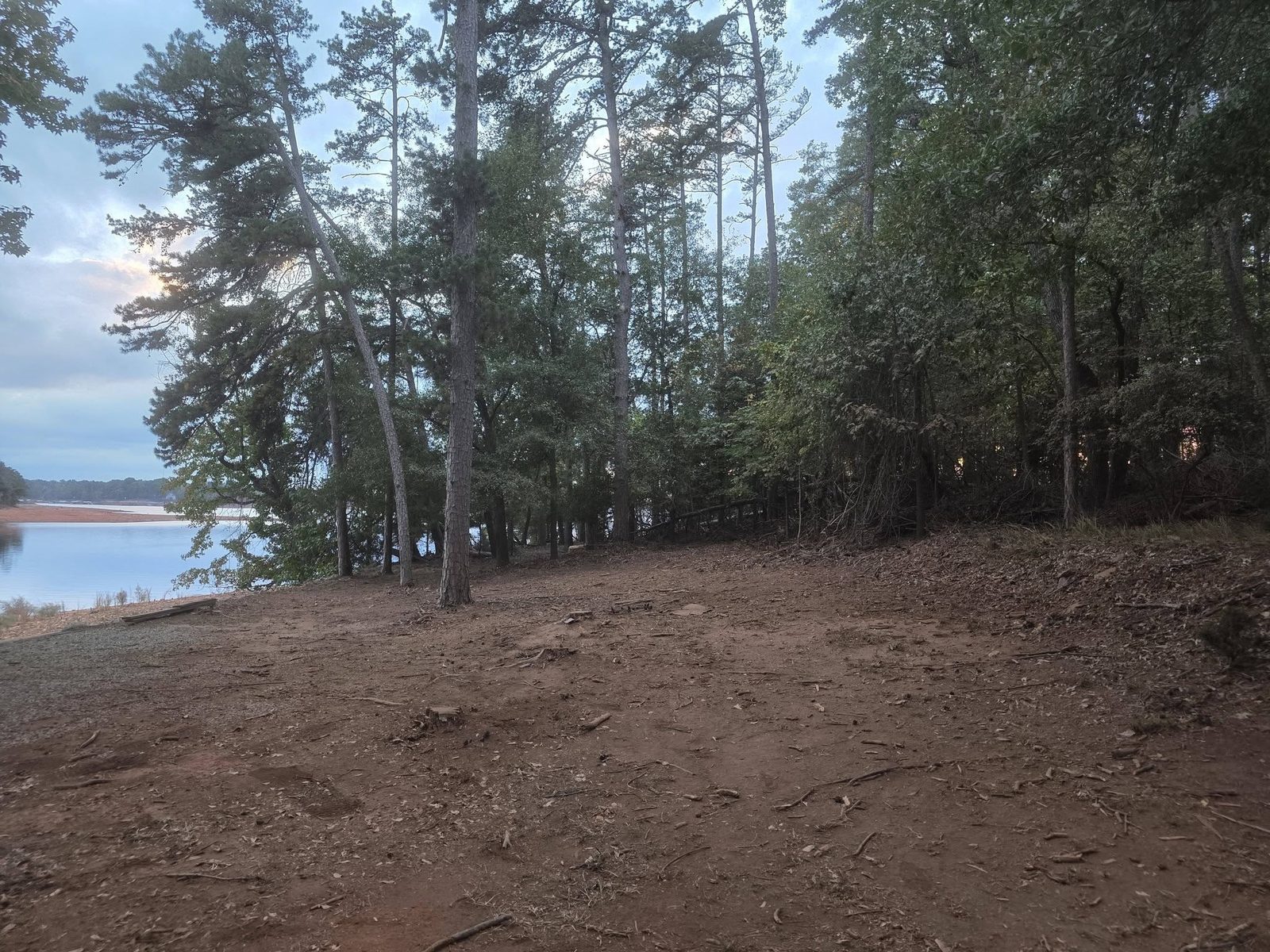
That combination is why forestry mulching has largely replaced the cut-and-haul approach on Upstate SC lots. A mulcher processes everything in place, leaves soil structure intact, and avoids the topsoil loss that a bulldozer almost guarantees on a sloped clay bank. Clearing the same lot with a dozer and hauling debris adds cost and leaves bare ground that actively invites erosion on any terrain with grade. See what an overgrown lot evaluation covers before scheduling a clearing estimate — the understory condition affects both the method and the final price.
What a mulcher crew does on a wooded Pickens County lot
A typical clearing project in the Upstate runs in the following order:
- Site walk and method selection. Slope, soil moisture, any protected trees, setbacks, and your intended end use — lawn, building pad, or pasture — determine whether the job calls for a straight mulch, a selective cut-and-chip, or a combination. Stump disposition is settled here too: a forestry drum head handles brush and small-diameter wood in one pass, but large stumps usually require a separate grinding step.
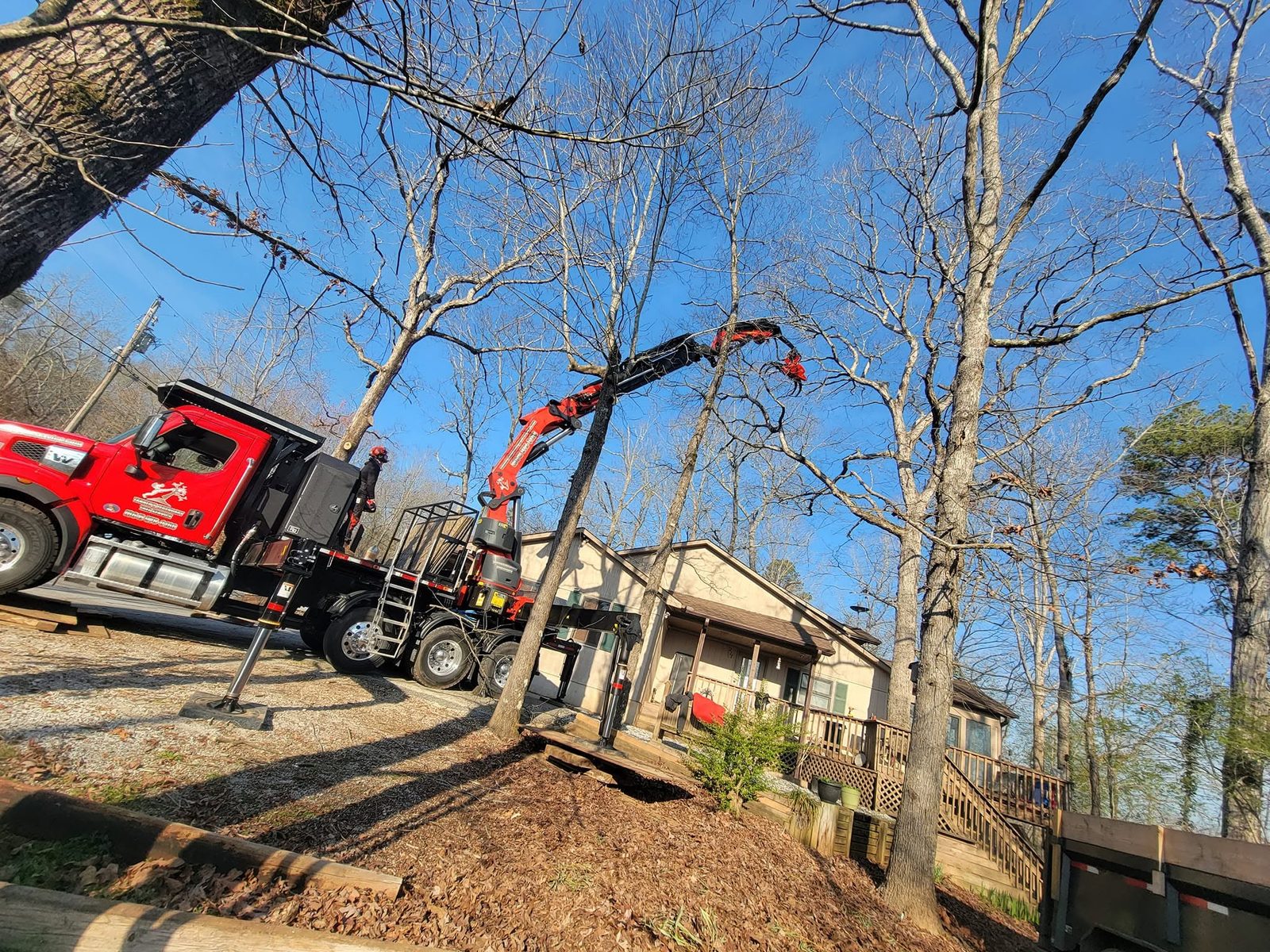
- Canopy removal. Larger trees are felled and either fed through the mulcher, cut to length for removal, or bucked for firewood if the timber has value. Salvageable hardwood is not common on most residential Pickens County lots, but older stands sometimes produce it.
- Forestry mulching pass. A tracked mulcher — not a tow-behind chipper, but a forestry drum head on a tracked carrier — grinds stumps, brush, and slash into a layer that covers and stabilizes the soil. On red clay in a county that sees real rainfall, that mulch layer matters: it slows runoff and suppresses regrowth without leaving bare ground exposed to the next storm.
- Grading and drainage check. Grade left lower than the surrounding drainage turns a cleared lot into a wet lot. Good clearing leaves positive drainage away from any planned structure, and that check happens before equipment leaves the site.
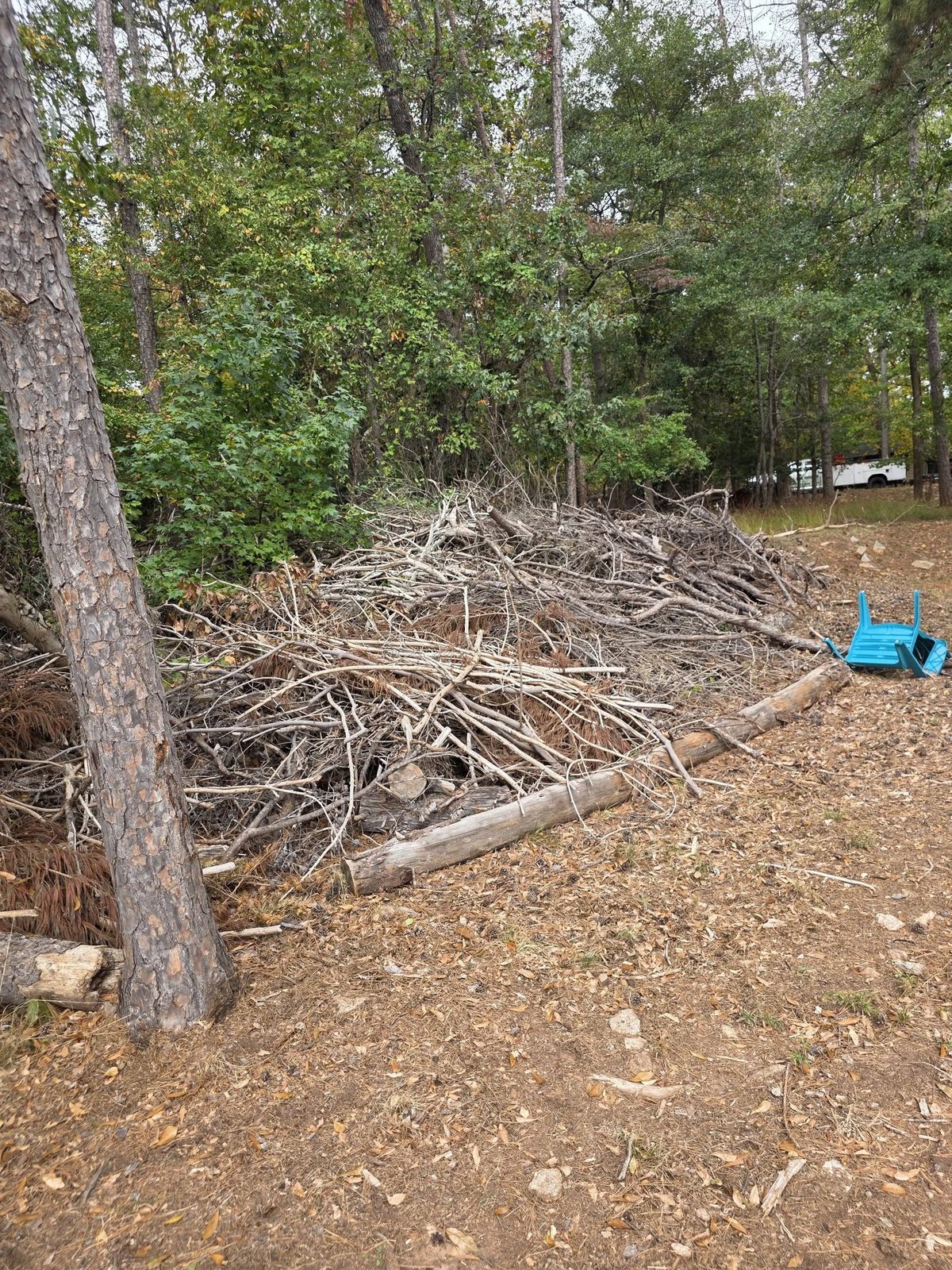
- Debris disposition. Material that cannot be processed on-site gets hauled. What debris hauling adds to a clearing quote explains how that pricing works and when it applies.
What clearing costs in Pickens County, and what changes the number
The table below shows typical Upstate SC price ranges by clearing scope. These are regional market ranges, not Tree Wisemen quotes — their full cost breakdown covers each variable in more detail. Every job gets a free on-site estimate.
| Scope | Typical range per acre | Primary cost drivers |
|---|---|---|
| Lightly wooded lot, scattered pines, thin understory | $1,500–$2,200 | Low stem count, good machine access |
| Mixed canopy with heavy understory and privet | $2,200–$3,500 | Canopy density, soil moisture, mulcher time |
| Dense hardwood stand with large stumps | $3,500–$5,000 | Stump grinding, slow machine travel |
| Steep or wet terrain (modifier) | Toward top of range | Access risk, required erosion controls |
In land clearing, density and access move the number the way depth does in foundation work. A half-acre lot choked with ten-year regrowth can price higher per acre than a two-acre open pine stand, because the mulcher travels slower and grinds harder. Pickens County's 23 federal disaster declarations across 2005-2026 reflect a region that sees serious weather: a lot that sat saturated through a wet winter is slower and harder to clear than the same lot in late summer, and timing the project to drier ground is worth considering when your schedule allows it.
What SC rules require before debris burns and contractor work begins
Land clearing generates debris, and what you do with it carries regulatory weight before the first tree comes down.
Open burning. South Carolina prohibits open burning within 300 feet of occupied structures without a permit from the SC Forestry Commission. Easley and unincorporated Pickens County follow the state standard, but municipalities may impose additional restrictions. The Commission publishes active burn bans by county — an Upstate SC wind event or drought can trigger one on short notice, which is one practical reason forestry mulching has replaced debris burns on most residential lots in this area. Confirm current conditions before any planned burn.
Contractor credentials. The SC LLR Contractor Licensing Board sets the thresholds at which land clearing work requires a licensed contractor. Confirm that any crew working on your property carries current state credentials before work begins — not after the first tree is down.
Stormwater and erosion. Projects disturbing more than one acre in South Carolina typically require a land disturbance permit and a stormwater pollution prevention plan, administered through your county planning department. Clearing that falls short of one acre still benefits from silt fence installation on downslope edges, particularly on the red clay terrain common throughout the Upstate foothills.
Clay soils, wet seasons, and what timing does to a clearing project
Pickens County's clay-heavy soils hold moisture well into spring, and the foothills receive enough annual rainfall to keep those soils wet for extended stretches. Scheduling a clearing job after a prolonged wet period means slower machine travel, compaction risk, and in some cases ruts that need remediation before the next phase of work can begin. If the end goal is a building pad or lawn, the soil condition you hand the next crew matters. The Clemson Cooperative Extension's Home and Garden Information Center publishes guidance on soil preparation and erosion control after land disturbance — worth reading when you are thinking through what happens after the mulcher leaves.
One common mistake on Upstate SC lots: clearing the entire parcel when selective clearing would have done the job. Mature hardwoods on the downslope edge of a lot serve as natural erosion buffers. Removing them to gain a few extra feet of usable area typically creates a drainage problem that costs more to fix than the trees were worth to clear. That tradeoff gets discussed on the site walk, before anything gets mulched.