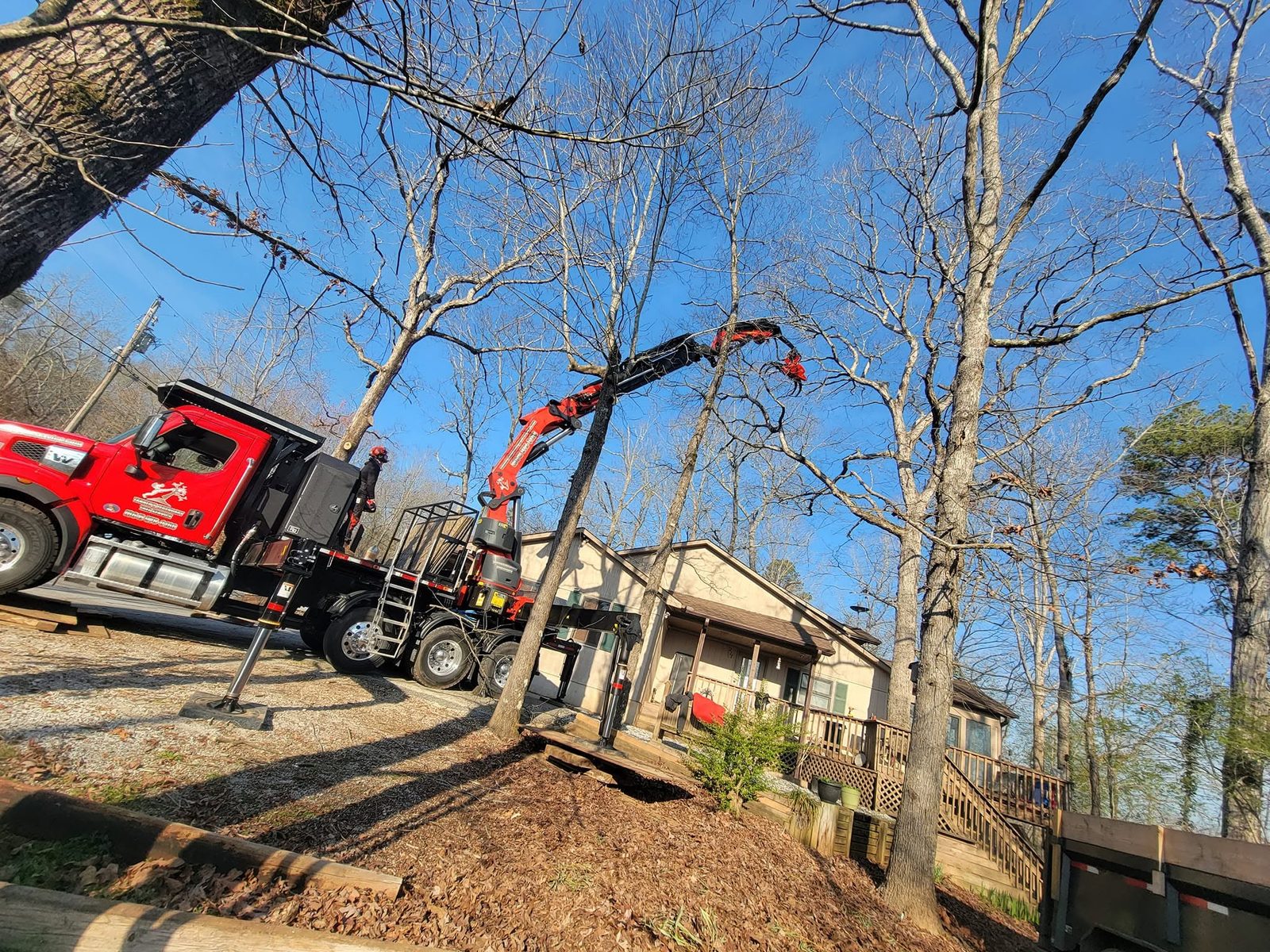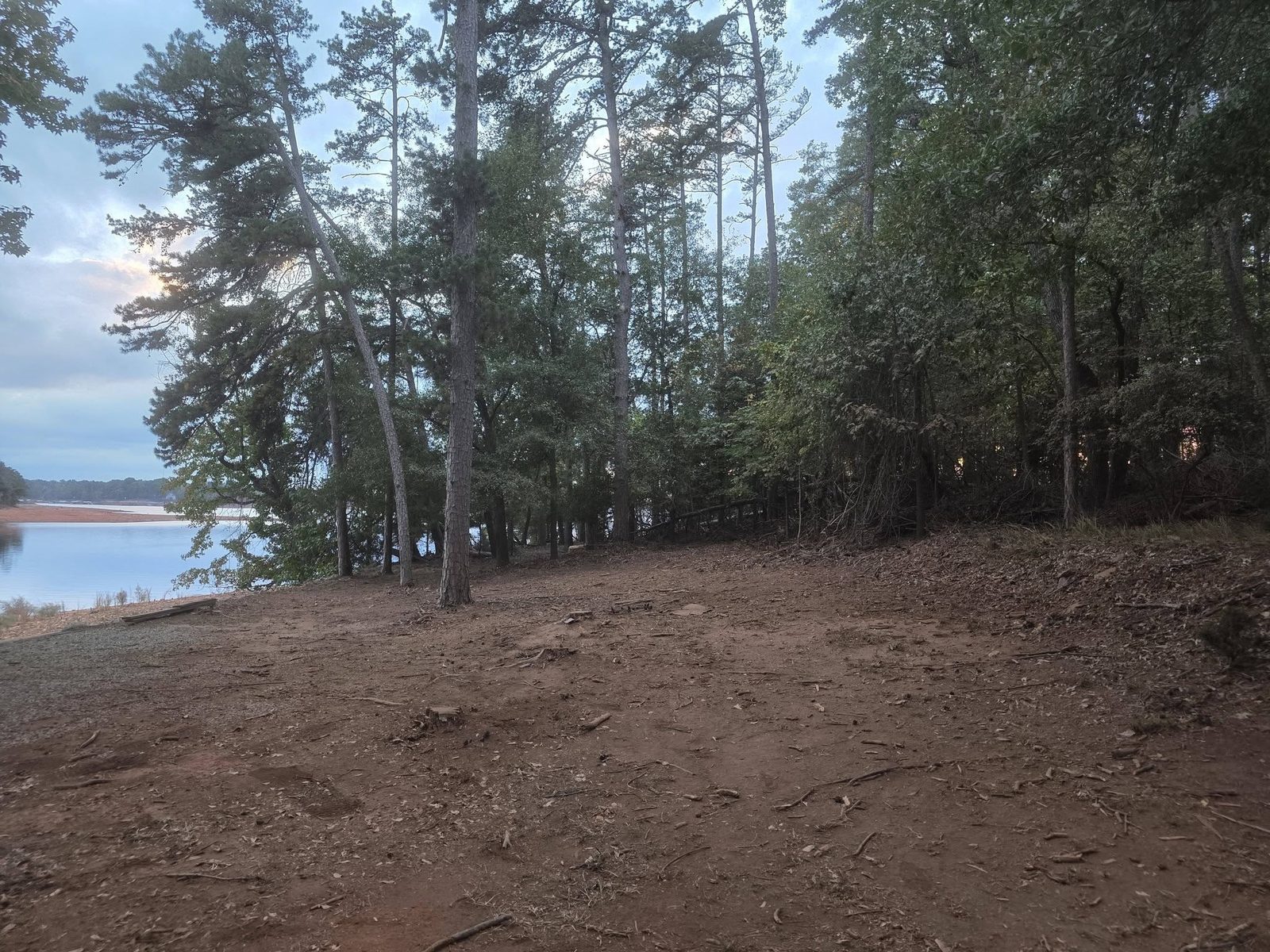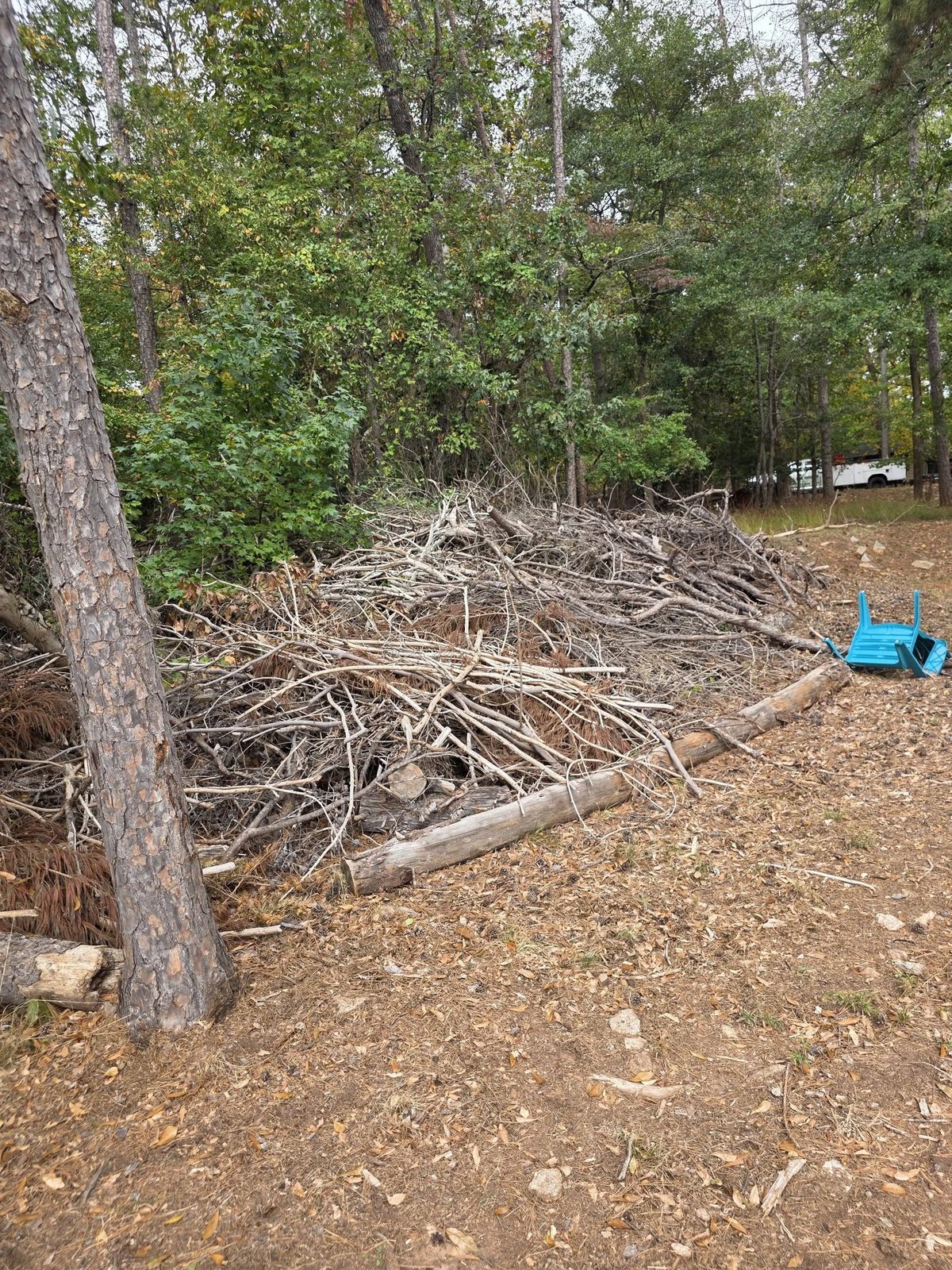
Hardwood country at the foot of the ridge
Travelers Rest sits at the precise point where South Carolina's red-clay Piedmont meets the Blue Ridge escarpment — a geography that determines what trees grow here and, eventually, what you have to grind out. The dominant canopy is upland hardwoods: white oak, red oak, hickory, and tulip poplar, with sweetgum filling in the wetter creek drainages below the ridge. These are not the pine stumps that come out in a half-hour down on the coastal plain. A mature white oak at 28 inches across, with roots threading through rocky Upstate red clay, is a full-morning job that demands a commercial grinder and multiple passes at the root plate.
The soil mix shapes the work too. Foothills red clay runs dense and hard in dry conditions and saturates quickly in heavy rain; roots adapt by spreading wide and shallow before going deep. Lateral surface roots are common on older trees and often require a separate grinding pass beyond the main stump. Travelers Rest has also grown faster in recent years than its older in-town lots suggest — new construction on ridge-line and hillside parcels has added a second stump profile: recently cleared builder lots where native hardwoods were cut to grade but not ground, leaving fresh stumps with roots that have not yet fully set in disturbed fill soil. When describing a job over the phone, mention any roots that are already visible at grade or lifting pavement — it gives the crew a truer picture of full scope before they arrive.
The Travelers Rest price picture
Stump grinding around Travelers Rest and the broader Greenville County area runs $100 to $400 per stump. See the full stump grinding cost breakdown for every line item; the table below maps the jobs that come up most often in this market.
| Job scope | Typical range |
|---|---|
| Small stump — under 12" diameter | $100 – $175 |
| Medium stump — 12" to 24" diameter | $150 – $275 |
| Large hardwood stump — over 24" diameter | $250 – $400 |
| Multiple stumps, single visit (3 or more) | Lower per-stump rate; request a combined estimate |
Three local factors push a job toward the top of that band: species (hickory and white oak grind slower and harder than softer hardwoods), stump diameter above 24 inches, and site access — a stump wedged against a fence line or in a narrow side yard costs more to maneuver around than one open in the middle of a lawn. Any bid that quotes a large hardwood job without an on-site look should be treated as a placeholder, not a price.
What stays in the ground and what to do with the debris
Grinding converts a stump and the top several inches of root structure into a mound of coarse chips and a below-grade void. The remaining root system stays in the soil and decays naturally — a process that runs several years for dense hardwood species. For most residential lots in Travelers Rest, that is the right outcome: the stump is gone from view, the chips are reusable, and the below-grade roots cause no structural problem as they break down.
The stump in the yard guide walks through the recovery process in detail, including how deep the grind needs to go for different end uses — lawn seeding, garden bed, and hardscape each need a different depth. One note worth flagging for Upstate hardwoods: the Clemson Home & Garden Information Center recommends aging or composting fresh hardwood chips before applying them around live plantings. Raw chips from dense species like oak and hickory can temporarily compete with new plants for soil nitrogen during decomposition. If you plan to replant in the same spot, ask the crew to grind a few inches deeper than standard, then backfill with topsoil to give new roots a clean start.
Storm trees and what they leave behind
Greenville County sits in a weather corridor where Gulf moisture systems track northeast through the Piedmont and compress against the ridge above Travelers Rest. The county has logged 23 federal disaster declarations over 2003-2026, with the record weighted toward severe thunderstorm and tropical remnant events — the kind that drops mature hardwood tops or uproots shallow-anchored trees entirely. Storm events reliably expand the local stump queue: a tree cut down cleanly after a storm leaves a standard stump; a tree that uproots and snaps leaves a partly exposed root mass that is both harder to position a grinder over and more time-intensive to clear.
If your stump came from a storm-damaged tree, mention it when you call. Soil and debris packed into an uproot mass can slow a grinder and change the estimate from a quick job to a half-day one. It also helps to know whether the tree was severed above the root flare or whether the full flare is intact — flare diameter often determines what machine size the crew needs to bring to the site.
Hiring a grinding crew in Greenville County
Stump grinding in South Carolina typically falls under tree service or landscaping contractor work rather than a standalone specialty license. The SC LLR Contractor Licensing Board is the authority for verifying any license a company claims; it is worth a quick check before work begins, particularly if the job also involves cutting, pruning, or removal alongside the grinding. The SC Forestry Commission sets professional standards for tree care practices in the state and is a useful reference for what a thorough stump job — proper grind depth, root-flare treatment, site cleanup — should look like.
Practically: ask for proof of general liability insurance and worker's compensation before any equipment enters your property. Then ask specifically whether the crew has worked on hardwood stumps in your size class — a company whose typical jobs are ornamental removal in a Greenville subdivision will approach a large white oak differently than a crew that regularly works rural foothills lots and utility corridors. The complete stump grinding guide covers exactly what a thorough job includes and which questions separate careful crews from fast ones.