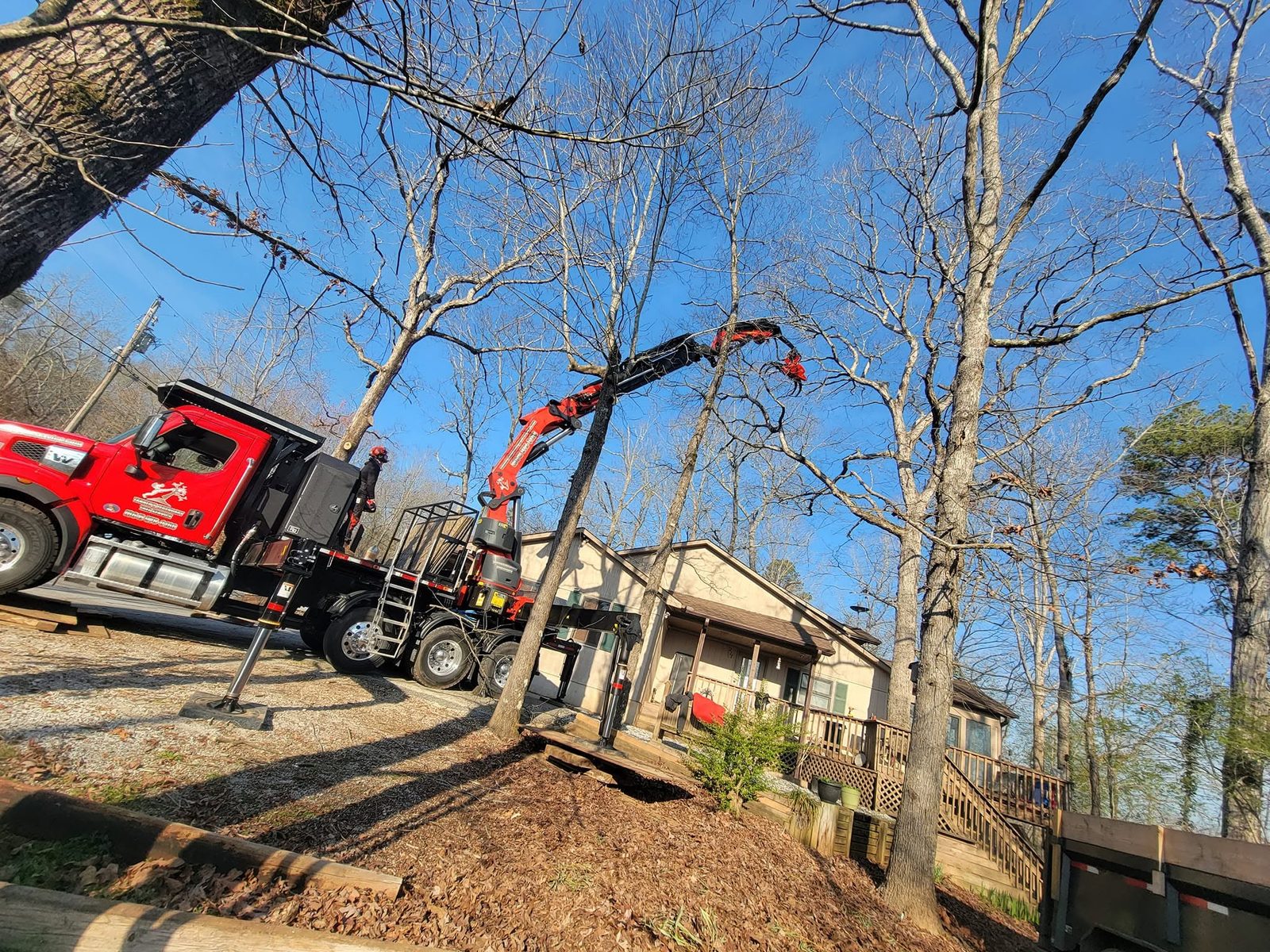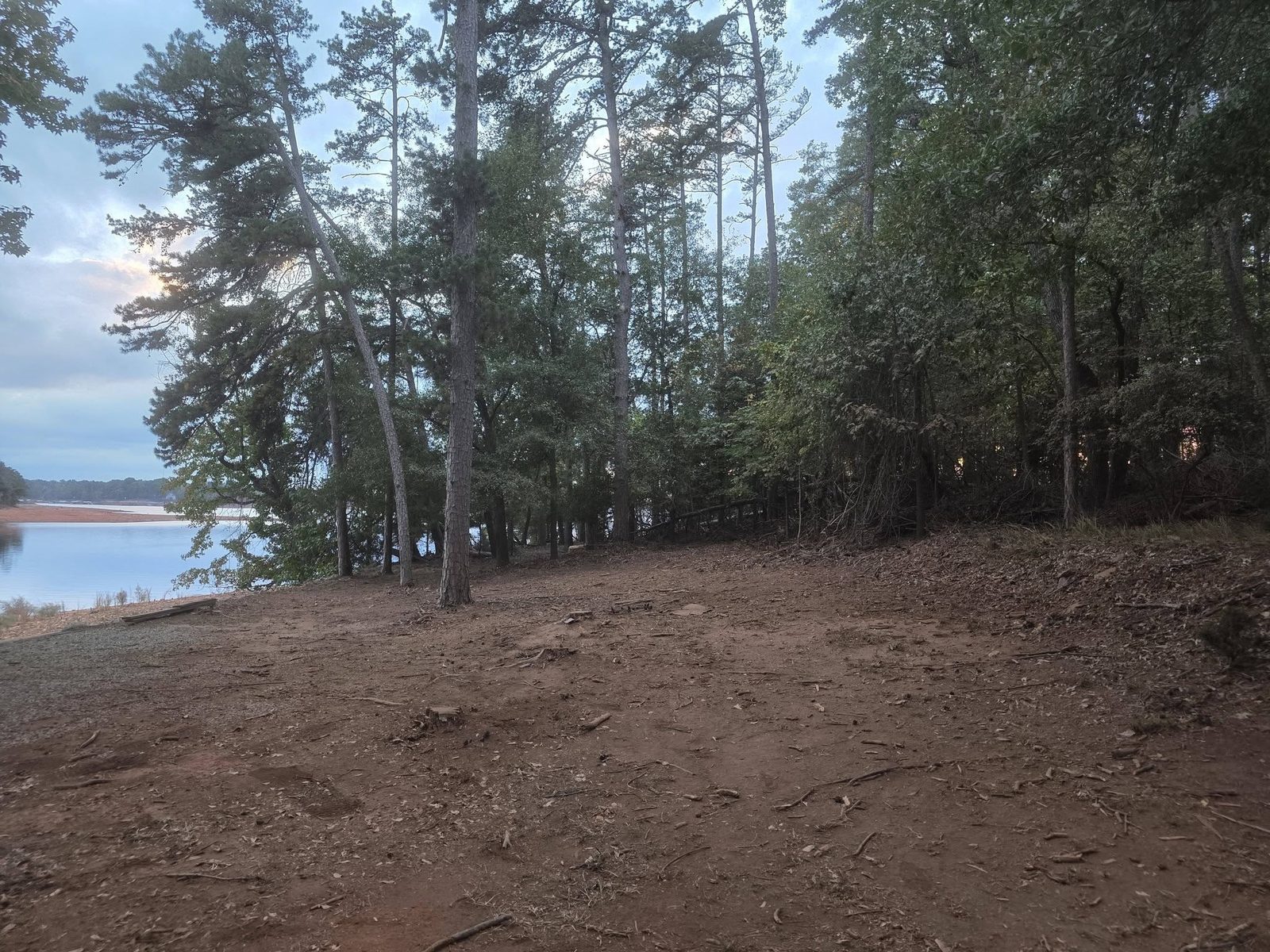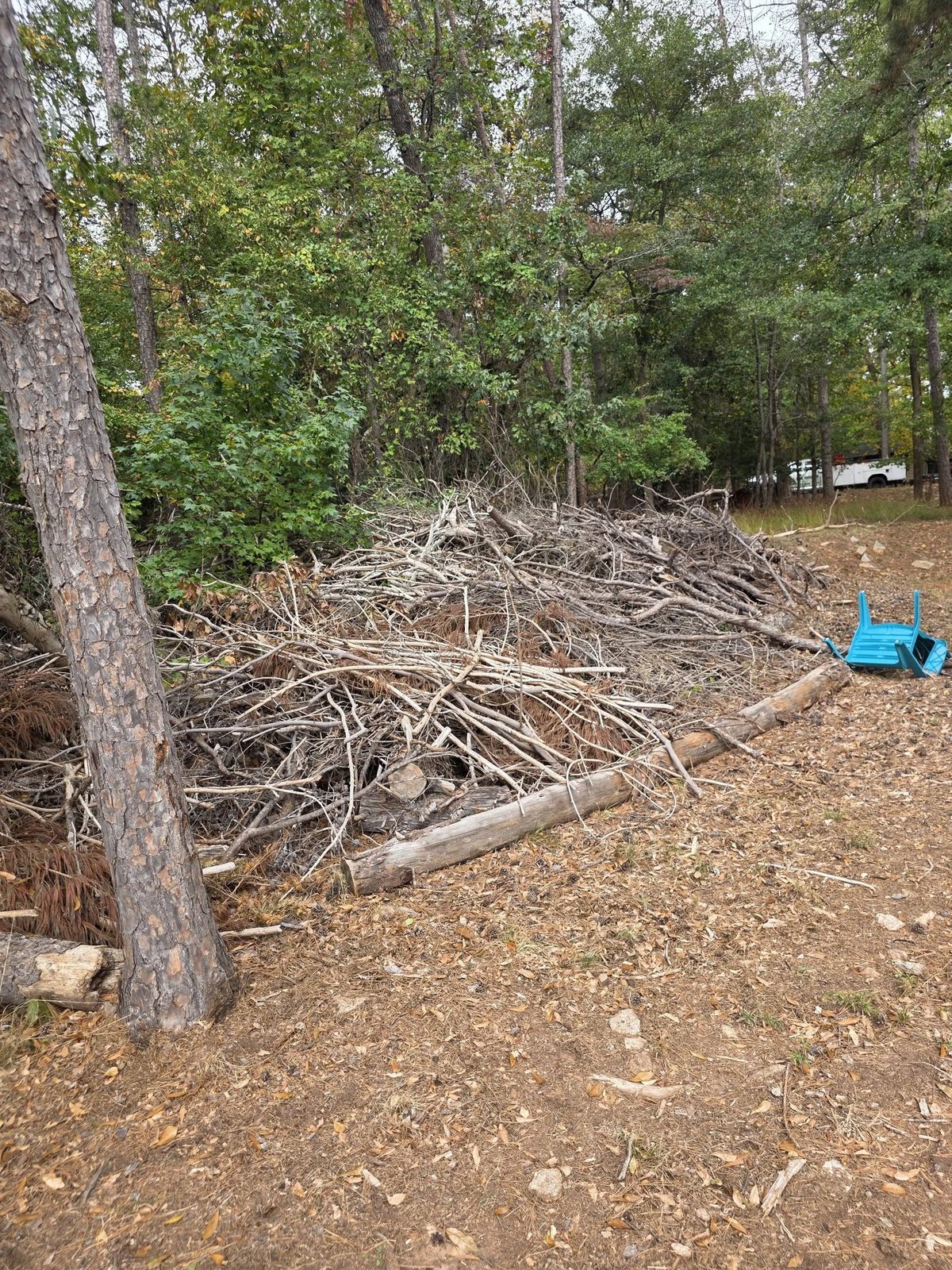
Red clay changes what this job costs
Anderson County's residential lots sit on classic Upstate red clay — the same iron-rich earth that built the brick mill towns along the Saluda River and that makes a drought-hardened stump feel close to concrete by August. That density is the first thing any experienced crew accounts for before they quote. A twelve-inch water oak stump in sandy Coastal Plain soil grinds in under half an hour; the same stump in Piedmont red clay can run twice as long and wear down cutter teeth faster, which is why diameter alone never explains a quote in this part of South Carolina.
The local tree inventory makes the picture more specific. Older mill-era neighborhoods in and around Piedmont carry mature water oaks, willow oaks, and tulip poplars that were planted or self-seeded a generation before the houses around them were updated. Some of those stumps measure 36 inches across or more, with root systems that have spent decades chasing the subsurface moisture the clay holds. Bradford pear is its own category: invasive across the Upstate and prone to forking close to the ground, a single Bradford pear removal often leaves two or three connected root crowns that each count as a separate grinding point. The SC Forestry Commission tracks Bradford pear among its invasive species of active concern in this region — grinding deep and stopping root resprouting is the only way to close the job completely. For a full picture of what a complete removal covers, see the stump grinding service overview.
What the grinder actually removes
Grinding brings the stump and visible root flare down below grade — typically 6 to 12 inches beneath the soil surface for a standard residential job, with the target depth going deeper when sod or a new planting is planned for the spot. The lateral root system stays in the ground and decays naturally over several growing seasons. What remains is a void filled with wood chips and disturbed clay that settles and compresses as the buried roots break down.
Clay soils need particular attention when it comes time to replant. The wood chips left in the hole are organic material that heavy clay will not absorb quickly on its own; direct seeding or sodding over an unfinished void leads to sink spots as decomposition continues below. Working compost or topsoil into the chip layer before closing the hole produces a better result. Clemson Cooperative Extension's Home and Garden Information Center has specific guidance on soil amendment for the red clay conditions common across the Upstate.
Site access is worth raising at the estimate stage. Wheeled grinders need a clear, reasonably level approach; confined lots in older Piedmont neighborhoods sometimes require tracked machines or hand clearing around a tight root flare. For what to do with chips and the cleared site afterward, the stump in the yard guide covers the main options.
What scope and size mean for price
Anderson County work prices close to the Upstate South Carolina average, with clay density and tree type being the main local variables on top of raw diameter. The table below shows typical per-stump ranges for the job sizes most common around Piedmont. For line-item detail on what drives each figure, see the full stump grinding cost breakdown.
| Scope | Typical Range | Primary Variable |
|---|---|---|
| Small stump, under 12 in. | $100 – $150 | Grinding time in clay |
| Medium stump, 12–24 in. | $150 – $250 | Diameter and clay depth |
| Large stump, 24–36 in. | $225 – $325 | Root flare complexity |
| Oversized stump, 36 in. and up | $300 – $400 | Equipment access and soil |
| Each additional crown (multi-stem trees) | $100 – $150 per crown | Extra grinding points |
These are Anderson County typical market ranges, not a Tree Wisemen quote. Every estimate is free and follows a look at the actual stump — clay hardness, root spread, and overhead clearance are not visible in a photo or over the phone.
Storm history and what it leaves behind
Anderson County has accumulated 18 federal disaster declarations spanning 2005-2026, most of them in the storm and flooding family. After a significant wind or ice event, stump calls fall into two groups: fresh stumps from trees that came down in the storm itself, and existing stumps from trees that had been slowly weakened by root rot driven by repeated saturation in the clay. The two jobs are priced and handled differently.
A storm-toppled tree often comes with the root ball partially heaved and the clay broken around the base, which can actually speed grinding compared to a standing stump that has been set in the ground for decades. An older stump from a tree that failed gradually due to water stress may have a wider, denser root system that holds tighter. If a storm recently moved through your part of Anderson County and left several stumps, bundling the work in one visit is worth asking about. For current weather conditions and timing outdoor work around wet stretches, the NOAA National Weather Service forecasts for the Upstate are a reliable reference.
What to look for when hiring in this market
South Carolina regulates tree work through the SC Contractor Licensing Board; crews performing specialty contracting above certain dollar thresholds must hold a license, and asking for it is a reasonable first step. Beyond the credential, two Anderson County-specific questions separate experienced crews from ones that will adjust the invoice after the fact: ask whether the crew has worked red clay stumps regularly — crews accustomed to sandier conditions elsewhere in the state sometimes underprice clay jobs — and ask how they handle multi-crown Bradford pears, since an underquote on a low-forking tree is one of the more common sources of invoice friction.
Chip disposal is the other topic worth raising before the job starts. Anderson County does not operate a single-point residential green-waste dropoff, so crew practices vary: some haul chips away, some leave them on-site, and some offer to spread them as mulch around existing beds. Knowing the plan before the crew arrives avoids back-and-forth after the work is done.