What the foothills position does to a tree's structure — and your estimate
Pickens County stretches from the Easley piedmont northwest toward the Blue Ridge escarpment, and the residential lots scattered along that gradient have a character that affects tree work before the first cut. Clay-heavy piedmont soil feeds fast, heavy growth in the water oaks, willow oaks, and tulip poplars that dominate Upstate residential lots. On a sloped lot — common in the neighborhoods between Easley and the lakes — fast-grown trees tend to lean outward over rooftops rather than grow straight up. Without regular structural pruning, those trees develop co-dominant stems (two or more trunks competing from the same union) and wide scaffold branches carrying far more weight than their attachment points were shaped to hold.
The Greenville-Easley corridor has absorbed significant residential development over the past few decades, and many of those neighborhoods were platted around mature trees left standing from the original forest. Those trees are landscape assets — but they have grown well past the crown footprints assumed when the houses were sited beneath them. Branches that have already grown out over a rooftop are covered in detail at the overhang page; the broader case for staying ahead of that problem starts with what the terrain here produces. In a county that has seen 23 federal disaster declarations over 2005-2026, the trees that came through storm events worst were invariably the ones carrying the most unmanaged co-dominant weight.
What structural pruning actually accomplishes — and what it doesn't
Professional tree trimming targets four categories of work: removing dead, broken, or diseased wood that presents an active hazard; eliminating crossing or rubbing branches that create wound entry points and long-term decay; reducing weight on overextended scaffold limbs; and establishing crown clearance from structures, vehicles, and utility lines. Done on a reasonable maintenance cycle — typically every three to five years for established hardwoods in this climate — it is consistently less expensive than the alternative, which is a full tree removal after a structural failure that the crown's shape made inevitable.
What it does not do: trimming does not stop growth. Topping — the practice of cutting large sections of crown at blunt stubs rather than at proper branch collars — creates rapid, weakly attached regrowth that produces a worse hazard within a few years, not a smaller tree. The Clemson Cooperative Extension Home and Garden Information Center publishes species-specific pruning guidance for the trees common to this region; their materials treat topping as a harmful practice, not a size-management strategy. Any proposal framing large stub cuts as "crown reduction" deserves a direct question about where those cuts land.
Young trees are also worth noting here: structural pruning at two to five years old, before the first scaffold architecture is fully set, is the most cost-effective intervention a property owner can make. It costs a fraction of corrective work on a mature specimen.
What a trimming visit involves, start to finish
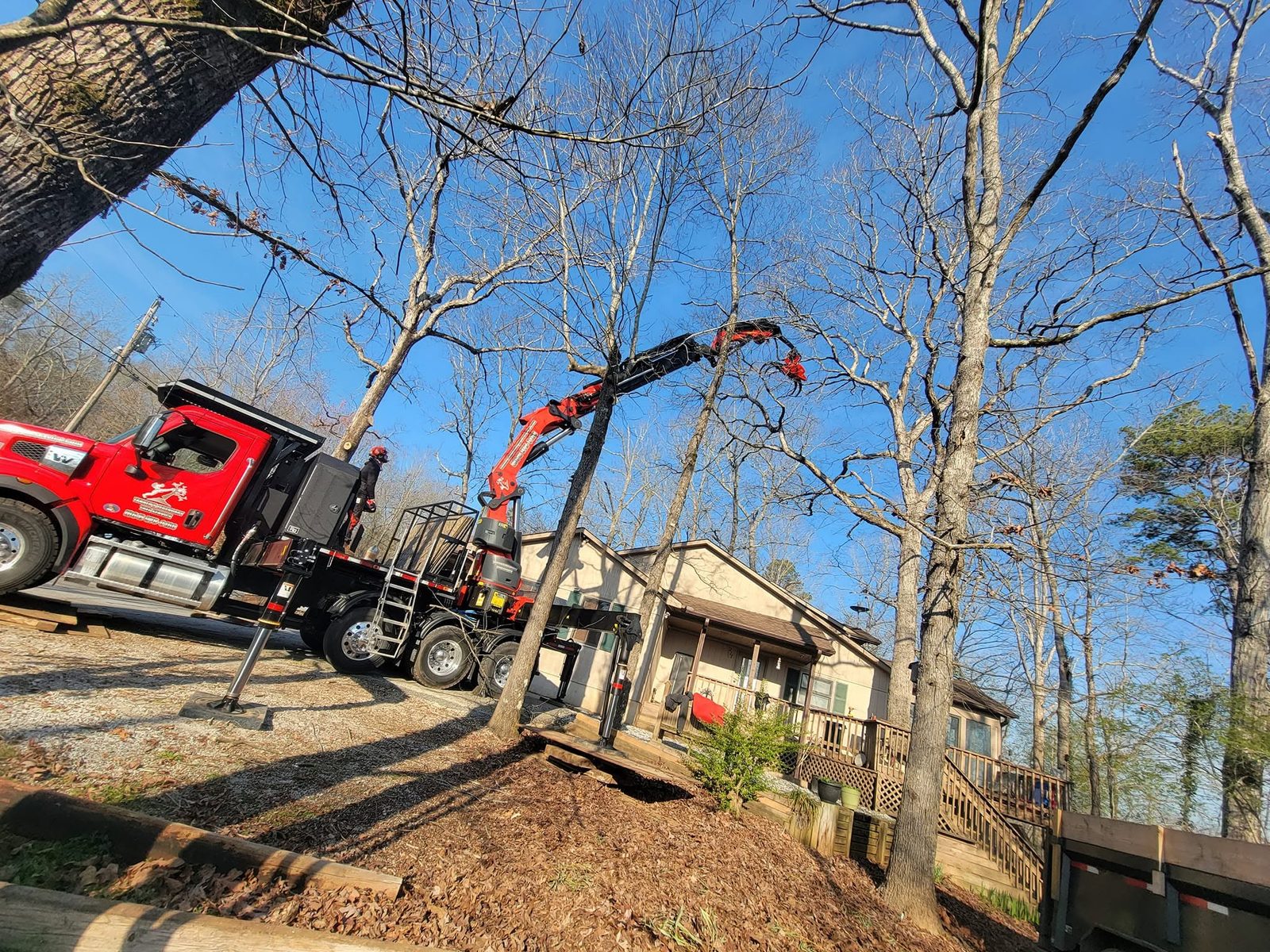
A typical residential trimming visit runs a half to full day depending on tree count and complexity:
- Crown assessment and marking. A trained crew lead walks each tree to identify dead wood, structural defects, and clearance targets before any equipment is staged.
- Prioritized removal cuts. Dead and hazardous material comes out first, followed by the structural work — crown raising for structure-clearance, subordination of competing leaders, and weight reduction on overextended limbs.
- Clearance trimming. Branches within reach of rooflines, gutters, HVAC equipment, and fencing are cut back to lateral branches, not to stubs.
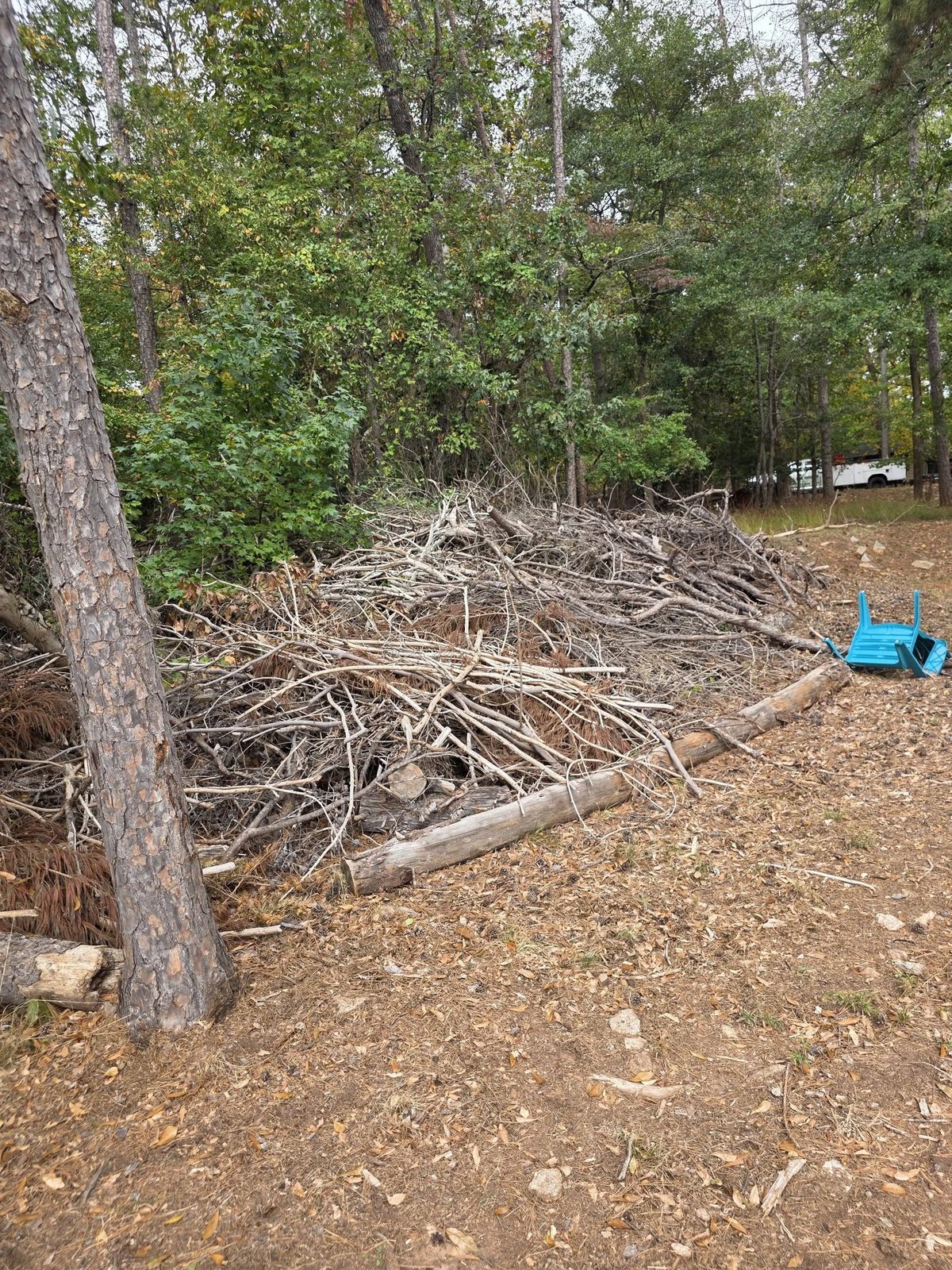
- Chip and haul or chip and spread. Brush is processed on-site; whether chips leave with the crew or stay as mulch is typically the customer's choice and can affect the final price by a small margin.
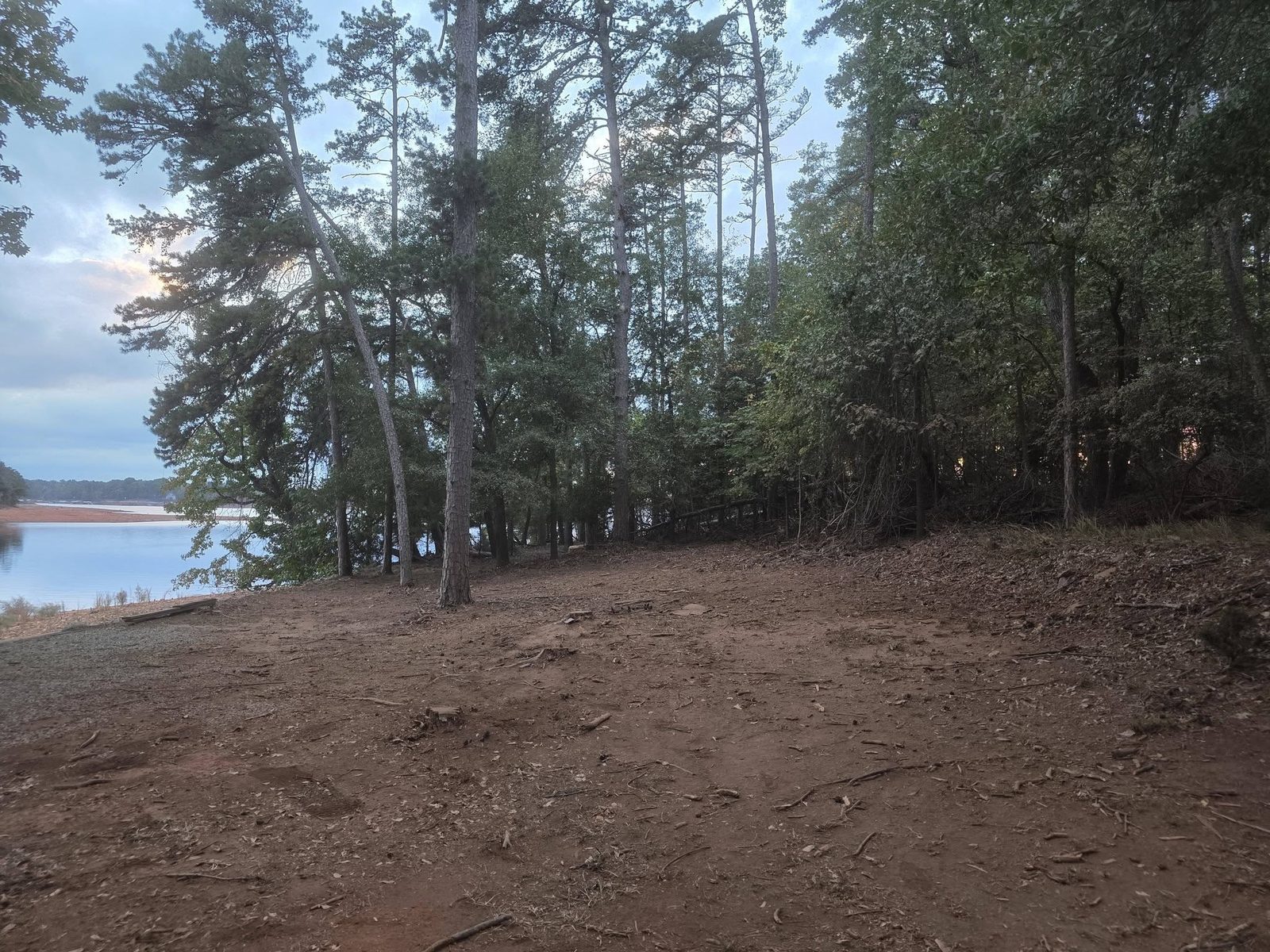
- Site cleanup. Sawdust, small debris, and equipment staging marks should be cleared before the crew leaves. Confirm this expectation before work begins, not after.
For anything involving utility lines: the portions of a tree directly contacting energized conductors are the utility company's work, not an independent tree crew's. A reputable crew will not touch energized lines and will coordinate with the utility or refer you to them for that portion of the crown.
What it costs in the Upstate and what moves the number
Tree trimming in Easley and the surrounding Upstate area runs $250–$900 per tree, with the full range of variables in the table below. For detailed breakdowns by job type, see the tree trimming cost page.
| Scope | Typical Range (per tree) |
|---|---|
| Small tree under 25 ft, open access, no obstructions | $250–$450 |
| Medium tree 25–50 ft, standard residential lot | $400–$700 |
| Large hardwood 50+ ft, clear access | $600–$900 |
| Any size with branches directly over a roofline or structure | $600–$900 |
| Near utility lines (accessible portions only) | $600–$900 |
The two biggest cost drivers in Pickens County are lot grade and crown accumulation. A tree on a slope that places the crew below the work, requires extended rigging, or limits where equipment can be safely positioned adds time and therefore cost. A tree that has gone ten-plus years without any pruning typically carries significantly more dead wood and structural conflict than the same species on a three-year maintenance cycle. Neither variable is visible from the street, which is why free on-site estimates exist — photos sent by text do not capture it.
The SC Forestry Commission recognizes that urban tree risk management is an ongoing cycle, not a one-time event; pricing should reflect that model, not a one-time cleanup rate that ignores the crown's history.
Three questions that keep a pruning bid honest
"What specifically are you removing, and can you show me?" A crew lead who can point to each target cut — dead wood, conflicting stems, clearance issues — and explain the reasoning is demonstrating the kind of crown knowledge that separates arboricultural work from brush hauling. A crew that cannot explain the selection criteria is not performing structural pruning; they are performing cosmetic shaping at structural-pruning prices.
"Is your crew licensed, and does the company carry liability coverage and workers' compensation?" South Carolina contractor licensing requirements apply to tree services above certain thresholds; the SC LLR Contractor Licensing Board is where license status can be verified. Workers' compensation matters specifically in tree work: crew members working at height are in a high-injury-risk category, and an uninsured injury on your property can become your liability. Any legitimate operator answers these questions without hesitation.
"Does the proposal include cleanup and haul?" Chip-and-leave is a legitimate option on rural lots where wood chips serve as mulch, but it should be a stated option, not a surprise. Confirm in writing what the site looks like after the crew leaves. Easley's residential density means most customers expect haul-off included; a price that looks low because it assumes chip-and-leave is not the same bid as one that hauls clean.