Clay-bound roots and campus-edge timber
Clemson sits where Piedmont red clay meets one of the densest residential tree canopies in Upstate South Carolina. The neighborhoods pressed against the university perimeter — along the older blocks between downtown and Lake Hartwell, and in subdivisions reaching east toward Anderson County — carry mature oaks, sweetgums, and large loblolly pines that have been growing in tight, moisture-holding clay for decades. When one of those trees comes down, the stump left behind is not simply a diameter problem. Red clay binds root systems the way packed soil holds a fence post: lateral roots push several feet in every direction, often well past what the crown suggested. Equipment calibrated for sandy Lowcountry soil works harder here, and a quote built only on stump width can undersell the job.
The species common to Clemson-area lots make that point sharper. Willow oaks and water oaks, both widespread in older neighborhoods here, develop aggressive lateral root systems even by hardwood standards. A water oak stump in red clay is a meaningfully different job than a pine stump in looser fill, and an accurate estimate accounts for that before the first cut. For a full picture of what the service involves from first visit to cleanup, see the stump grinding service page.
What stump grinding costs in Clemson
Most residential stump grinding in the Clemson area falls between $100 and $400 per stump. Diameter is the starting point, but root spread, stump age, and soil density all move the number. A fresh hardwood stump in heavy red clay typically costs more than a rotted pine in looser fill. The table below maps scope to typical range for Upstate SC jobs; for a full line-item breakdown of what appears in a tree service quote, see the stump grinding cost guide.
| Scope | Typical Range | What drives the number |
|---|---|---|
| Small stump, under 12" diameter | $100–$150 | Straightforward grind, shallow root spread |
| Medium stump, 12–24" diameter | $150–$250 | Wider root plate, more grinding depth required |
| Large hardwood stump, over 24" diameter | $250–$400 | Dense wood, deep clay-bound roots |
| Stump near fence, structure, or utilities | Toward top of range | Access and protection add time |
| Multiple stumps on one visit | Lower per stump | Mobilization cost shared across the job |
These figures are typical Upstate SC ranges and are not a Tree Wisemen quote. Every job is priced on-site after a free estimate.
Storm removals and the stumps they leave behind
Pickens County has seen 23 federal disaster declarations across 2005-2026, the majority of them storm events. Each one takes trees, and the stumps from emergency removals tend to sit for a season or two while property owners handle the rest of the cleanup. A short delay is not automatically a problem, but it does change the job. A fresh stump grinds faster and cleaner than one that has been sitting through a wet Upstate summer; soft rot and fungal growth around the base can let the grinder reach target depth more easily, but surface root spread can also broaden unpredictably as the wood softens and pulls more moisture from the clay.
Timing also affects what you do with the grindings. Fresh chip fill from a recently-ground stump is clean and can often be redistributed as mulch elsewhere on the property. Grindings from an older, partially rotted stump may contain fungal material that is better removed from the site entirely. What to do with the stump before and after grinding is covered in the stump in the yard guide.
What the site looks like after grinding
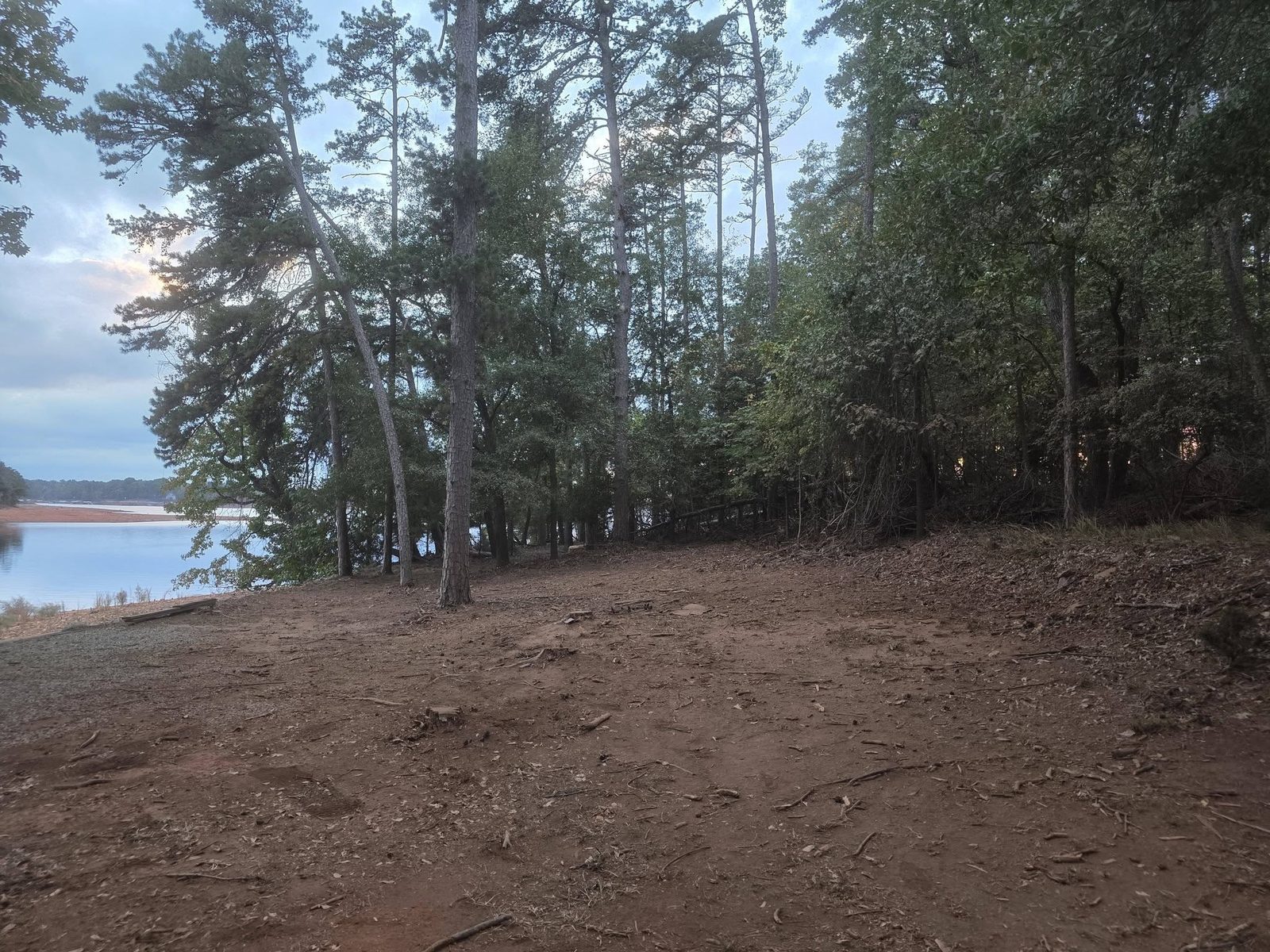
Grinding leaves a mix of wood chips, sawdust, and disturbed clay in the stump's footprint. Fresh grindings are high in carbon and low in nitrogen, which matters if you plan to seed or sod the area. The Clemson Cooperative Extension Home and Garden Information Center recommends removing the bulk of the chip fill or waiting for it to decompose before establishing turf. In clay-heavy Upstate SC soil, that patience pays off — compost mixed into the backfill improves drainage and gives new plantings a better start than raw Piedmont clay alone can provide.
If you are replanting a tree in the same spot, species selection and placement matter. Clemson Extension's resources on residential tree placement address setback distances from structures and utility lines — both relevant on the compact lots close to campus and in older neighborhoods where property lines leave little room for a large-canopy species at maturity.
What to look for when hiring in Upstate SC
South Carolina does not require a dedicated license for residential stump grinding as a standalone service, but tree contractors taking on broader tree work fall under the oversight of the SC Contractor Licensing Board. For stump-only jobs, the practical checks are equipment condition, proof of liability insurance, and whether the crew has experience with Piedmont clay soils. That third item matters more than it may seem: a crew familiar with clay-ground root systems will scope the job more accurately before the first cut than one that quotes from diameter alone. When asking for references, ask specifically about Upstate SC work — clay-bound root behavior does not show up on jobs done in sandier ground elsewhere in the state.
The SC Forestry Commission is the state resource for tree health and best practices for stump work on private land. If your project is part of a larger clearing effort or sits near a waterway or protected buffer, confirming what applies before work begins is a reasonable step. Tree Wisemen serves Clemson and surrounding Pickens and Anderson counties, with free estimates available within 50 miles of Easley.