Foothills clay, tight lots, and why the site read is the whole job
Easley sits where the SC Piedmont grades into the lower Blue Ridge foothills, and that geology shapes every tree removal in the area. The red-orange clay soils common across Pickens County hold moisture and compress unpredictably, which means the roots of large hardwoods — white oak, willow oak, tulip poplar, shagbark hickory — spread wide and shallow rather than deep. Trees that have grown in older Easley neighborhoods for 60 to 80 years frequently sit directly over driveways, foundations, buried utilities, and septic lines. That proximity is what separates a Pickens County removal from a straightforward fell-and-chip operation.
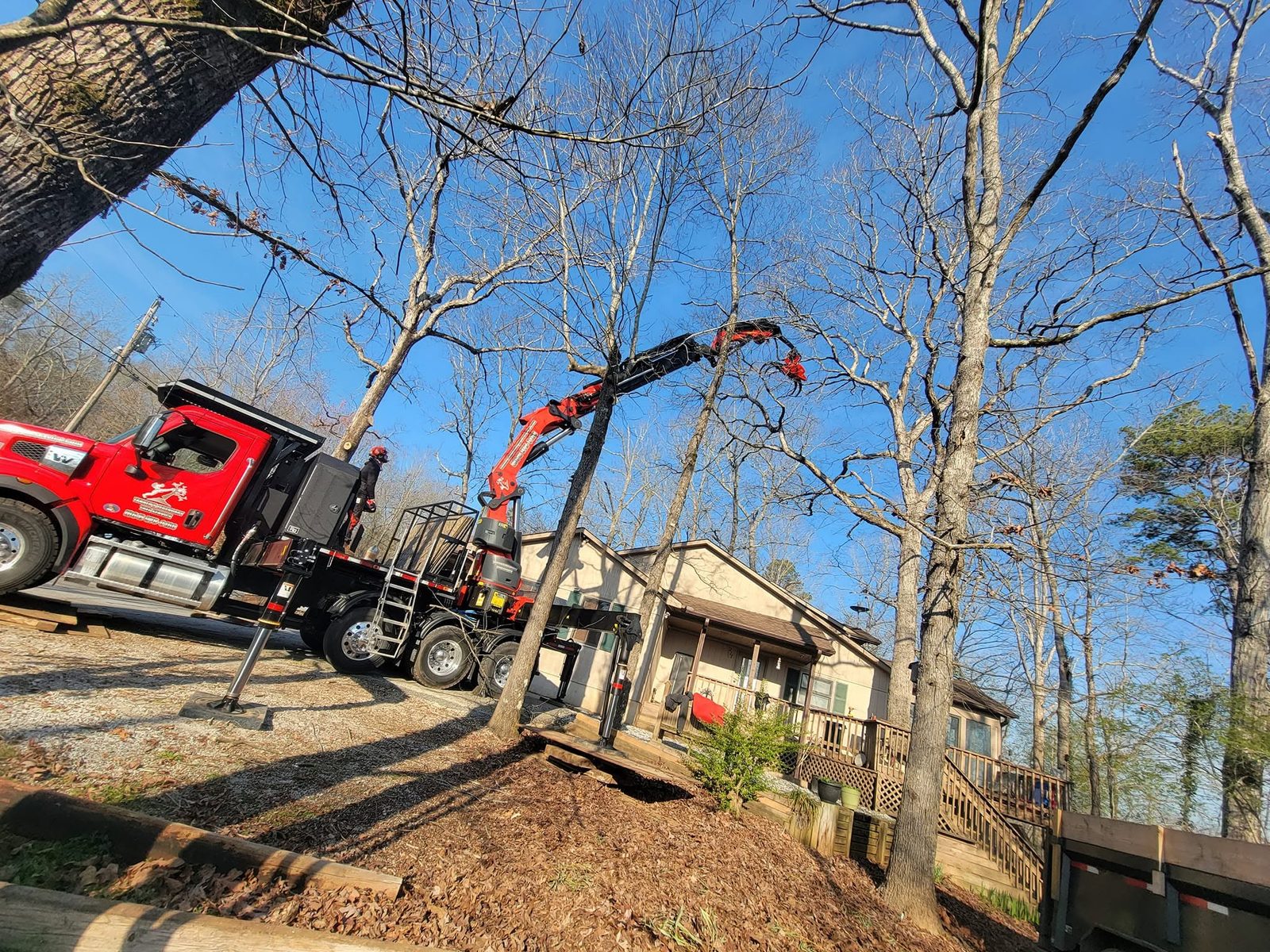
Sloped lots — common as the county grades toward the mountains — eliminate what crews call the drop zone: the open ground a large section needs to land safely. Without it, the work becomes sectional, with the crew rigging each piece down from the canopy in controlled segments. That takes longer, requires more equipment, and costs more. For a full breakdown of how local site conditions affect your estimate, see the tree removal cost page.
From first call to clean site: what the work actually involves
A well-run removal follows a consistent sequence even when the tree itself does not cooperate.
- On-site assessment. The crew walks the tree, checks lean direction, root flare condition, visible decay, proximity to structures and utility lines, and available drop or rigging space. This read sets every decision that follows.
- Utility notification. South Carolina law requires notification before any ground-disturbing work near buried lines — 811 must be called before digging or stump grinding begins. Responsible crews factor overhead line proximity into the rigging plan as well.
- Felling or sectional takedown. Trees with a clear drop zone and open ground can often be felled in one or two controlled cuts. Confined, hazardous, or over-structure trees are disassembled from the top down, with ropes and rigging controlling each piece to the ground.
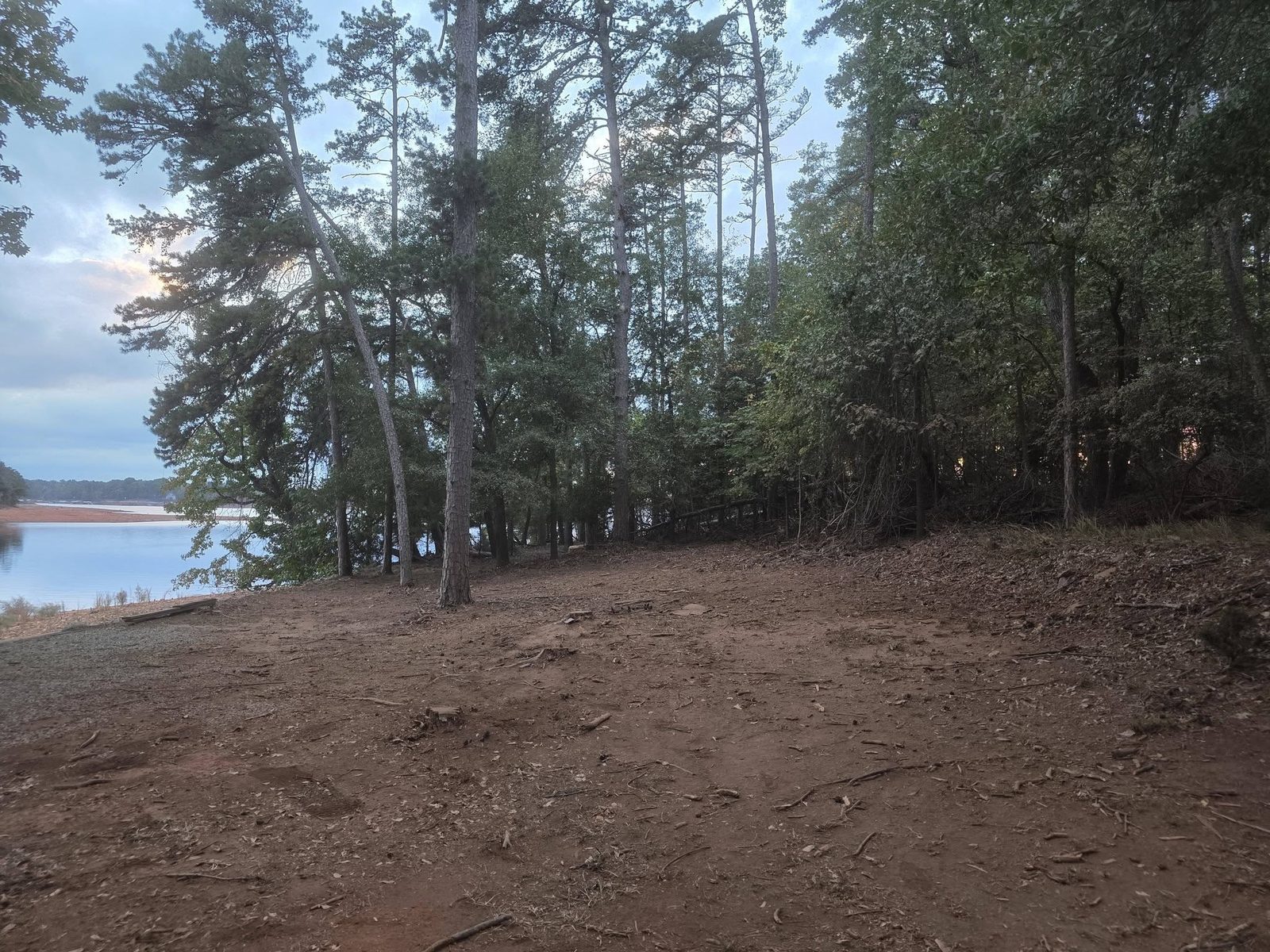
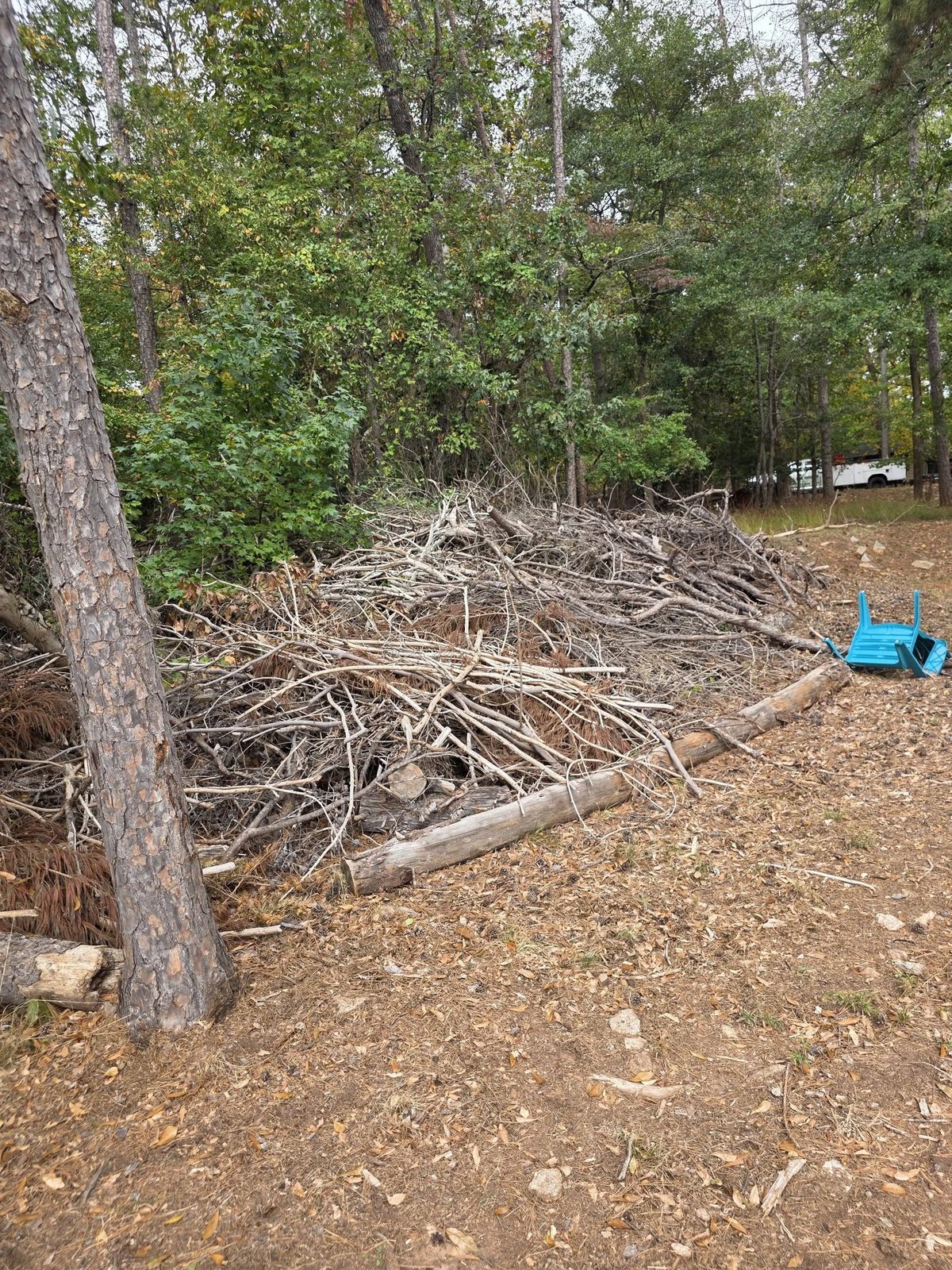
- Debris handling. Branches are chipped on-site; large trunk sections can be bucked for firewood or hauled away. Confirm what is included in your quote — debris handling is where estimates most often differ.
- Stump decision. Felling leaves a stump. Most clients either leave it, grind it immediately, or schedule grinding separately. See stump grinding for what that step adds and why timing it with the removal usually saves a mobilization cost.
What tree removal costs across the Upstate — and what moves the number
Typical Upstate SC tree removal runs $300 to $2,000 per tree; very large, hazardous, or crane-dependent jobs can pass $3,000. Tree Wisemen provides free estimates within 50 miles of Easley — the ranges below are regional benchmarks, not a quote for your specific tree.
| Job scope | Typical Upstate SC range |
|---|---|
| Small tree under 25 ft, open drop zone | $300 – $600 |
| Medium tree 25–50 ft, clear equipment access | $600 – $1,200 |
| Large tree 50–80 ft, standard site conditions | $1,200 – $2,000 |
| Very large, hazardous, or crane required | $2,000 – $3,000+ |
| Stump grinding (add-on or separate visit) | See stump grinding page |
The variables that push a job toward the top of its range: lean toward a structure, overhead or buried utility proximity, a backyard gate that won't pass a chipper, significant internal decay that makes the wood unpredictable, and trunk diameter on mature hardwoods that is wider than a quick glance suggests. The cost detail page breaks each factor down with specific examples from the Upstate region.
Permits, licensing, and the SC rules that actually apply
South Carolina does not require a statewide permit to remove a tree on private residential property, but that does not mean the work is unregulated. Municipal rules vary: some SC cities and towns protect street trees or designated heritage trees through local ordinances, and work near a right-of-way or utility easement may require coordination with the governing body before a saw touches the trunk. Confirm with your local planning or public works office when the tree's location is at all ambiguous.
On the contractor side, the SC LLR Contractor Licensing Board governs contractor credentials in this state. A licensed, insured contractor is accountable to a regulatory body in a way an unlicensed crew is not — and if an uninsured worker is injured on your property, the liability exposure can fall to you as the property owner. For work that involves timber harvest or removal adjacent to managed forest land, the SC Forestry Commission is the state authority on forest practices and can clarify what regulations apply to larger-scale removal.
Always request a certificate of general liability insurance and workers' compensation coverage, and verify contractor credentials, before any crew begins work.
Storm damage and when the removal timeline compresses
Upstate SC produces two distinct problem seasons for trees. Summer brings fast-moving thunderstorms — high-wind, often brief events that split scaffold limbs and topple shallow-rooted trees without warning. Winter brings the more structurally damaging scenario: ice loading. The Pickens County foothills see freezing rain events that the coastal plain rarely experiences, and a mature hardwood carrying a quarter inch of ice can fail at the root or crown with no visible warning. Pickens County has recorded 23 federally declared disasters over 2005-2026, a storm history that shows up regularly on residential lots as failed canopy and storm-tossed tops.
When a tree has already failed or is visibly compromised after a weather event, the removal timeline is no longer about scheduling convenience. A leaning stem braced against a fence or a split leader still attached to the crown is an active hazard, not a situation that can wait. The emergency tree service page covers how after-hours and storm-response calls are handled and what to expect when urgency overrides the normal estimate process.
For tracking incoming storm conditions, the NOAA National Weather Service Greenville-Spartanburg forecast office is the authoritative source for Pickens County outlooks and severe weather watches.
What to ask before any crew starts work on your property
Tree work is unforgiving of shortcuts. These five questions separate a credentialed crew from a risk:
- Are you licensed and insured in South Carolina? Ask for the certificate of general liability and workers' compensation, and verify contractor standing through the SC LLR Contractor Licensing Board.
- Who is actually performing the climb or rigging work? Some operations subcontract hazardous work without disclosing it. Know whose crew is on your lot and under what coverage.
- What does cleanup include? Chips, brush piles, and trunk sections have different disposal costs. A quote that leaves the stump and a wood pile behind is not a full-service quote.
- How do you handle buried utilities? Any crew driving equipment or grinding stumps near buried lines needs an 811 call and a documented plan before equipment enters the ground.
- What is the payment schedule? Established local contractors do not typically require full payment before work begins. A large upfront payment demand is worth pausing on.
If you are uncertain whether removal is the right answer at all, the Clemson Extension Home and Garden Information Center publishes guidance on tree health assessment, hazard signs, and when professional evaluation makes more sense than an immediate removal quote.