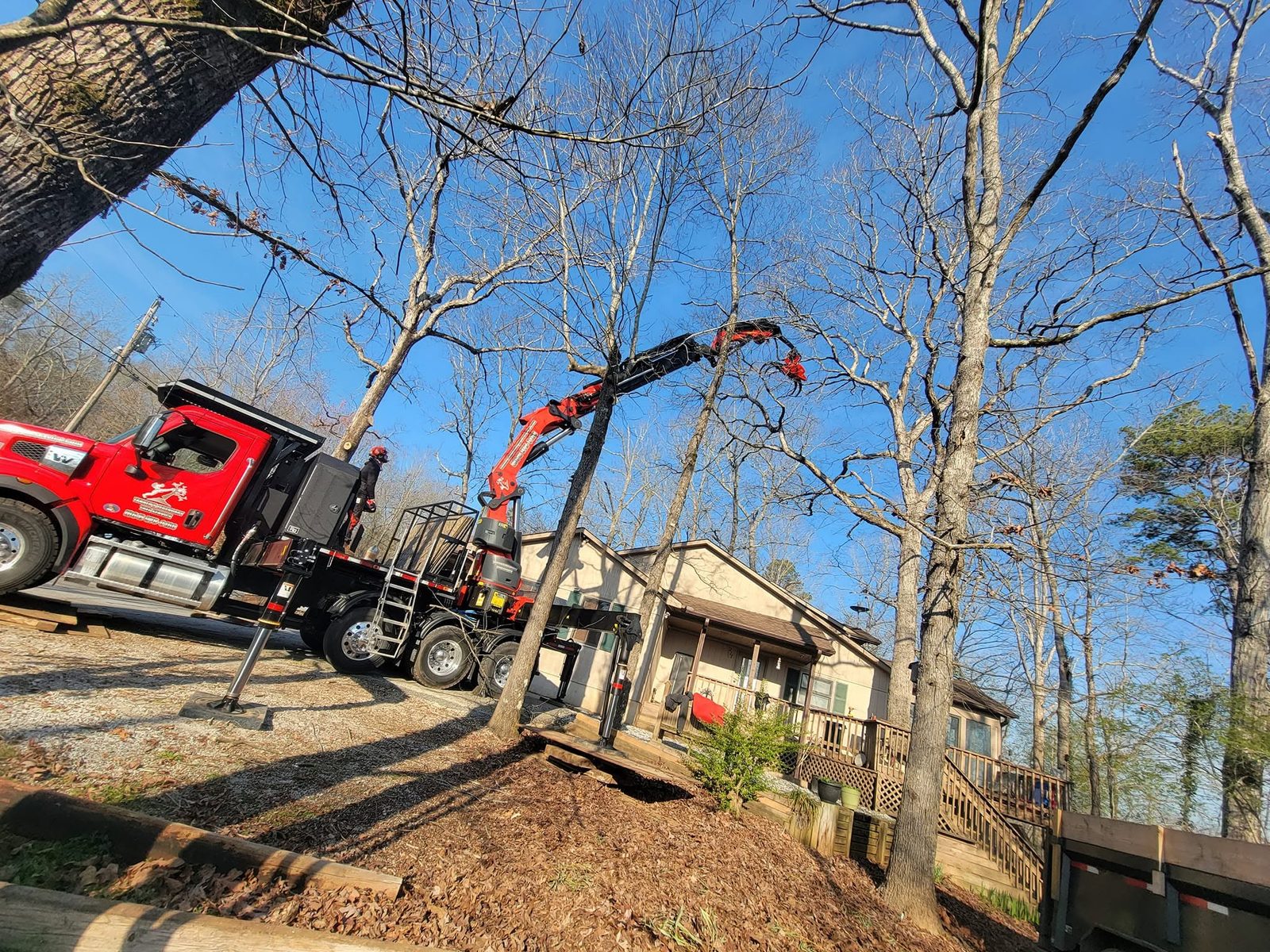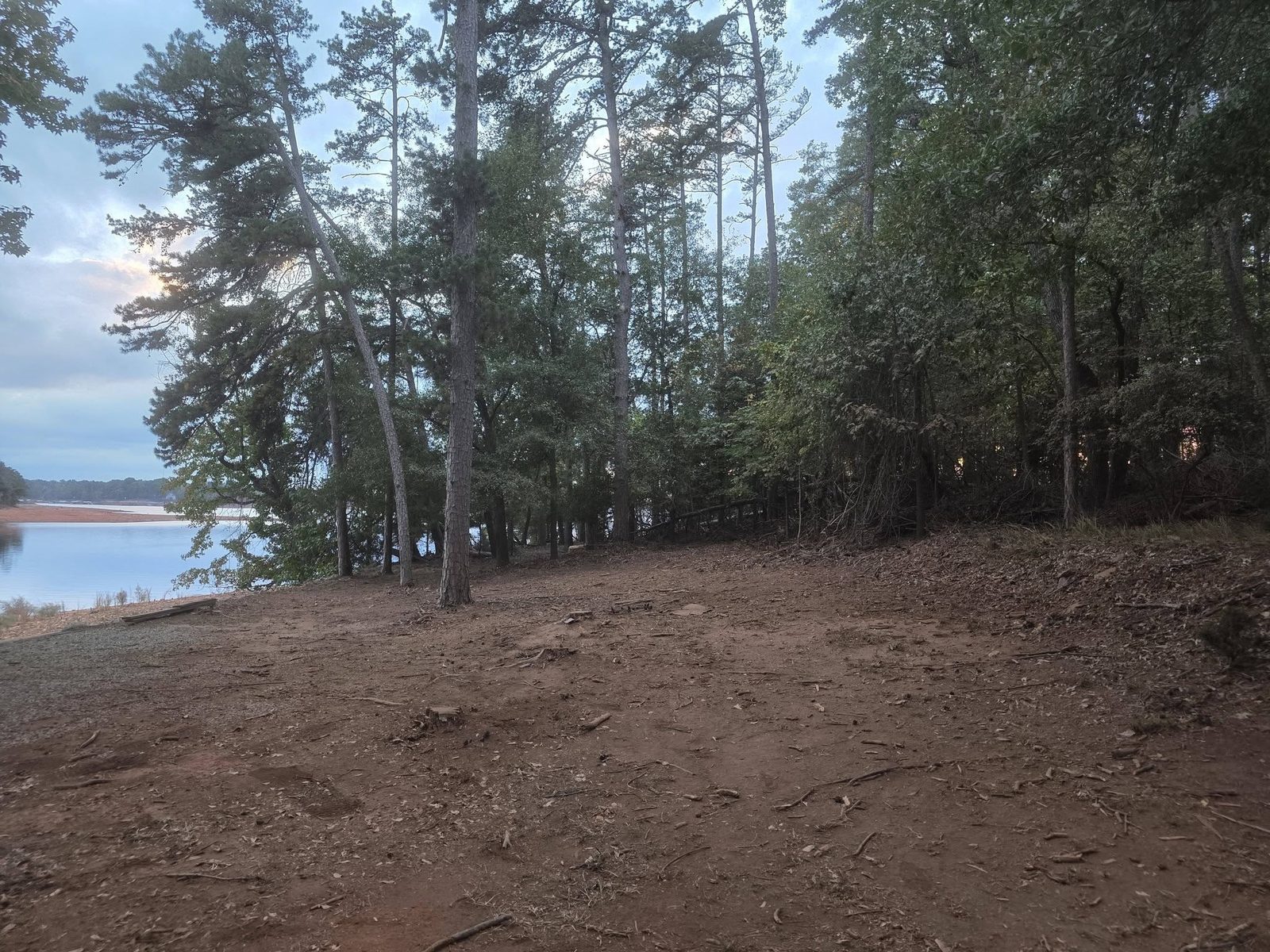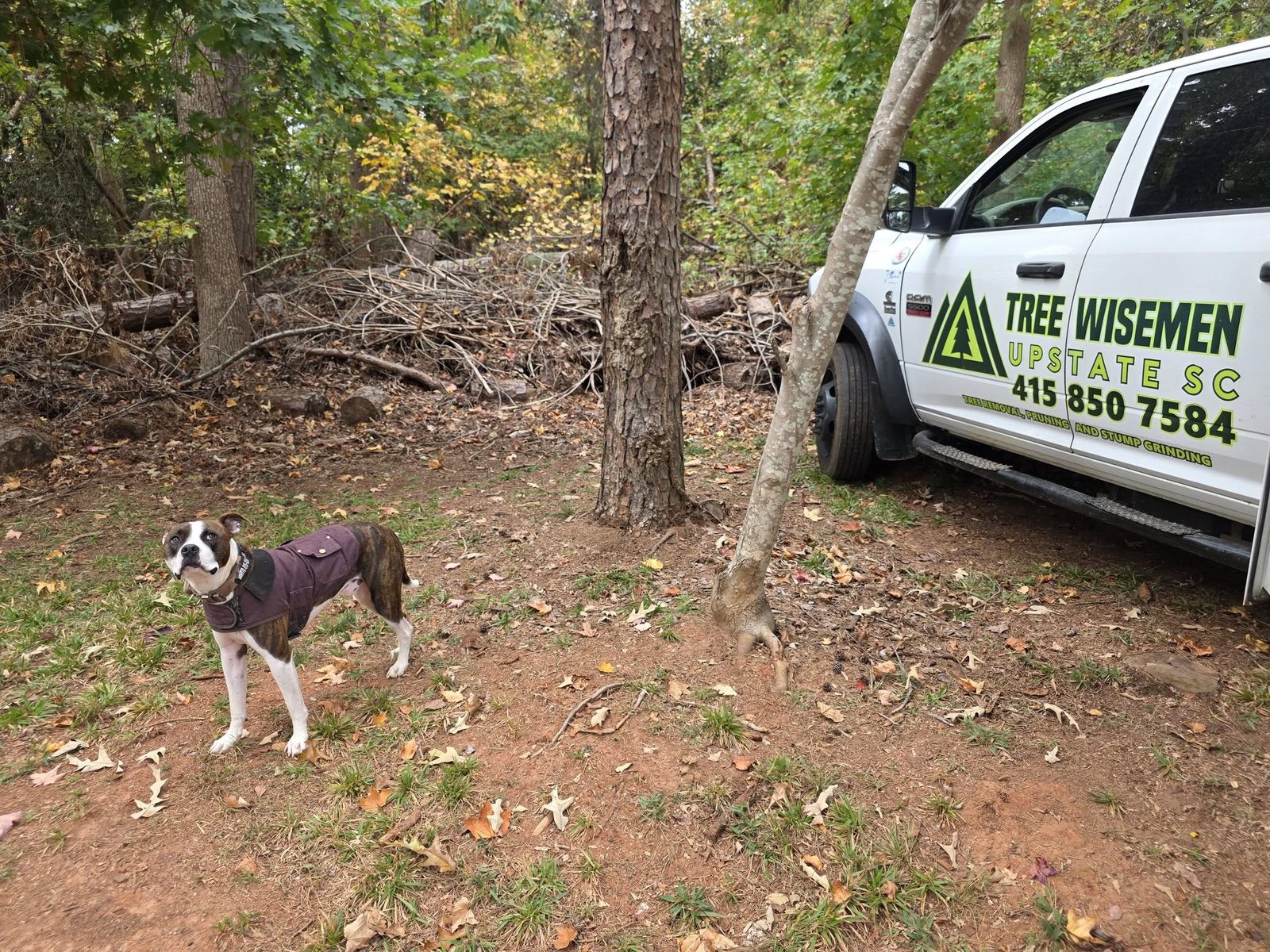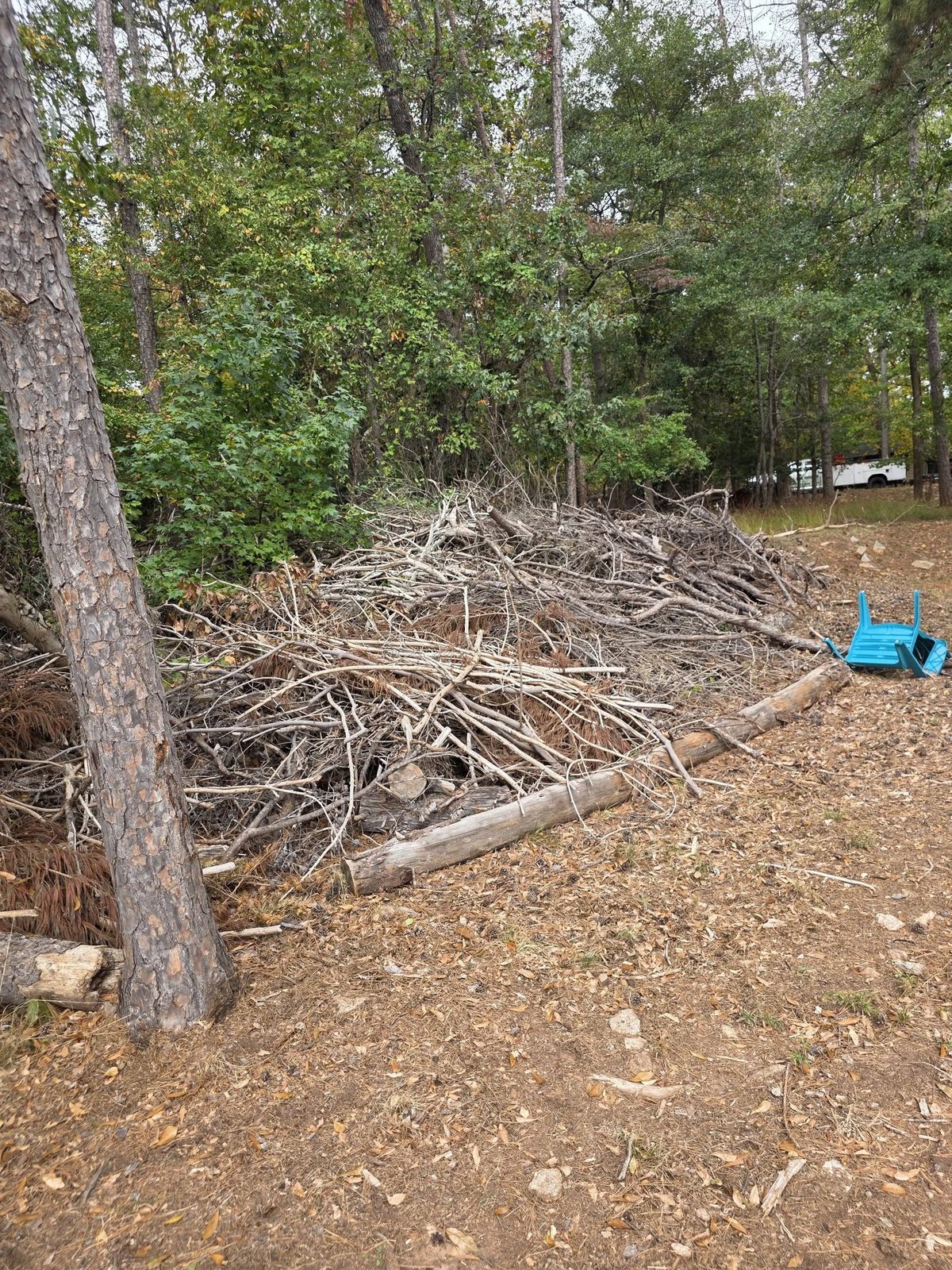
Red clay roots and what they mean for your lot
Easley sits at the transition between the SC Piedmont and the Blue Ridge foothills, and the red clay running through Pickens County tells more about a stump job than the stump itself. Hardwood root systems — white oak, sweetgum, tulip poplar, water oak — grip Piedmont clay differently than they grip the sandier soils further south. Lateral roots on a mature white oak spread well past the drip line and anchor hard; when the grinder drops into that clay, it is cutting through dense root mass rather than loose duff, and that resistance shows up in both time and cost.
The character of the stump also depends on which part of Easley you are in. Older blocks near downtown hold the biggest hardwood stumps from decades-old shade trees. Newer residential corridors off Highway 123 and toward the Lake Hartwell side of the county tend to have pine stumps left over from land clearing and storm events — a lighter root structure and generally a faster grind. Before any job, it helps to know what species you are working with and what the access looks like. The stump-in-the-yard guide breaks down how species, soil type, and site conditions combine and what they mean for depth and debris management.
What stump grinding costs in Easley
Stump grinding in Easley and across Pickens County runs in a predictable band, with the main variables being stump diameter, root density, and site access. For a full line-item breakdown of everything that moves the number, see the stump grinding cost page. The table below covers the common scope categories:
| Job scope | Typical Upstate SC range |
|---|---|
| Small stump, open access, under 12" diameter | $100 – $175 |
| Medium stump, 12–24" diameter | $150 – $275 |
| Large stump, over 24" or restricted access | $250 – $400 |
| Stump with significant surface root spread | Toward top of range; discuss on estimate |
| Multiple stumps, same crew visit | Ask about bundled pricing |
What keeps a job at the low end: a younger pine stump in an open backyard on a flat lot with nothing blocking the machine. What pushes toward $400: a large-diameter hardwood in clay soil, a gated yard where the grinder has to disassemble to fit through, or a stump that needs to go deep for a planned patio or paving project. These are honest Upstate SC ranges; Tree Wisemen provides a free estimate before any work begins, and that number will be specific to your job, not a category average.
Storm history and the stumps it left behind
Pickens County experiences a mix of storm types that together account for a significant share of tree removals in this area: severe summer thunderstorms, winter ice loading that snaps limbs and leans whole trees, and the remnants of tropical systems that weaken over the mountains but still carry enough wind to topple trees with waterlogged clay around the roots. FEMA has recorded 23 federal disaster declarations tied to this region across 2005-2026, the majority storm and flood events, each leaving behind a round of tree debris that became stumps once trunks were cleared.
The SC Forestry Commission tracks storm damage and tree health response statewide and is a useful resource when a recent storm has you evaluating whether a leaning tree needs to come down before the next event. For timing on storm stumps specifically: a stump from a freshly downed tree grinds faster than one that has been sitting for years, because the root system has not fully desiccated into the clay. If you have a storm stump from last season that you have been putting off, the job is still straightforward — just expect more resistance from the soil than a fresh cut would give you.
Replanting and what happens after the grind
After grinding, you are left with a mix of wood chips and disturbed clay in a hole that may be six inches deep for a small stump or over a foot for a large one. If you want to reseed grass, rake out the chip debris and top-dress with clean soil — fresh sawdust left in place will rob the soil of nitrogen as it decomposes and leave a dead patch where you expected lawn. If you want to replant a tree, the soil amendment question is more involved. Clay soil in the Upstate is not naturally hospitable to new establishment without help; the Clemson Cooperative Extension Home & Garden Information Center has practical guidance for tree and shrub planting in SC's clay-dominant Piedmont profiles, including amendment ratios that work in this region rather than generic bag-label instructions.
If the tree came down because of disease — armillaria root rot, cankers, or any fungal problem that reached the root system — tell your grinding crew before they start. Some pathogens survive in root debris and can infect a new tree planted in the same hole. In those cases, grinding deep and hauling chip debris off-site rather than leaving it as fill is the right call. The service overview at stump grinding covers standard debris handling and what to ask about haul-off when you book.
What to ask before you hire in Pickens County
South Carolina does not issue a stump-grinding-specific license, but tree work that crosses certain dollar thresholds becomes licensed contractor work in the state. The SC LLR Contractor Licensing Board sets those thresholds; regardless of project size, every crew you hire for stump grinding should carry general liability insurance and equipment coverage. A grinder on a tight Easley lot — where the machine may pass within a few feet of a fence, irrigation line, or buried utility — is a real property-damage exposure, and an uninsured crew leaves that exposure with you.
Beyond insurance, ask three questions on any estimate: What depth will you grind to? (Six to eight inches is standard for replanting; twelve or more for under-paving jobs.) Will you haul the chip debris, or does it stay on-site? And what is your process if you hit a buried utility or fence anchor during the grind? A crew that answers those questions without hesitation has thought through the job. The estimate should always be on-site — a Pickens County lot with slope and clay access prices differently than a flat lot two streets over, and a quote from a photo will not catch that difference.