Foothills terrain changes the first question
Central sits a few miles east of Clemson University, where Pickens County's Piedmont farmland starts tilting toward the Blue Ridge. That grade shift — from flat to rolling to steep ridge lots inside a few miles — is the reason tree removal here looks different than a quote from a Greenville flatland crew. Properties around Central carry a specific tree load: 60- to 80-foot white oaks, tulip poplars, and sweetgums that established on sloped ground, grew without much clearance management, and now hang over rooflines, driveways, and the utility lines threading through older neighborhoods near the railroad corridor.
The housing stock splits into rough thirds: mill-era bungalows closer to town center with mature planted oaks that have outgrown the lot plan, mid-century ranch homes on slight grades with overgrown pine runs along the property lines, and newer ridge developments at the county's higher elevations where native canopy was left standing during construction because it looked good and now represents a liability in storm season. All three profiles carry tree risk, and they fail in different ways. The lean of the lot, the lean of the tree relative to the structure, and what landing zone exists are the first three variables in an honest estimate — trunk diameter is a distant fourth.
The signs worth acting on: a large hardwood whose lean toward the house has shifted over two or three seasons, one-sided crown dieback that suggests root failure on the downhill side, storm damage with any suspended limb still up in the crown, and basal cavities or fungal growth at ground level. Root-zone heave — cracked soil, raised ground near the trunk base — is an active structural condition, not a cosmetic one.
What removal jobs cost in Pickens County
Pricing around Central follows the Upstate South Carolina market, with access and lean direction as the two variables that move a job from one end of the range to the other. The full cost breakdown goes deeper on individual line items; the table below covers the most common residential job types in and around Central.
| Scope | Typical range |
|---|---|
| Small tree under 30 ft, open yard | $300–$600 |
| Medium tree 30–60 ft, near structure | $600–$1,200 |
| Large hardwood over 60 ft, good access | $1,200–$2,000 |
| Storm-damaged or structurally compromised tree | $500–$1,500 |
| Hazard tree on steep slope, limited equipment access | up to $3,000 |
| Stump grinding per stump, by diameter | $75–$250 |
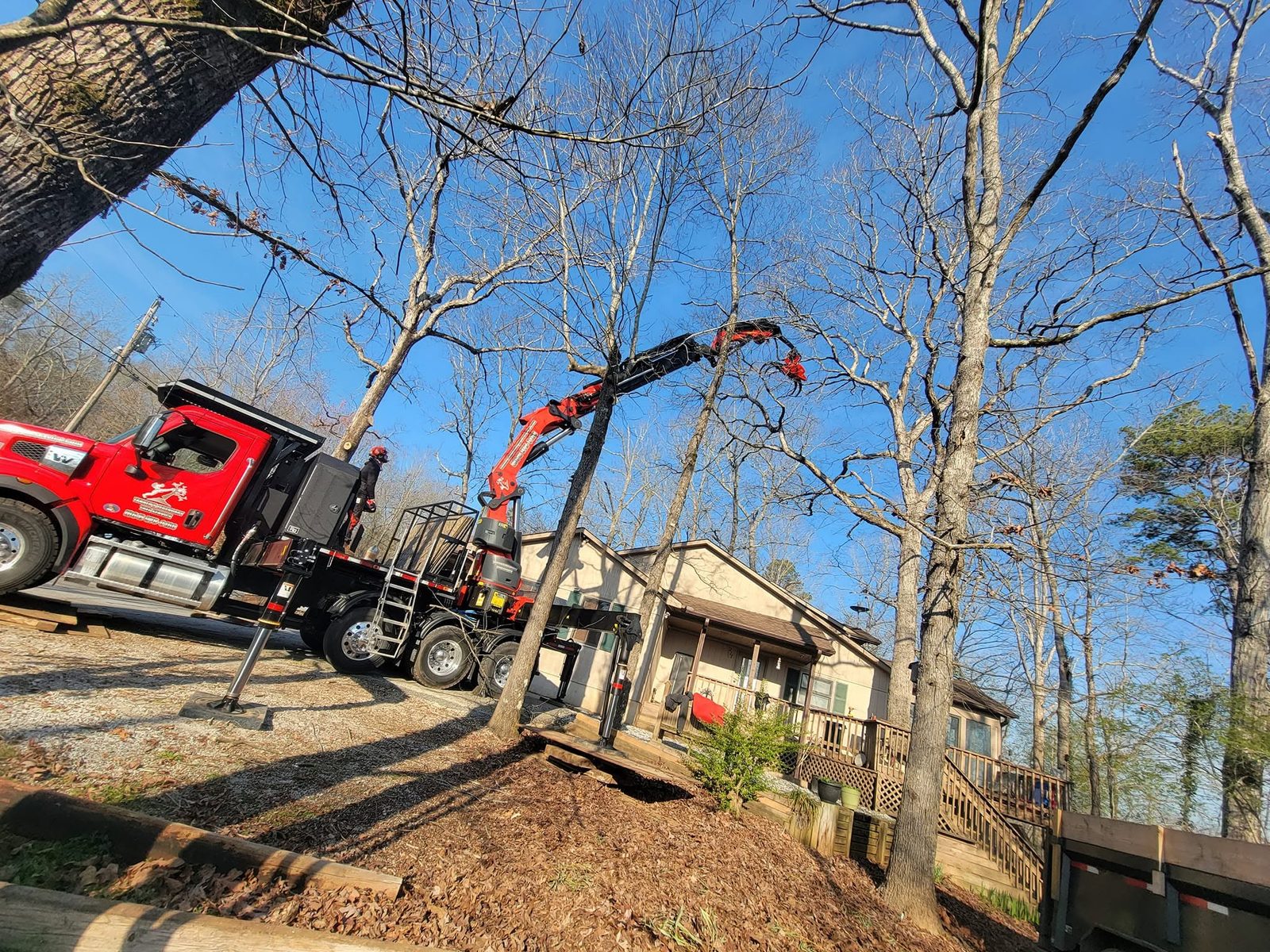
The access line is the most common gap between a foothills quote and a flatland one. A 70-foot tulip poplar standing in an open side yard is a cable-and-cut job with a predictable setup. That same tree leaning over a ridge-lot house with a creek at the base, no equipment lane on grade, and power lines along the street face is a rigging job or a crane day — and both carry real equipment costs that change the number. Any bid that names a price without specifying how the tree comes down and where the debris stages is missing information that matters.
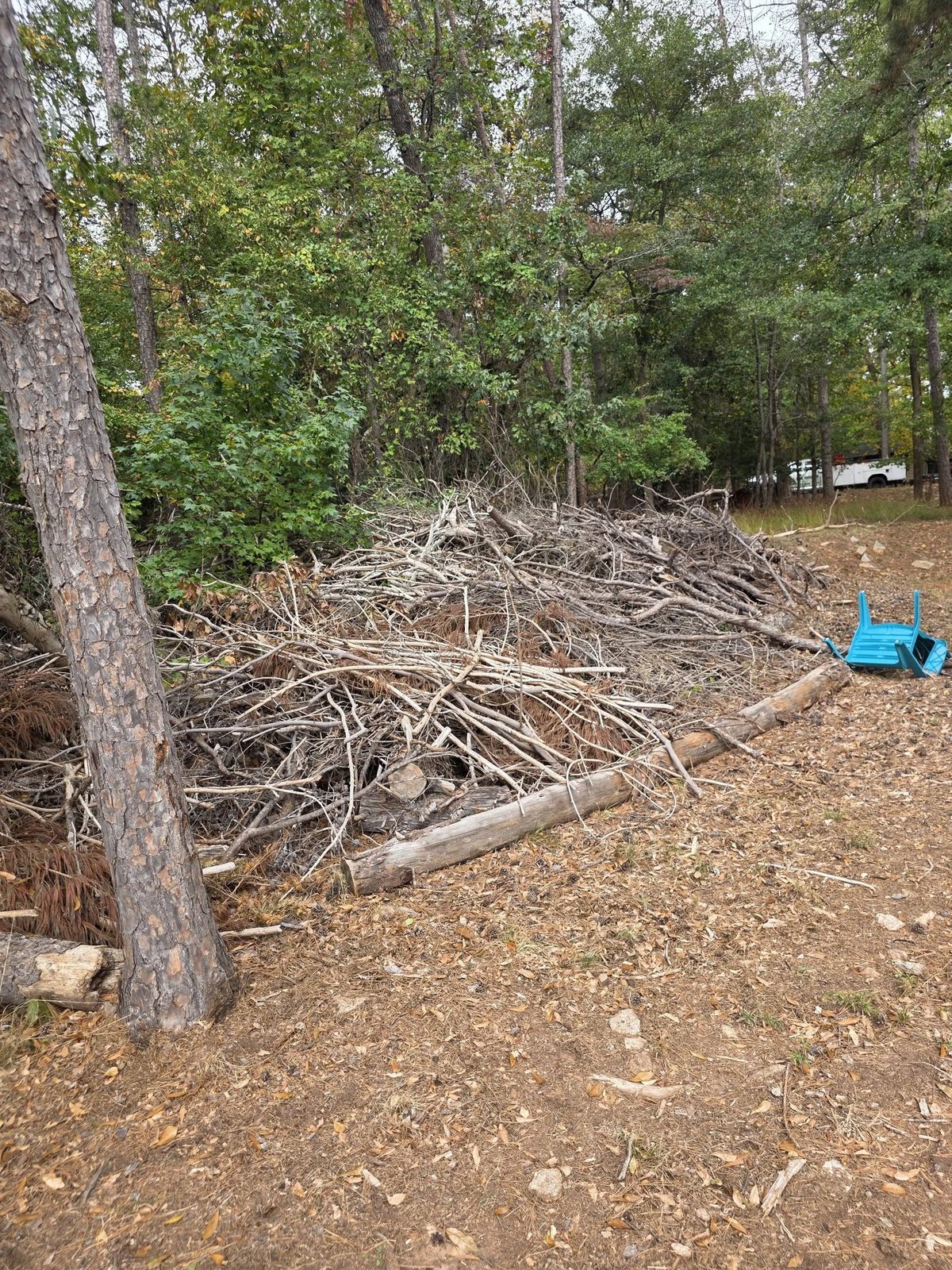
Debris haul is worth confirming on every quote. Some crews leave chip piles for the homeowner; others remove everything. On steep lots where chipping in place is not an option, clarifying this before you sign prevents day-of surprises.
Storm load in the Upstate foothills
The Blue Ridge foothills generate some of South Carolina's most active summer thunderstorm activity. Warm, humid air from the Piedmont pushed up the escarpment produces convective cells that move fast and hit hard — a pattern the NOAA National Weather Service storm record for the Upstate documents consistently across decades. Pickens County has accumulated 23 federal disaster declarations over 2005-2026, the majority tied to severe storms, flooding, and high-wind events. Those are the same events that split crowns, uproot shallow-rooted pines on ridge lots, and leave hazard trees standing in what looks like finished condition once the wind passes.
The practical gap between a planned removal and an emergency one is scheduling and cost. A storm-flagged tree assessed before the next convective season is a date on a calendar. One that waits through two more storm seasons becomes a priority call after the fact, with emergency pricing and compressed availability to match. The SC Forestry Commission publishes guidance on identifying post-storm hazard conditions — how to read crown damage, root-plate disturbance, and trunk failure indicators after a significant event — that helps property owners judge whether a roughed-up tree is structurally sound or quietly failing before calling anyone.
Checking credentials before the job starts
South Carolina licenses residential contractors through the SC LLR Contractor Licensing Board. Work involving hazard trees, structures, or utility-adjacent situations warrants confirming that the crew holds a current state license and carries both general liability and workers' compensation insurance — not expired, not pending renewal. A lapsed certificate transfers risk to the property owner if something goes wrong during the job. Ask to see both documents before authorizing any work, and verify that the license number is active rather than accepting a photocopy on faith.
Beyond the credential check: ask how the crew plans the setdown and debris handling, whether stump grinding is in scope or quoted separately, and what their protocol is for protecting established trees in the work zone that you are keeping. Around Central, where residential lots often carry clusters of mature hardwoods, what happens to the root zones of the trees staying is not a secondary concern. The full tree removal service page covers what a thorough pre-job site evaluation should include — both what to expect during the first visit and what a complete written scope looks like before anyone starts cutting.
After the tree is down
Removal ends the hazard; it does not end the stump. An unground stump on a Pickens County lot will generate sprouts within a growing season — the foothills soil and reliable summer rainfall support aggressive root-sucker growth from stumps that look well and truly dead. Stump grinding is priced separately by diameter and root flare, but bundling it with the removal usually comes out ahead of a return-trip quote because equipment and crew are already on-site and mobilization costs are shared. After grinding, the cavity fills with chip mulch and is ready for lawn backfill, a new planting, or simple coverage — the tripping hazard and the annual mower problem both disappear.
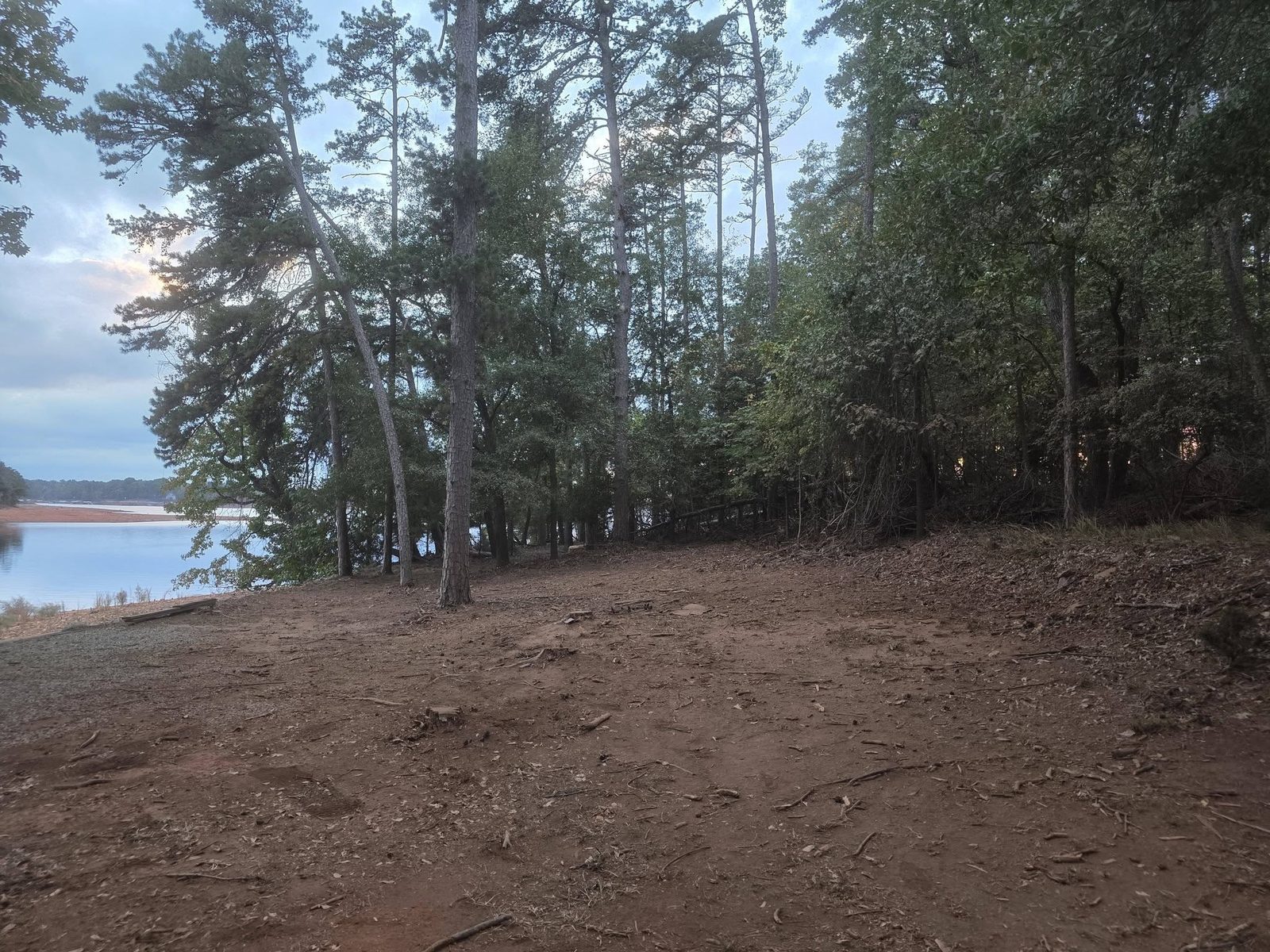
For properties near Lake Hartwell or Lake Keowee, root and stump work close to the shoreline may require coordination with the relevant utility authority that manages the lake before the job begins. That conversation is worth having during the estimate, not on the morning the crew shows up.