Slope lots change the job
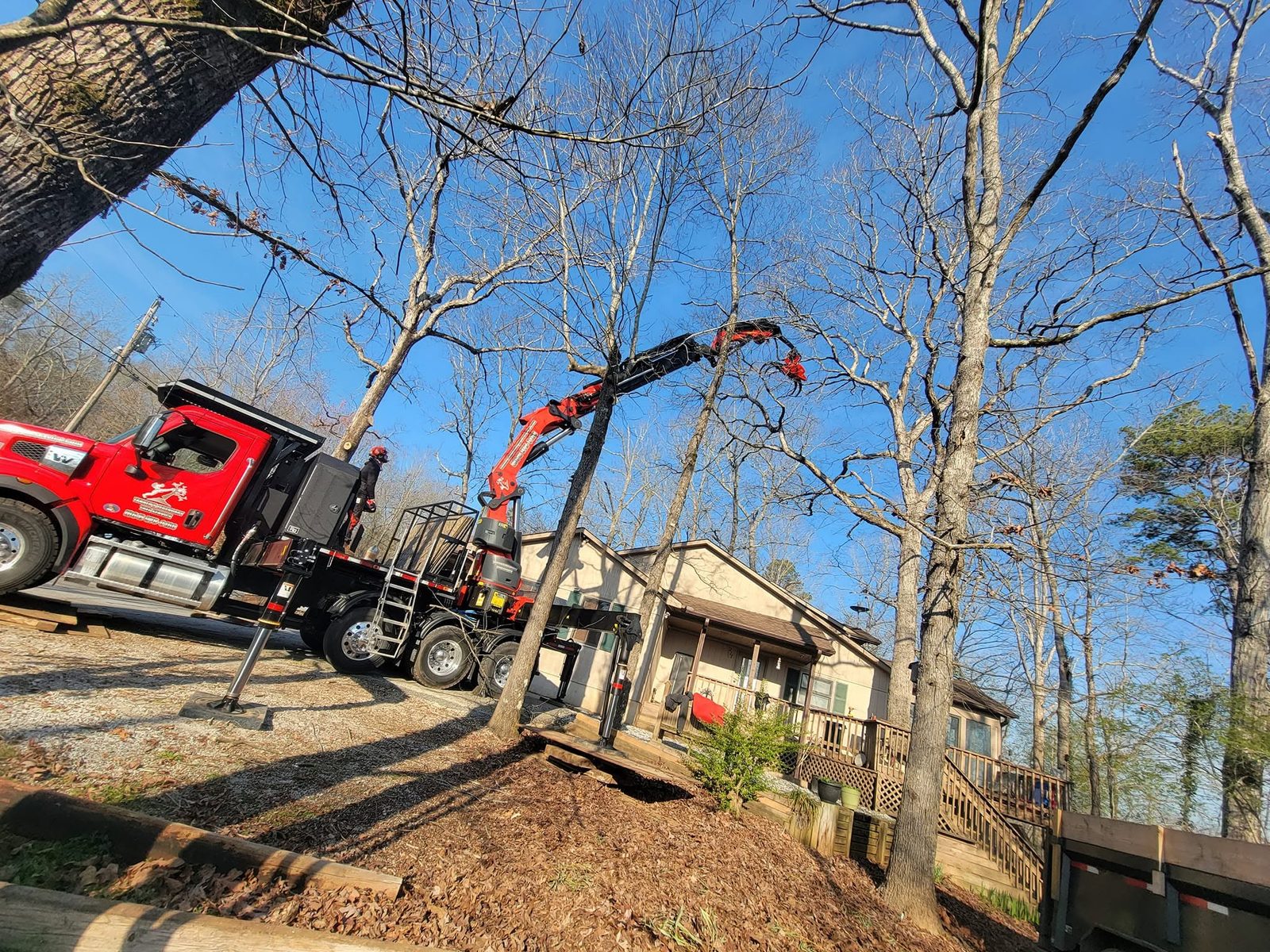
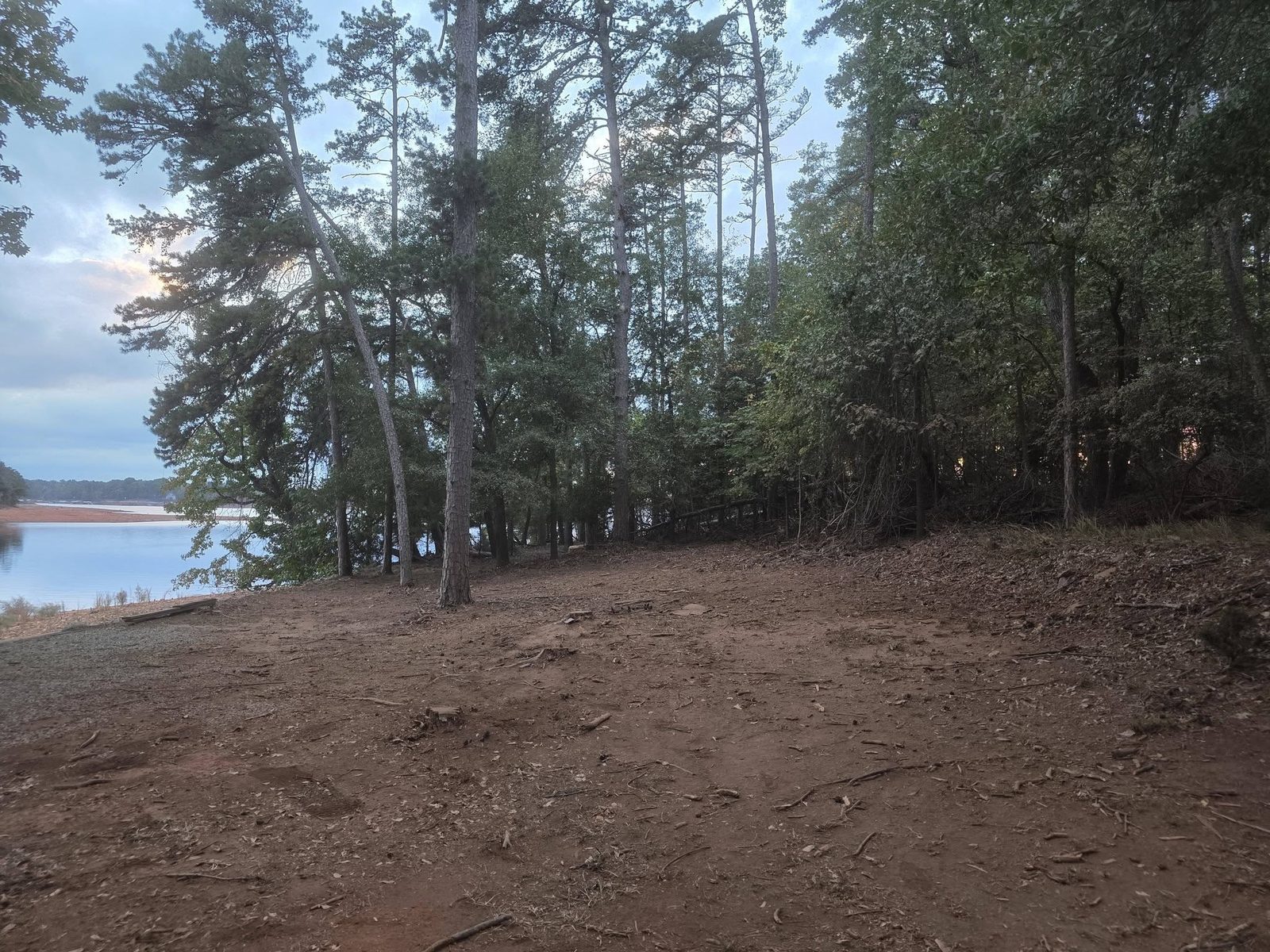
Liberty sits in central Pickens County, right where the SC Piedmont starts tilting toward the Blue Ridge foothills: a geography that matters as much for tree work as it does for anything built on the ground here. Properties around Liberty carry mature hardwood stands on grades that require rigging, sectional dismantling, and sometimes crane-assisted work that never shows up on a quote written for a flat suburban lot. When a 70-foot water oak leans toward a structure on a 15-degree slope, every step of the removal changes — the direction of pull, the anchor points for rigging lines, the placement of lowered sections, and the total labor hours. A flat-lot quote applied to that tree was never really a scope.
The housing stock around Liberty adds its own character. Older neighborhoods in and around town mix Craftsman-era homes with mid-century ranches, most of them sitting under large-canopy trees that have been growing for 40 to 80 years. Root systems on those oaks and sweetgums have had decades to work under foundations, driveways, and utility corridors, which means removal decisions sometimes carry a belowground conversation alongside the one about the crown. For what a full scope looks like from start to finish, the tree removal overview walks through each stage.
What tree removal costs in Pickens County
Around Liberty, typical tree removal runs $300 to $2,000 per tree; large, hazardous, or technically complex trees can pass $3,000. The variables that push a job toward the high end are largely the ones Pickens County terrain creates: slope, lean direction, proximity to structures or utilities, and whether wood has to be rigged down in sections rather than felled into an open zone. The tree removal cost guide breaks down every category with full detail.
| Scope | Typical range |
|---|---|
| Small tree, under 30 ft, open yard | $300 – $600 |
| Mid-size tree, 30–60 ft, good access | $600 – $1,200 |
| Large tree, 60+ ft, clear drop zone | $1,200 – $2,000 |
| Hazardous, leaning, or slope-sited tree | $1,500 – $3,000 |
| Storm-dropped tree contacting a structure | Varies; call for assessment |
| Stump grinding (separate service) | See stump grinding page |
Tree Wisemen prices every job after a free on-site estimate within 50 miles of Easley. The ranges above are typical for Upstate SC and not a fixed quote for a specific tree on your property.
Storm history and what it leaves in Pickens County
Pickens County carries 23 federal disaster declarations on record spanning 2005-2026, the majority tied to severe storms, flooding, and wind events that push across the foothills from the northwest. That history shows up directly in tree removal calls: trees that passed a visual inspection in spring carry crown damage that only becomes visible when late-summer weight — soaked wood, full canopy — reveals a compromised leader or a root ball that has been rocking at the base. The SC Forestry Commission publishes storm recovery resources and regional damage assessments worth consulting after major weather events in this part of the state.
Post-storm calls break into two timelines. Trees contacting a structure, draped over power lines, or blocking a primary access route are emergencies — do not approach lines on the ground, and call before attempting any clearance yourself. Trees down in the yard but clear of immediate hazard typically schedule within a few days. Either way, the job gets an on-site look before work starts; a tree on a fence and a tree on a roof price differently even at the same diameter and species.
Species that drive most removal calls here
The trees accounting for most removal work in and around Liberty are Loblolly pine, water oak, sweetgum, and tulip poplar. Each has a recognizable failure pattern. Loblolly pines in this part of Upstate SC are under sustained pressure from drought stress and southern pine beetle activity; a pine losing needles from the top down on a dry site is showing distress rather than seasonal drop, and dead Loblollies fail quickly in wind. Water oaks are fast-growing with comparatively shallow root systems — they mature quickly and decline quickly, and trees past 60 years warrant a close look at the crown for dead wood and trunk cavities. Sweetgums resist decay well but their aggressive surface root systems put them in long-term conflict with nearby pavement and foundations over time.
The Clemson Cooperative Extension Home and Garden Information Center publishes South Carolina-specific guidance on identifying hazardous trees by species — a practical reference if you are deciding whether a tree is a removal candidate or a pruning candidate before calling anyone out.
What to verify before the crew starts
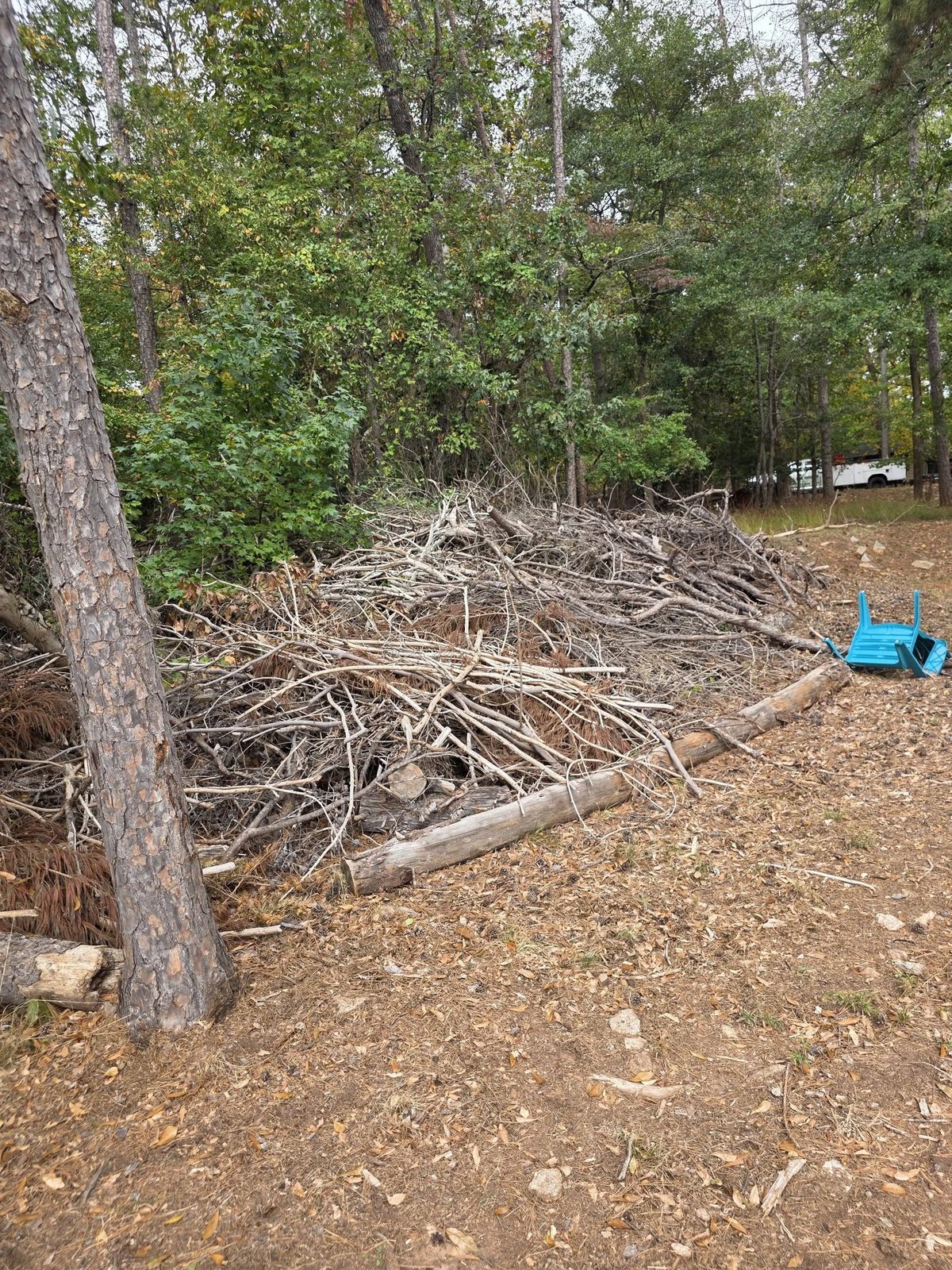
Three checks worth making before any tree work in Pickens County. First, confirm the crew carries general liability and workers' compensation insurance — tree work is high-risk and a property claim on an uninsured job is the homeowner's problem, not the contractor's. Second, confirm the written scope specifies whether debris haul-away and cleanup are included or priced separately; the gap between those two versions of a quote is often significant. Third, for any job that involves treating diseased wood or applying herbicide to a fresh-cut stump, confirm the applicator holds a valid license through Clemson's Department of Pesticide Regulation — stump herbicide application is a regulated pesticide use under SC law, not a casual finishing step.
For larger projects, general contractor licensing thresholds set by the SC LLR Contractor Licensing Board determine when formal licensure is required. Confirming compliance before work begins takes one phone call and costs nothing; sorting out a licensing dispute after the fact costs considerably more.